
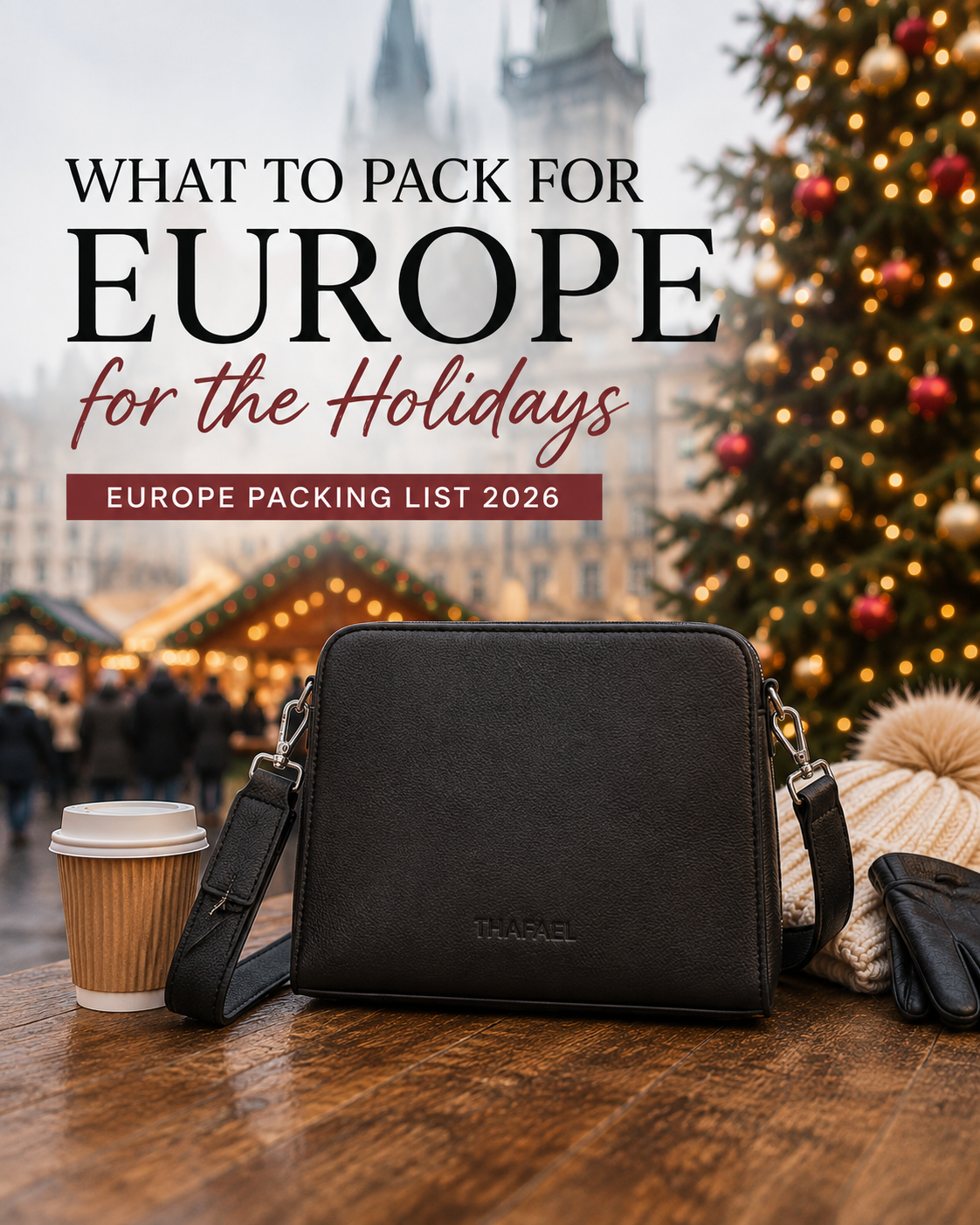
What to Pack for Europe for the Holidays: Christmas Packing List 2026
Holiday packing guide · Europe at Christmas
Packing for Europe during the holidays is all about smart layers, comfortable waterproof footwear, and versatile pieces that can take you from sightseeing during the day to Christmas markets at night.
What you need will depend heavily on where you're traveling. A December trip to Vienna or Prague will generally require much warmer clothing than Christmas in Rome or Lisbon, so always check the forecast for your specific destinations before you leave.
This complete Europe Christmas packing list for 2026 covers what clothing, shoes, winter accessories, electronics, travel essentials, and day-bag essentials to bring—plus what to pack specifically for Europe's famous Christmas markets.
For a broader, year-round packing framework, see our complete Europe packing guide
Key Takeaways
- Pack in layers. Thermal base layers, sweaters and one versatile winter coat are usually more practical than several bulky pieces.
- Prioritize waterproof, comfortable shoes. Winter trips to Europe often involve long walking days, cobblestones, rain, slush and uneven streets.
- Adjust your packing list to your destination. Central and Northern Europe generally require warmer clothing than destinations in Southern Europe.
- Pack for Christmas markets specifically. Bring warm accessories, waterproof footwear, a portable charger, a small amount of cash and a secure crossbody bag.
- Choose a secure day bag. A crossbody bag with secure zippers, slash-resistant materials and organized compartments can be especially useful in crowded markets, stations and public transportation.
- Don't double your wardrobe for a longer trip. For a two-week Europe trip, pack roughly one week's worth of versatile clothing and plan to do laundry.
- Wear your bulkiest items while traveling. Wearing your winter coat and largest shoes on the plane can free valuable suitcase space.
- Check the forecast and airline rules before you leave. Weather varies significantly across Europe, and luggage restrictions can differ by airline.
What Should You Pack for Europe at Christmas?
For a Christmas trip to Europe, pack a waterproof winter coat, thermal base layers, 2–3 sweaters, comfortable waterproof walking shoes or boots, warm socks, gloves, a scarf and hat, plus a secure antitheft crossbody bag for sightseeing and Christmas markets.
You'll also want your passport and travel documents, a European power adapter, portable charger, essential medications, and a few winter skincare essentials.
Travelers visiting colder parts of Northern and Central Europe will generally need heavier layers than those spending the holidays in Southern Europe.

Europe Christmas Packing List 2026: Quick Checklist
Here's the short version before we get into the details.
Clothing
-
1 waterproof winter coat
-
2–3 sweaters or fleece mid-layers
-
2 thermal/base-layer tops
-
1–2 thermal/base-layer bottoms
-
3–4 long-sleeve tops
-
2–3 pairs of pants
-
7 pairs of underwear
-
5–7 pairs of warm socks
-
1 sleepwear set
-
1 dressier outfit for dinners or holiday events
Shoes
-
1 pair of waterproof, comfortable walking shoes or boots
-
1 second comfortable pair
-
Optional dressier shoes with good grip
Winter Accessories
-
Warm scarf
-
Gloves
-
Beanie or winter hat
-
Compact umbrella
-
Sunglasses
-
Lip balm
-
Hand cream
Travel Essentials
-
Passport and necessary travel documents
-
Wallet with at least two credit/debit cards
-
Some local currency
-
Secure crossbody bag
-
Phone and charger
-
European travel adapter
-
Portable power bank
-
Prescription medications
-
Travel-size toiletries
What Is Europe Like During the Holidays?
One of the biggest packing mistakes travelers make is treating Europe as though it has one winter climate.
December weather can vary considerably depending on your itinerary. Check the forecast for every destination shortly before your trip and adjust your packing list accordingly.
Central Europe at Christmas
If you're visiting destinations such as Vienna, Prague, Budapest or Munich, prepare for genuinely cold winter weather.
You'll want warm layers, a proper winter coat, gloves, a scarf and comfortable waterproof footwear—especially if you'll be spending evenings outside at Christmas markets.
Snow is possible, but wet, cold conditions and slushy streets are just as important to prepare for.
Northern Europe at Christmas
Destinations such as London, Amsterdam and Copenhagen can be cold, windy and wet in December, while destinations farther north can experience considerably colder conditions.
Waterproof outerwear becomes especially important here.
A good combination is a thermal base layer, sweater or fleece, and waterproof insulated coat that allows you to adjust as you move between cold streets and heated restaurants, museums and shops.
Southern Europe at Christmas
Winter in Rome, Barcelona or Lisbon is generally milder than in Central and Northern Europe, but that doesn't mean you should pack for warm weather.
A medium-weight coat or waterproof jacket, sweater, long pants, scarf and closed-toe walking shoes will usually be much more useful than heavy snow gear.
Evenings can feel considerably cooler than daytime temperatures, so layers are still important.
What Clothes to Pack for Europe in December
The best winter travel wardrobe is one you can layer, mix and repeat.
Instead of packing a completely different outfit for every day, choose coordinating colors and versatile pieces that work together.
A neutral palette—black, navy, grey, camel, cream or similar shades—makes it easier to create multiple outfits from fewer pieces.

Start With Thermal Base Layers
Thermal layers are one of the easiest ways to stay warm without filling your suitcase with bulky clothing.
Pack approximately:
-
2 thermal long-sleeve tops
-
1–2 thermal leggings or bottoms
Merino wool and moisture-wicking synthetic fabrics are both useful options because they're designed to manage moisture while providing warmth.
Thermal leggings can also be worn discreetly underneath regular pants on particularly cold days.
Sweaters and Mid-Layers
Pack 2–3 sweaters or fleece layers in different weights.
Instead of bringing several extremely bulky sweaters, choose pieces that can be layered underneath your coat.
This also makes it much easier to adjust throughout the day as you move between cold outdoor temperatures and heated indoor spaces.
Pants and Bottoms
Two or three versatile pairs should be enough for most trips.
Consider:
-
Comfortable dark pants or jeans
-
A warmer or lined pair for colder destinations
-
A dressier pair for dinners
If temperatures are particularly low, add thermal leggings underneath rather than packing several pairs of heavy pants.
Choosing a Winter Coat
Your coat will probably be the most important piece of clothing you bring.
For colder destinations, look for a coat that is:
-
Warm
-
Wind resistant
-
Water resistant or waterproof
-
Comfortable enough for long walking days
-
Long enough to provide good coverage
If your itinerary includes both colder and milder destinations, layering can be more versatile than bringing two different coats.
What to Wear for Dinner and Holiday Events

You don't need an entire suitcase of evening clothes.
One dressier outfit that can be worn more than once is usually enough.
A sweater dress, dark trousers with a nice sweater, or another simple polished outfit can work for restaurants and holiday events.
Choose comfortable footwear with good traction rather than heels that are difficult to walk in on cobblestones or wet streets.
If you're traveling earlier in the season, our European fall outfits guide covers the transition period.
Best Shoes to Pack for Europe in Winter
Europe trips often involve hours of walking, cobblestone streets, stairs and uneven pavement, making shoes one of the most important things you'll pack.
For a winter trip, bring:
1. Waterproof walking shoes or boots
These should be your primary sightseeing shoes. Look for good traction and enough room to wear warm socks.
2. A second comfortable pair
A sneaker or ankle boot works well for drier days and gives your feet a break from wearing the same shoes every day.
3. Optional dressier shoes
Only bring them if you know you'll actually wear them. Choose something comfortable with a non-slip sole.
Most importantly, don't bring brand-new shoes. Break them in before your trip.
Leave high heels and slippery leather-soled shoes at home unless your itinerary genuinely requires them.
Winter Accessories You Shouldn't Forget
Small winter accessories take up relatively little suitcase space but can make an enormous difference when you're spending several hours outdoors.
Pack:
-
Warm scarf
-
Water-resistant gloves
-
Beanie or warm hat
-
Warm socks
-
Compact umbrella
-
Sunglasses
-
Lip balm
-
Hand cream
Touchscreen-compatible gloves can be particularly convenient when you're constantly taking photos, checking maps or paying with your phone.
What to Pack for European Christmas Markets
Christmas markets are one of the highlights of visiting Europe during the holidays—but they also create some specific packing needs.
You'll often spend several hours outdoors, walk on uneven or wet surfaces, buy food and drinks, take photos, and move through crowded areas while carrying purchases.
For a Christmas market, bring:
-
Warm gloves
-
Waterproof walking shoes or boots
-
Scarf and hat
-
Layers you can easily adjust
-
Compact umbrella if rain is expected
-
Portable phone charger
-
Lip balm and hand cream
-
Small amount of cash
-
Packable tote for purchases
-
Secure crossbody bag for your phone, cards and other valuables
Crowded markets are also prime pickpocket territory , see our guide to avoiding pickpockets in Barcelona for specific techniques.
The Best Bag to Carry in Europe During the Holidays
Christmas markets, train stations, public transportation and major tourist attractions can become extremely crowded during the holiday season.
A secure crossbody bag allows you to keep your everyday essentials close to your body and in front of you while leaving your hands free.
When choosing a travel crossbody bag for Europe, look for features such as:
-
Secure or lockable zippers
-
Slash-resistant materials
-
Crossbody design
-
RFID-blocking organization
-
Internal pockets for valuables
-
Comfortable adjustable strap
-
Enough room for your phone, wallet, passport and daily essentials
Browse our full collection of anti-theft crossbody bags, or see how each of La Trotteuse’s anti-theft features works.

These features don't replace normal awareness of your surroundings, but they can make your belongings more difficult to access unnoticed in crowded environments.
Our Pick: THAFAEL La Trotteuse

For travelers who want these features in one bag, THAFAEL's La Trotteuse Anti-Theft Crossbody Bag was designed specifically for travel.
It combines lockable zippers, slash-resistant construction, built-in RFID organization and multiple internal compartments in a crossbody design made to look like a stylish handbag rather than traditional anti-theft gear.
It's designed to carry everyday travel essentials while keeping them organized and close to you during sightseeing, public transportation and busy Christmas markets.

For a deeper comparison of features and options, see our complete guide to choosing the best anti-theft bag for travel
For a full walkthrough of anti-theft bag features, comparisons, and what to look for, see our complete guide to choosing the perfect anti-theft bag.

The stylish anti-theft bag for your Christmas market trip.
Crowded markets, train stations and busy streets are where pickpockets work. La Trotteuse has lockable zippers, slash-resistant construction and RFID-blocking compartments to help keep your essentials secure, and it looks as good as everything else on your packing list.
Shop La TrotteuseDocuments, Money & Travel Essentials
These are the items you don't want to discover you've forgotten after arriving at the airport.
Travel Documents
Bring:
-
Passport
-
Visa or travel authorization, if required
-
Travel insurance information
-
Driver's license if needed
-
Hotel and transportation confirmations
Check the official passport and entry requirements for every country on your itinerary, as requirements vary depending on your nationality and destination.
Keep digital copies of important travel documents accessible securely on your phone or cloud storage, and consider keeping a separate backup copy.
Money
Travel with at least two payment cards, preferably stored separately.
Contactless payments are widely used across many European destinations, but carrying a small amount of local currency can still be useful—particularly at smaller businesses and some Christmas-market stalls.
Avoid carrying all of your cards and cash in the same place.
Electronics to Pack for Europe
Keep electronics minimal. Your smartphone already replaces a camera, map, guidebook and boarding pass for many travelers.
|
Item |
Notes |
|---|---|
|
Smartphone + charging cable |
Pack chargers for each electronic device you bring |
|
Universal travel adapter |
Europe uses different electrical systems than the U.S. Continental Europe uses Type C/E/F round-pin plugs at 230 V; the UK uses Type G three-rectangular-pin plugs |
|
Portable charger |
Portable chargers are essential for long sightseeing days; check airline regulations (max ~100 Wh in carry on) |
|
E-reader |
Optional; lighter than books for long flights |
|
Camera |
Only if you will use it daily |
|
Earbuds/headphones |
For flights and train rides |
|
A universal travel adapter with USB ports covers both continental and UK outlets. Bring only what you will use every day. Organize cables and adapters in a small zip pouch inside your carry on or secure day bag for Europe so they stay connected and accessible. |
|
Remember that continental Europe and the United Kingdom use different plug types, so make sure your adapter covers every destination on your itinerary.
Also check that your devices are compatible with the local voltage before plugging them in.
Keep cables and adapters together in a small pouch so you're not searching through your suitcase every time you need a charger.
Toiletries & Winter Skincare
Cold outdoor air combined with heated indoor spaces can leave skin and lips feeling particularly dry during winter travel.
Consider packing:
-
Moisturizer
-
Lip balm
-
Hand cream
-
SPF
-
Toothbrush and toothpaste
-
Deodorant
-
Shampoo and conditioner
-
Basic makeup
-
Prescription medications
-
Pain reliever
-
Blister patches
You can buy most basic toiletries at pharmacies and shops throughout Europe, so there's little reason to overpack.
If you're traveling with carry-on luggage only, check the current airport-security rules for liquids at the airports you'll be using before packing.
Carry-On vs. Checked Luggage for a Europe Christmas Trip
Can you travel to Europe in winter with only a carry-on?
Yes—but winter packing requires more discipline than summer packing because coats, sweaters and boots take up considerably more room.
Carry-On May Be Best If:
-
You're traveling between several cities
-
You'll use trains frequently
-
You're flying European low-cost airlines
-
Your accommodations have stairs or limited storage
-
You're comfortable doing laundry during the trip
Checked Luggage May Make Sense If:
-
You're traveling somewhere extremely cold
-
You're bringing ski equipment or specialized winter gear
-
Your trip is several weeks long
-
You need multiple types of clothing for very different climates
Whichever you choose, check your airline's exact luggage size and weight restrictions before departure.
Space-saving tip: Wear your bulkiest coat and largest shoes during your travel day rather than putting them inside your suitcase.
What NOT to Pack for Europe During the Holidays
Packing smarter isn't only about deciding what to bring. It's also about knowing what to leave behind.
Try to avoid:
-
Multiple bulky winter coats
-
Several pairs of heavy boots
-
Full-size toiletries
-
High heels or uncomfortable shoes
-
Clothes that don't coordinate with anything else
-
Excessive "just in case" outfits
-
Bulky items you could easily purchase at your destination
The same principle applies to choosing a day bag — see our how to not look like a tourist in Europe guide
A useful rule is:
If you can't imagine wearing an item at least twice during your trip, reconsider whether it deserves suitcase space.
7-Day Europe Christmas Packing List
For a one-week winter trip to Central or Northern Europe, this is a practical starting point.
Clothing
-
2 thermal tops
-
1–2 thermal bottoms
-
2–3 sweaters or mid-layers
-
3–4 long-sleeve tops
-
2–3 pairs of pants
-
7 pairs of underwear
-
5–7 pairs of warm socks
-
1 sleepwear set
-
1 waterproof winter coat
-
1 dressier outfit
Shoes
-
1 pair of waterproof walking shoes or boots
-
1 comfortable second pair
-
Optional dressier pair
Winter Accessories
-
Scarf
-
Gloves
-
Beanie
-
Compact umbrella
-
Sunglasses
-
Lip balm
-
Hand cream
Electronics
-
Phone + charger
-
Travel adapter
-
Power bank
-
Earbuds/headphones
Travel Essentials
-
Passport and travel documents
-
Two payment cards
-
Some local currency
-
Travel insurance details
-
Secure crossbody bag
-
Reusable water bottle
-
Packing cubes
2-Week Europe Christmas Packing List
A two-week trip does not require twice as many clothes.
Start with the seven-day packing list above and plan to do laundry approximately halfway through your trip.
You might add:
-
1 additional sweater or mid-layer
-
1 additional pair of pants
-
2–3 additional pairs of underwear
-
2–3 additional pairs of socks
The coat, shoes, accessories and electronics can stay essentially the same.
This keeps your luggage manageable while still giving you enough variety to create different outfits.
How to Pack Winter Clothes Without Overpacking
Winter clothing is bulky, so a little planning makes a big difference.
1. Wear Your Bulkiest Pieces
Wear your winter coat and largest shoes on travel days rather than putting them in your suitcase.
2. Use Packing or Compression Cubes
Packing cubes help organize sweaters, thermal layers, underwear and other clothing. Compression cubes can also help bulky winter pieces take up less room.
3. Layer Instead of Packing Multiple Coats
One versatile winter coat combined with different base and mid-layers is usually more practical than bringing several heavy coats.
4. Build a Capsule Wardrobe
Choose colors that coordinate so almost every top works with almost every bottom.
You'll create more outfits while packing fewer individual pieces.
5. Leave Space for Christmas Purchases
If you're planning to visit Christmas markets, don't leave home with a completely full suitcase.
Leave some room for ornaments, gifts and other souvenirs you'll inevitably be tempted to bring home.
Complete Europe Christmas Packing Checklist 2026
|
Category |
Items |
|---|---|
|
Clothes |
Winter coat, 2–3 sweaters, 2 thermal tops, 2 thermal bottoms, 3–4 long-sleeve tops, 2 pants, 7+ underwear, 5+ warm socks, 1 sleepwear, 1 dressy outfit, 1 light jacket or cardigan |
|
Shoes |
Waterproof boots, casual pair, optional dressy pair |
|
Winter Accessories |
Scarf, gloves, beanie, thermal socks, compact umbrella, sunglasses, lip balm, hand cream |
|
Bag |
Secure crossbody bag or fanny pack, packable tote for market purchases |
|
Documents |
Passport, visa (if required), travel insurance (print + digital), driver's license, booking confirmations |
|
Money |
2 credit/debit cards, cash in small denominations, slim travel wallet |
|
Electronics |
Phone, charger, universal travel adapter, portable charger, earbuds, camera (optional), e-reader (optional) |
|
Toiletries |
Moisturizer, SPF, lip balm, hand cream, shampoo, conditioner, toothbrush, toothpaste, deodorant, razor |
|
Health |
Prescription medications, pain relievers, cold medicine, blister patches, motion sickness remedies |
|
Miscellaneous |
Packing cubes, reusable water bottle, laundry kit (sink stopper + travel detergent), pen for customs forms, sewing kit, sleep mask for long flights |
FAQ: Packing for Europe During the Holidays
What should I pack for Europe in December?
Pack a waterproof winter coat, thermal base layers, 2–3 sweaters, comfortable waterproof walking shoes or boots, warm socks, gloves, a scarf and hat. Add a secure day bag, European travel adapter, portable charger, travel documents and essential toiletries.
Your exact clothing will depend on where in Europe you're traveling.
How cold is Europe at Christmas?
Temperatures vary significantly by destination. Central and Northern European destinations generally require heavier winter clothing, while destinations in Southern Europe tend to be milder. Check the forecast for each city on your itinerary shortly before departure.
What should I wear to European Christmas markets?
Wear layers that can keep you warm while standing outdoors for extended periods: thermal base layers, a sweater, winter coat, scarf, gloves, hat and comfortable waterproof footwear.
Carry a secure crossbody bag for your phone, cards and other valuables, plus a foldable tote if you plan to shop.
Do I need snow boots in Europe in December?
Not necessarily. For most city trips, comfortable waterproof boots or walking shoes with good traction are more versatile than heavy snow boots.
If you're visiting alpine areas or destinations expecting significant snow, more specialized winter footwear may be appropriate.
Can I pack for Europe in winter with only a carry-on?
Yes. Wear your bulkiest coat and shoes while traveling, choose clothing that layers well, use packing cubes, and plan to do laundry during longer trips. Always check your airline's carry-on size and weight restrictions.
How many sweaters should I pack for a two-week Europe trip?
For most travelers, three or four versatile sweaters or mid-layers are enough when combined with thermal layers and laundry during the trip. Choose different weights that can be layered depending on the weather.
What type of bag should I carry at European Christmas markets?
A secure crossbody bag is a practical choice because it keeps your belongings close to your body while leaving your hands free. Look for secure or lockable zippers, slash-resistant materials, internal organization and a comfortable adjustable strap.
Do I need an anti-theft bag in Europe?
An anti-theft bag isn't mandatory, but additional security features can be useful when traveling through crowded tourist areas, public transportation and Christmas markets. Lockable zippers and slash-resistant materials can make belongings more difficult to access unnoticed, while a crossbody design lets you keep the bag close and in front of you.
Should I bring cash to European Christmas markets?
It's useful to carry a small amount of local currency. Card and contactless payments are increasingly common, but payment options vary by market and individual vendor. Keep cash in small denominations and avoid carrying large amounts.
What should I pack for a 10-day trip to Europe in December?
Use the seven-day packing list as your base rather than packing ten completely different outfits. Add a few extra pairs of underwear and socks, and plan clothing that can be mixed, layered and reworn. For a longer itinerary, doing laundry once can significantly reduce how much you need to carry.
What to Wear at Your Destination
Once your suitcase is packed, these guides show how to style it for each destination:
-
What to Wear in Paris in Winter — stylish outfits and practical layers for Paris in colder weather.
-
What to Wear in Austria in Winter — layering for Vienna, Salzburg and Alpine Christmas markets.
-
What to Wear in Italy in Winter — layering and outfit ideas for Italy in December, January and February.
-
What to Wear in Spain in December — winter outfits for Madrid, Barcelona and the rest of Spain.
-
What to Wear in Portugal in Winter — outfit inspiration for a generally milder European winter.
-
What to Wear in Strasbourg and Colmar in Winter — cold-weather outfits for the Alsace Christmas markets.
-
European Winter Outfits for Christmas Markets — our main guide to staying warm and fashionable at festive markets.
A Final THAFAEL Travel Tip
When packing for Europe during the holidays, think about your entire day rather than individual outfits.
You may leave your hotel after breakfast, spend the day sightseeing, take public transportation across the city, stop for dinner and finish the evening at a Christmas market without returning to your room.
Your coat, shoes, layers and day bag therefore need to be comfortable and practical enough to work from morning until night.
Pack pieces that can adapt with you, keep the essentials you use throughout the day organized and accessible, and leave a little room in your suitcase for something special from the Christmas markets.
About the Author
Arielle is the founder of Thafael, a travel accessories brand built around one idea: that women should not have to choose between feeling safe and feeling stylish when they travel. She created La Trotteuse, Thafael's anti-theft crossbody bag, after realizing that most secure travel bags looked exactly like what they were: functional, obvious, and nothing she actually wanted to carry. Thafael is named after her two children, Thaliya and Rafael, which is as good a reason as any to build something that lasts. She writes about European travel, packing smart, and moving through the world with a little more ease and a lot more confide



Leave a comment
This site is protected by hCaptcha and the hCaptcha Privacy Policy and Terms of Service apply.