
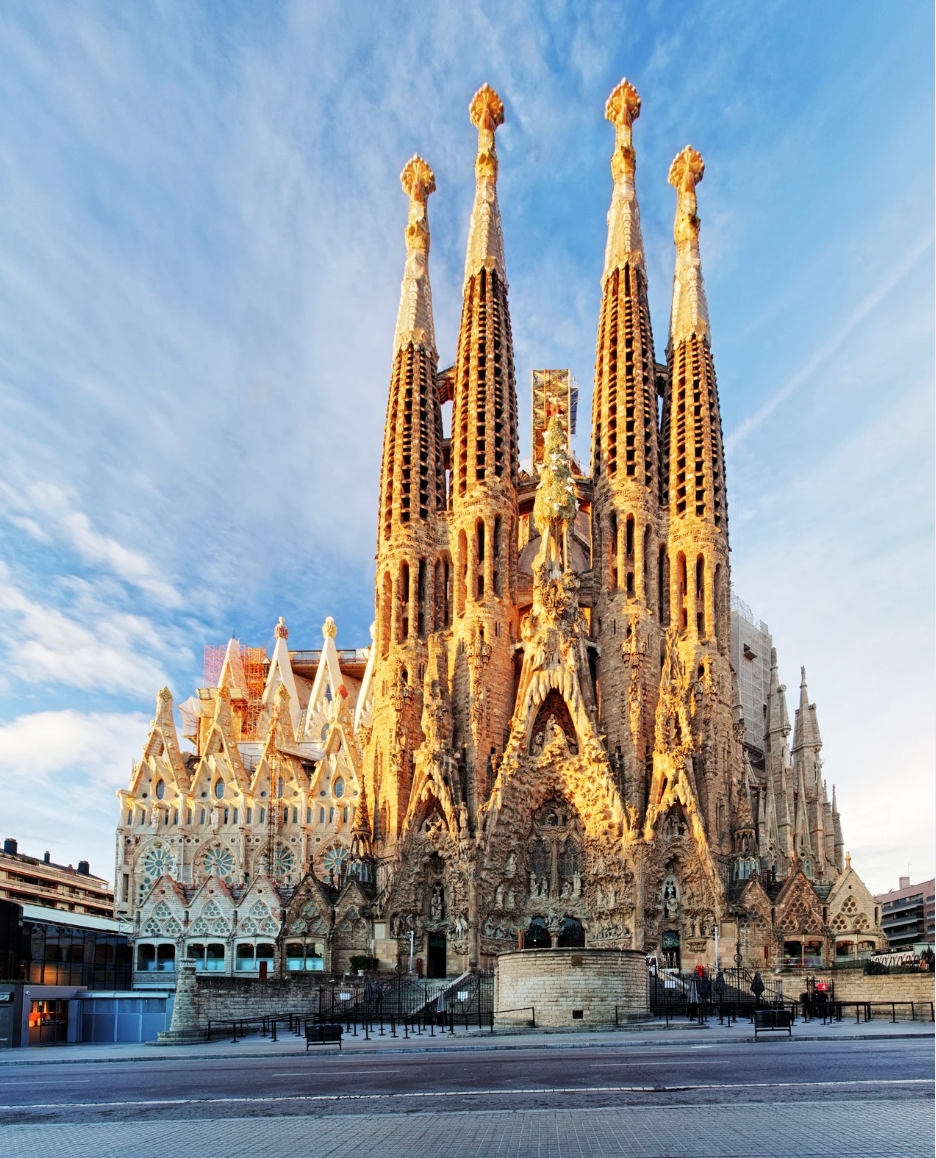
The most effective way to avoid pickpockets in Barcelona is to wear a secure crossbody bag in front of your body, stay alert on the metro and in tourist-heavy areas like La Rambla, and know the specific scams Barcelona pickpockets use before you arrive. Barcelona is not dangerous. But it does have a well-documented pickpocketing problem that catches unprepared travelers off guard every single day.
This guide shows how to avoid pickpockets in Barcelona with the exact locations, the exact scams and the habits that work in this city. For the broader framework on staying safe across Europe, start here: How to Avoid Pickpockets in Europe (What Actually Works).

Key Takeaways
- Wear your bag across your body, in front of you, with the zippers closed and locked, especially on the metro and on La Rambla.
- Keep your phone in your bag, not in your hand or back pocket, when you are on crowded streets or platforms.
- Say no and keep walking if a stranger offers a bracelet or flowers, or asks you to sign a petition. These are distraction tactics.
- Never hand your wallet or passport to anyone claiming to be police. Ask to go to the nearest police station or call 112.
- Never leave a bag, phone or wallet unattended on the beach or on a café table or chair.
- Carry only what you need for the day, and keep backups of your cards and passport details somewhere safe.
Barcelona pickpockets rely on distraction and crowds. These habits help reduce your risk, but no habit or bag can remove it completely.
Table of Contents
- Barcelona Pickpocketing: Understand the Risk Without the Hype
- Where Exactly Do Pickpockets Operate in Barcelona?
- How to Protect Your Belongings on the Barcelona Metro
- La Rambla, Markets and the Gothic Quarter: What to Watch For
- How to Keep Belongings Safe at Barceloneta Beach
- What Are the Most Common Pickpocket Scams in Barcelona?
- How to Protect Your Phone and Bag in Cafés and Public Spaces
- Reduce Easy Access to Your Wallet, Phone and Bag
- Bag Features That Can Help — and Their Limits
- Is Barcelona Safe for Solo Female Travelers?
- What Should I Do If I Get Pickpocketed in Barcelona?
- A Practical Checklist After Your Phone, Cards or Passport Are Stolen
- Barcelona Pickpocketing Questions
Barcelona Pickpocketing: Understand the Risk Without the Hype
Barcelona has a long-standing reputation for theft, but the problem is concentrated in touristy hotspots rather than the whole city. According to the Quotezone European Pickpocketing Index 2024, Spain logs 111 pickpocketing mentions per million visitors at its top attractions. In the first half of 2025, Catalan police identified 266 active repeat offenders in Barcelona who had been arrested 1,776 times between them. Those figures cover theft and robbery in general, not only pickpocketing, but they explain why pickpockets in Barcelona remain a persistent concern for visitors.
That said, Barcelona is a magnificent cosmopolitan city, and hundreds of thousands of women visit it every year without incident. Like most cities in European countries, the main risk here is petty crime rather than violent crime. The difference between those who get targeted and those who do not is almost always preparation and awareness, not luck.
Understanding the scale of the problem is not about fear. It is about going in with your eyes open so you can enjoy every single thing Barcelona has to offer without the stress of losing your belongings.
For context on how Barcelona compares to other European cities: Is Europe Safe for Solo Female Travelers? What You Need to Know (2026).
Where Exactly Do Pickpockets Operate in Barcelona?
Barcelona pickpockets are not random. They concentrate in specific hotspots where tourists are distracted, crowds are dense, and escape routes are easy. If you are visiting Barcelona, knowing exactly where helps you use common sense and adjust your awareness in those moments rather than staying on high alert everywhere.
| Location | Typical situation | Protective habit |
|---|---|---|
| La Rambla and La Boqueria | Crowds, street performers, tourists stopping to photograph stalls | Bag in front, zipped and locked; phone away while you browse |
| Gothic Quarter | Narrow streets, distraction, bag snatching on busy pedestrian streets | Keep your bag on the side away from the street and notice who is close behind you |
| Plaça de Catalunya | Arriving, departing, checking a map or phone | Check your route before you leave the metro or a shop |
| Park Güell and Sagrada Família | Queues and viewing platforms, compressed crowds | Hold your bag in front while you queue and take photos |
| Metro and train stations | Boarding, luggage, jet lag, crowded doors and turnstiles | Keep both hands on your bag at the doors and the turnstiles |
| Barceloneta and the beaches | Belongings left on a towel while you swim | Take turns swimming, or bring only what you need |
This table shows where visitors most often report problems. It is a practical guide, not an official ranking.
La Rambla. The most famous street in Barcelona is also the most dangerous for tourists. Street performers, flower stalls, and the constant movement of crowds create perfect cover. Pickpockets work this stretch in teams, particularly around La Boqueria market where tourists stop to look and photograph.
The Gothic Quarter. Narrow winding streets, beautiful architecture, and constant distraction. The Gothic Quarter is stunning and absolutely worth visiting. It is also a prime zone for bag snatching and pocket dipping, particularly on the busier pedestrian streets.
Plaça de Catalunya. The main square connecting La Rambla to the rest of the city is a convergence point for tourists and a known hotspot. Be particularly aware here when arriving or departing and when consulting your phone or map.
Park Güell. The queues and viewing platforms at Park Güell create exactly the kind of distracted, compressed crowd that pickpockets target. Sagrada Família is another major hotspot where you should be extra careful. The escalators leading up to Montjuïc are also flagged consistently.
La Boqueria market. You are browsing, your hands are occupied, your attention is on the stalls. It is one of the most beautiful markets in Europe and one of the highest-risk environments in the city for theft.
Barcelona Sants and Passeig de Gràcia stations. Train stations and public transport are always high risk, and metro stations are especially common places for pickpocketing. Tourists are managing luggage, checking departures, and often jet-lagged or disoriented. Both Barcelona Sants and Passeig de Gràcia are commonly flagged in local police reports. Keep your wallets and cards in a zipped bag, not in a back pocket, while you walk through the turnstiles and wait on the platform.
How to Protect Your Belongings on the Barcelona Metro
Barcelona metro safety starts with a few habits, because the metro is where a significant proportion of tourist pickpocketing incidents happen. If you want to avoid pickpockets in Barcelona, this is one of the first places to tighten your habits. The moments of boarding and exiting are the highest-risk points: crowds compress, people push, and the movement and noise mask contact completely.

Pickpocketing is commonly reported on metro lines and stations that serve the main tourist areas, including La Rambla, the Gothic Quarter, Barceloneta and Park Güell, because that is where tourist density is highest. No official ranking shows that one line is riskier than another, so use the same habits on every line.
Boarding, Escalators and Crowded Platforms
The riskiest moments are the ones where you cannot easily see your bag: stepping on and off the train, riding escalators and standing in a packed carriage. Keep one hand on your bag, face the doors, and move away from anyone who presses too close. Be especially careful at the turnstiles and on crowded platforms, where a quick bump can be a distraction. If the carriage is unusually crowded for the time of day, wait for the next one.
Specific habits for the Barcelona metro:
- Keep your bag in front of your body with the zippers locked at all times, not on your back and not dangling from one shoulder.
- Be especially alert at the doors when boarding and exiting. Thieves position themselves near the doors specifically to grab and run before they close.
- If the carriage is unusually crowded for the time of day, stay alert. Overcrowding is sometimes engineered deliberately by pickpocket teams.
- Do not use your phone openly on the metro. Keeping your phone safe also means not setting it or your wallet down on a seat, ledge, or café table before or after a ride.
- Buy a T-Casual transport card before you travel so you are not fumbling with ticket machines on the platform or carrying more cash than necessary.
La Rambla, Markets and the Gothic Quarter: What to Watch For
Yes and no. La Rambla has long had a bad reputation for theft, although police presence and coordinated anti-theft operations have improved the situation in recent years. But La Rambla remains one of the highest-risk streets in the city for tourist theft.
The specific risks on La Rambla: groups of people loitering on the sides of the walkway watching foot traffic. Locals do not linger on La Rambla. They walk through it. Anyone standing still and observing is worth noting, and some theft setups use children or flower sellers as decoys to create a distraction. Street performers create crowd compression that pickpocket teams use deliberately. The restaurants and terraces along the strip are also flagged for bag theft from chair backs. The flower offer is a common distraction: someone hands you a flower to start a conversation while an accomplice goes for your bag.
None of this means you should avoid La Rambla. It is a genuinely beautiful and vibrant street and skipping it entirely would be a shame. It means you walk through it with your bag secured in front, your phone in your bag rather than your hand, and your awareness slightly elevated compared to a quieter neighborhood.
The same applies around La Boqueria market and in the Gothic Quarter. Browsing slows you down and narrow streets bunch people together. Keep your valuables in a front-facing bag and step to the side before you check your phone.
How to Keep Belongings Safe at Barceloneta Beach
Barceloneta is one of the most visited beaches in Europe and the main risk is different from the city center. This applies to other busy beaches in the city too.
The primary risk at Barceloneta is belongings left unattended while swimming. This sounds obvious but it catches travelers constantly. There is no safe way to leave a bag, phone, wallet, or passport on a beach towel while you are in the water. Thieves work the beach specifically targeting unattended items and they are fast.
The secondary risk is bag snatching from people walking along the beachfront promenade, particularly with phones in hand. A slash-resistant anti-theft crossbody bag worn in front of you can help on the promenade.
Practical habits for Barceloneta:
- Leave your passport, extra cards, and anything you do not need in a safe place at your accommodation, such as the hotel safe or your hotel room. Bring only the minimum money you need for the beach, and do not wear expensive visible valuables.
- Use a waterproof phone pouch you can wear in the water if you want to keep your phone with you.
- If you are in a group, take turns swimming so someone always stays with the bags.
- Consider a small locker if available near the beach.
- Wear a crossbody bag on the promenade. Do not carry valuables in a tote or beach bag that hangs open.
What Are the Most Common Pickpocket Scams in Barcelona?
Most scams in Barcelona rely on one idea: someone grabs your attention while a second person, often one of several decoys, goes for your bag. These are the Barcelona scams reported most frequently by travelers and local guides in 2025 and 2026. If you want to avoid pick pockets, watch for the distraction first.
Petitions, Flowers and Unwanted Help
The clipboard petition scam. A group of people, often claiming to represent a charity, approach you with a clipboard and ask you to sign a petition. While you read and sign, an accomplice accesses your bag. This scam is particularly common on the escalators leading up to Montjuïc and on streets leading to Park Güell. The petition is always fake. Do not stop. Keep walking and say no clearly.
The bracelet and flower scams. Someone grabs your wrist and starts tying a bracelet on it before you have agreed to anything, or presses a flower into your hand. While your hand and attention are occupied, an accomplice goes for your bag. This is documented extensively on La Rambla and near major monuments. If someone reaches for your wrist, step back immediately and do not accept the flower.
How to disengage calmly. Do not stop, do not argue, and do not explain. A firm "No, thank you" and a step back is enough. You do not owe anyone a conversation.
Stain Tricks, Maps and Fake Police Approaches
The map or directions scam. Someone approaches you with a large map asking for directions. The map is used to obscure their hands or your bag while an accomplice works behind you. A tourist asking another tourist for directions is rarely genuine. Say no and keep moving.
The bird dropping scam. Someone tells you that you have bird droppings on your jacket and immediately and helpfully starts wiping it off. The substance is fake. The cleaning is the distraction. While you process what is happening, your bag is accessed. Your first move is always to secure your bag, not address whatever is on your clothing.
The fake police scam. Someone in plain clothes flashes what looks like a badge and asks to inspect your wallet for counterfeit currency. Fake policemen may ask for your ID as a pretext to get you to open your wallet. Real police in Barcelona do not do this. Do not hand your wallet to anyone. Real officers do not need to handle your cards or cash. If you are unsure, ask to go to the nearest police station or call 112.
The crowding technique on the metro. A group boards just as the doors are closing, pressing close on all sides. Hold your bag in front with both hands through every boarding and exiting moment.
Heading to Barcelona?
The La Trotteuse anti-theft crossbody bag is designed to help reduce the risk of opportunistic theft in cities like this, with lockable zippers for the metro and a slash-resistant body and strap for busy streets like La Rambla. Carry it across your chest and move through the city with more confidence.
 SHOP THE THAFAEL ANTI-THEFT CROSSBODY →
How to Protect Your Phone and Bag in Cafés and Public Spaces
Terraces and cafés are some of the easiest places to lose a phone or bag, because you relax and put things down. Keep your phone in your hand or in your bag, not on the table, and keep your bag on your lap or across your body, not hanging on the back of a chair. Some bags have a lockable strap that you can fasten to a chair or table leg. If yours does, use it: it makes the bag harder to lift away while you are looking at the menu. The Thafael La Trotteuse I travel with has one, and I use it whenever I sit down. Do not leave wallets, passports or keys on a seat or ledge while you pay or look at a menu. If you are traveling with someone, agree who watches the bags. At the end of the meal, check the table and the floor before you stand up.
Reduce Easy Access to Your Wallet, Phone and Bag
Barcelona pickpockets are professionals who make fast assessments, and the only reason they can work so quickly is that they look for visible opportunity, not because they can identify victims perfectly. Here is how to avoid pickpockets in Barcelona by removing those signals.
They look for distraction first. Someone looking at their phone, consulting a map, watching a street performer, or taking photos is a primary target. Your attention is divided and you will not notice what is happening to your bag.
They look for easy access. A backpack worn on the back. A bag dangling from one shoulder. A tote hanging open. A phone in a back pocket. These are all signals of easy access. A crossbody bag worn in front and zipped shut offers fewer chances, so a pickpocket is more likely to look elsewhere. A money belt hidden under clothing is harder to reach too.
They look for tourist markers. Shorts and sneakers in a neighborhood where locals dress differently. A camera around the neck. A guidebook in hand. Someone who stops and looks uncertain about where they are going. Not everyone can speak Spanish, and that can make some travelers look more unsure, which is why checking directions in advance matters. These all communicate that you are unfamiliar with your surroundings and therefore less likely to notice what is happening. Our guide on how to not look like a tourist in Europe covers the clothing and habits that make you a less obvious target.
They look for people who seem unaware. Confidence and purposeful movement are genuine deterrents. Walk like you know where you are going even when you are not entirely sure. Check your route before you step out of the metro, not on the pavement in the middle of foot traffic.
None of this requires you to be someone you are not. It just means taking simple precautions and being deliberate about the signals you send in the moments and places where risk is highest. These signals are the same in most European cities, which is why our guide to pickpockets in Europe covers them city by city.
Bag Features That Can Help — and Their Limits
A secure anti-theft crossbody bag worn across your chest, in front of your body, is one of the most useful pieces of gear you can bring to Barcelona. No bag can eliminate the risk, but the right features can help reduce it by making it harder and slower for someone to reach your belongings.
I travel with my Thafael anti-theft crossbody, and in a crowded metro it changes how I move. The body and strap are slash-resistant, the main zipper locks, and the card pockets are RFID-protected. It looks like a regular sleek crossbody, so nothing about it announces "security bag" or "tourist". I wear it across my chest and walk through La Rambla, the Gothic Quarter and the metro without checking it every few minutes. It is designed to help protect against pickpockets, and it works best together with the habits in this guide.

What to look for in a bag for Barcelona:
- Lockable zippers: useful on the metro and in crowds.
- A slash-resistant body and strap: bag slashing is reported in busy areas such as La Rambla.
- RFID-protected card pockets: for cards in crowded transit.
- A front-facing design: so your bag stays in your line of sight.
Limits: no bag stops a determined thief, and a locked zipper does not help if you leave the bag on a chair. A secure bag is more reliable than keeping valuables in a pocket, but it is one layer of protection, not a guarantee.
For a closer look at what to check before you buy, read our guide to choosing an anti-theft bag for travel. You can also browse all Thafael anti-theft crossbody bags in the collection.
See all of the anti-theft crossbody bag features built into the THAFAEL bag.
See how the Thafael anti-theft purse is built for exactly this kind of travel.
If you are comparing options, our best crossbody bag for travel guide breaks down exactly what to look for.


Is Barcelona Safe for Solo Female Travelers?
Yes. Barcelona is a vibrant, walkable, well-connected city, and most solo women who visit have a great experience. If you are asking whether Barcelona is safe for solo female travellers, the main risk is petty theft concentrated in specific tourist areas, and it is manageable with the right preparation. Violent crime against tourists is rare.
A few Barcelona-specific habits for solo women:
Stay on well-lit, well-populated streets at night. The Gothic Quarter is beautiful after dark but some of the narrower side streets are quieter than they look on a map.
Use official taxis or Uber and Cabify rather than unmarked vehicles. Barcelona has reliable app-based transport throughout the city.
Be particularly aware on La Rambla at night when the crowd thins and the dynamic changes compared to daytime.
Trust your instincts. If a situation or a person feels off, step away, find a busy spot, and reorient. You do not need to justify that feeling to anyone.
Arriving late at Barcelona Sants. Have your route to your accommodation saved offline before you leave the station, and wait in a lit area if you need to check your phone.
Enjoying a terrace in the Gothic Quarter. Keep your bag on your lap, not on the back of a chair.
Returning at night. Choose a main street with other people on it, use an official taxi or an app like Uber or Cabify, and keep your phone in your bag until you reach your door.
With a secure bag, basic awareness, and a little advance knowledge of where the risks concentrate, Barcelona is a city that rewards solo female travel enormously.
If your trip continues to France, see is Paris safe for solo female travelers for the same kind of city-level advice. Choosing where to go next? Our list of the safest cities for solo female travelers is a good place to start. For general advice that applies to any trip, see travel safety tips every woman should know.
If you are planning to visit Barcelona on your own, our complete guide to solo female travel safety covers everything from choosing accommodation to getting around confidently.
What Should I Do If I Get Pickpocketed in Barcelona?
First, do not panic. It is stressful but manageable. Here are the steps specific to Barcelona, in the order that usually works best.
- Make sure you are safe first. Move to a busy, well-lit place. Do not chase the person.
- Secure your phone and cards. Freeze or cancel compromised cards through your bank's app or international number. Use another device to change passwords and lock or locate the stolen phone.
- Report the theft. Barcelona has several police forces. The Mossos d'Esquadra (Catalan police) and the Guàrdia Urbana (city police) both handle tourist theft, and the Policía Nacional is another contact. Tell the officer what was taken and get a report number: you will need it for insurance. Some reports can be started online through the Mossos d'Esquadra website, but an online report must be validated at a police station within 72 hours. Check the official site for the current rules before relying on it.
- Contact your consulate if your passport was taken. The US, UK, Canadian, and Australian consulates all have emergency services for lost or stolen travel documents. A photo of your passport data page saved to your email speeds this up.
- Contact your insurer. File a travel insurance claim with the police report number, a list of stolen items and receipts for emergency expenses.
- If you need cash, use an ATM inside a bank branch rather than a street ATM.
- In an emergency, call 112. This is Spain's general emergency number and connects to police, ambulance, and fire services.
A Practical Checklist After Your Phone, Cards or Passport Are Stolen
- Phone: lock or erase it remotely, call your carrier, and change passwords from another device.
- Cards: freeze or cancel each one and ask your bank for a replacement.
- Passport: report it to the police, then contact your consulate.
- Insurance: keep the police report number, photos of your receipts and a list of the items.
- Backups: keep a photo of your passport data page in your email, and your bank's international number saved somewhere other than your phone.
- Cash: keep one backup card and a small amount of cash in your accommodation, not in your bag.
Barcelona is one of the most beautiful cities in Europe. Pickpocketing is a real and documented problem here, but it is not a reason to avoid the city or to spend your trip anxious. The travelers who go home with everything intact are usually the ones who prepared: they know where the risk concentrates, they recognize the scams before they unfold, and they carry a bag designed to help reduce the risk so their attention can stay on the experience. Preparation, not paranoia.
A bag like the THAFAEL La Trotteuse anti-theft crossbody, designed by a woman who travels for women who travel, can be part of that preparation.
Packing for the rest of your trip? Start with our Europe packing guide for women.
Have a wonderful trip.
Arielle
Barcelona Pickpocketing Questions
Is Barcelona safe for tourists in 2026?
Yes. Barcelona is safe for tourists overall and violent crime against visitors is rare. The primary risk is pickpocketing, concentrated in tourist-heavy areas like La Rambla, the Gothic Quarter, Barceloneta beach, and the metro. With the right preparation and a secure bag, most tourists visit without any incident.
Is Barcelona safe for solo female travelers?
Yes, for most visitors. Violent crime against tourists is rare, and the main risk is petty theft in busy areas. Stay on busy, well-lit streets at night, use official taxis or apps, and keep your bag secured in front of you.
Where do most pickpocketing incidents happen in Barcelona?
La Rambla, the Gothic Quarter, Plaça de Catalunya, Park Güell, La Boqueria market, Barceloneta beach, and busy metro lines and stations that serve these areas. These are the areas where tourist density is highest and pickpocket teams concentrate.
How do you avoid pickpockets on La Rambla?
Walk through rather than stopping, keep your bag in front of you with the zippers locked, and keep your phone in your bag. If you are wondering how do you stop pickpockets in Barcelona from reaching your things on busy streets, the answer is mostly habits: say no to anyone offering flowers, bracelets or petitions, and keep walking.
Is La Rambla safe to walk at night?
It is generally safe but requires more awareness at night than during the day. The crowd thins after dark, which changes the dynamic. Stay on the main walkway, keep your bag secured, and avoid stopping for street approaches. It is worth visiting, but worth being deliberate about.
Is the Barcelona metro safe?
The metro is safe but is one of the highest-risk environments in the city for pickpocketing, particularly on busy lines and at stations that serve tourist areas. Keep your bag in front of your body with the zippers locked, stay alert at the doors when boarding and exiting, and keep your phone in your bag rather than in your hand.
How do you keep a phone secure on the Barcelona metro?
Keep it in a zipped bag, not in your hand or back pocket, especially on platforms and at the doors. Check your route before you board, not while you are standing in the doorway.
Can I leave my bag on the beach while swimming?
No. Take turns swimming, or bring only what you need and leave passports and extra cards at your accommodation.
What should I do if someone approaches me with a clipboard in Barcelona?
Keep walking. Say no clearly and do not stop. The clipboard petition scam is one of the most common in Barcelona and involves a distraction designed to give an accomplice access to your bag. You do not need to engage.
What is the best bag to use in Barcelona?
A secure anti-theft crossbody bag worn in front of your body. Look for lockable zippers, a slash-resistant body and strap, and RFID-protected card pockets. No bag can remove the risk, but these features are designed to help reduce it.
Do anti-theft bags guarantee that nothing will be stolen?
No bag can guarantee that. Features such as lockable zippers and a slash-resistant body and strap are designed to help reduce the risk, and they work best together with awareness and good habits.
What should I do if I get pickpocketed in Barcelona?
Make sure you are safe, then secure your phone and cards. Report the theft to the Mossos d'Esquadra or Guàrdia Urbana and get a report number. Contact your bank to freeze compromised cards, contact your consulate if your passport was taken, and file a travel insurance claim with your report number. Call 112 in any emergency.
Where should I report a theft in Barcelona?
Report it to the Mossos d'Esquadra or the Guàrdia Urbana and get a report number for your insurer. If your passport was taken, contact your consulate too.
About the Author
Arielle is the founder of Thafael, a travel accessories brand built around one idea: that women should not have to choose between feeling safe and feeling stylish when they travel. She created La Trotteuse, Thafael's anti-theft crossbody bag, after realizing that most secure travel bags looked exactly like what they were: functional, obvious, and nothing she actually wanted to carry. Thafael is named after her two children, Thaliya and Rafael, which is as good a reason as any to build something that lasts. She writes about European travel, packing smart, and moving through the world with a little more ease and a lot more confidence.


Leave a comment
This site is protected by hCaptcha and the hCaptcha Privacy Policy and Terms of Service apply.