
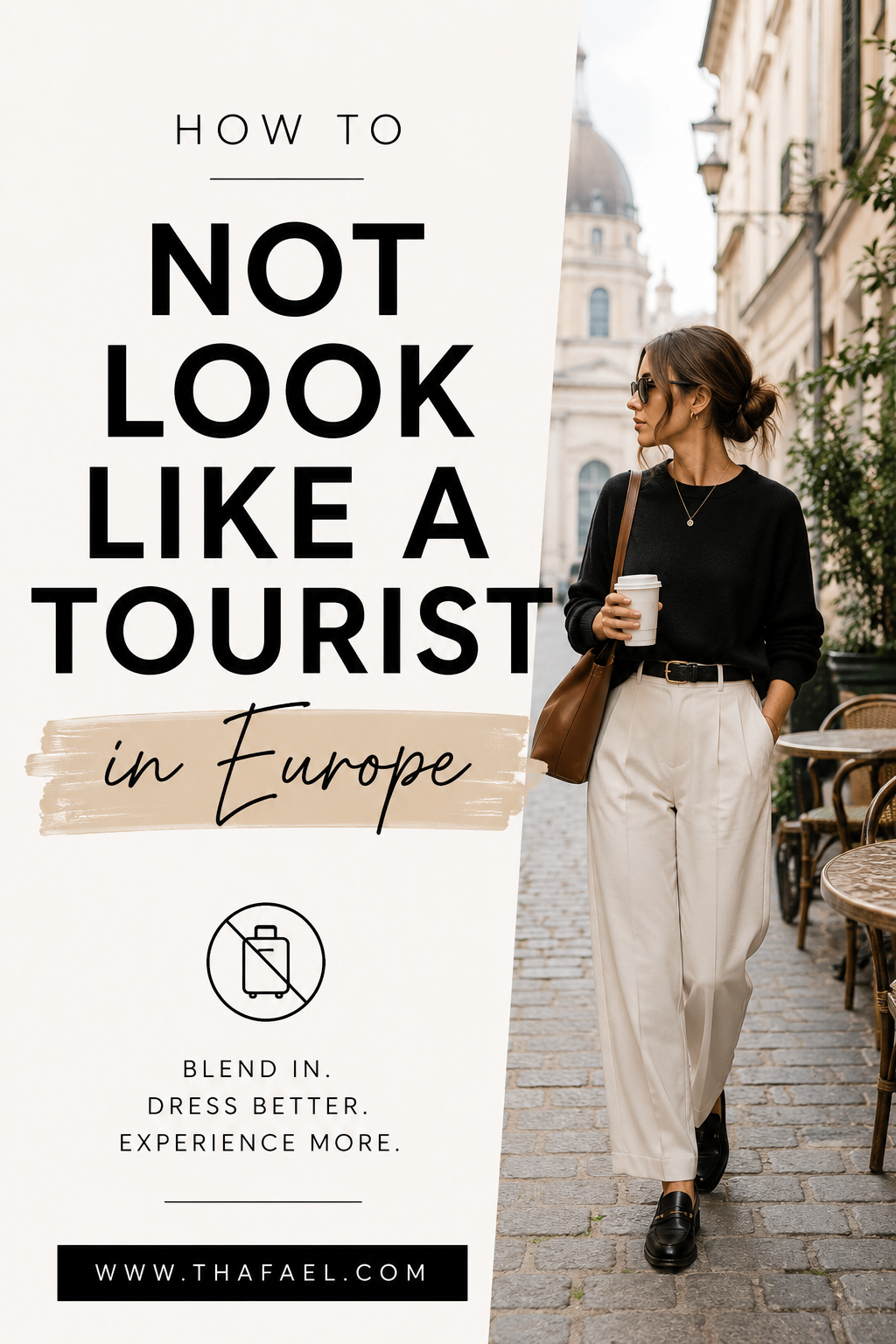
Knowing how to not look like a tourist in Europe comes down to a few habits: walk with purpose, dress simply in pieces that suit the city, keep your phone in your bag, and carry a bag that looks like it belongs. None of this requires a wardrobe overhaul. It requires knowing which habits make you stand out, and adjusting the ones that don’t suit the setting.
Looking like a tourist is nothing to be embarrassed about, and no outfit can keep you safe. But in crowded places, some visitor habits can make a day harder: stopping in the middle of a busy pavement to check your phone, wearing a bag open or behind you, or looking unsure at a ticket machine. Blending in is mostly about moving comfortably, feeling at ease and staying aware of your surroundings.
Thafael designs anti-theft crossbody bags for women who travel. This guide collects practical habits for blending in more naturally while you travel Europe’s cities.
This guide is part of the Thafael solo female travel safety series. For the complete framework, start here: How to Travel Solo as a Woman in 2026: Safety, Confidence and Smart Travel Tips. Choosing a first destination? Compare the safest cities for solo female travelers.

Key Takeaways
Short answer: To not look like a tourist in Europe, dress simply in a way that suits the city and the occasion, carry a practical bag, keep your phone away while you walk, and move with purpose. Appearance does not guarantee safety, so stay aware either way.
- The biggest giveaways are clothing that doesn’t suit the setting, bag choice, phone habits and body language. None of them is wrong. They just make you look like a visitor.
- European style differs by city, season and occasion, so there is no single rule. Check what locals wear where you’re going.
- Simple, well-fitted pieces in neutral tones, comfortable shoes you have already broken in and a crossbody bag worn in front are practical choices for city days.
- Blending in can help you feel more comfortable and draw less attention. It cannot prevent theft, so keep your bag closed and in front of you in crowded places.
- Confidence and awareness help you feel at ease.
Table of Contents
- Does looking like a tourist really matter?
- What not to wear in Europe: context matters
- What should women wear in Europe to blend in?
- Can you wear sneakers, sandals or running shoes in Europe?
- Choose a practical bag that suits your day
- Keep accessories and valuables discreet
- How do you act like a local in Europe?
- How do you use your phone without looking like a tourist?
- Adapt to the city, season and occasion
- Common tourist habits and easy alternatives
- Situation → more comfortable or considerate alternative
- Questions about blending in while traveling
Does Looking Like a Tourist Really Matter?
Looking like a tourist is not embarrassing. You are a visitor, and most visitors to European cities have trips without problems.
Where it can matter is comfort. In busy places, habits such as standing still to read a map, carrying a bag open behind you or holding your phone loosely can leave you distracted or in people’s way. Opportunistic thieves and scammers tend to look for distraction and easy access, so staying aware of your surroundings and keeping your belongings secured matters far more than any clothing label.
This is not about paranoia, and appearance alone does not decide whether something happens. Blending in is simply one way to move through a city more comfortably, with fewer awkward moments and a little more confidence.
👉 Related: How to Avoid Pickpockets in Europe
What Not to Wear in Europe: Context Matters
If you’re wondering what not to wear in Europe, how not to look like a tourist in Europe, or how to not dress like a tourist in Europe, the answer depends on the city, the season and the setting. These are clothing choices that can stand out in some everyday city settings. Many locals wear them too, and none of them is wrong. Several at once may simply mark you as a visitor.
Athletic shorts and cargo shorts. Europeans wear shorts in summer, particularly in southern Europe, but tailored shorts with clean lines are more common in city settings. Athletic shorts, board shorts and cargo pants with multiple pockets tend to stand out more in everyday city environments.
Sports team apparel. A jersey, sweatshirt or cap from your home team is most common around stadiums on match days and less common in everyday city settings.
Matching athletic sets and leggings as outerwear. Athleisure as everyday clothing is less common in some European cities than elsewhere, so a full matching workout set can stand out at a museum or restaurant.
Overly distressed jeans. Heavily ripped, embellished or worn-out denim can read differently than it does at home. Clean, simple denim in straight or slim cuts is easy to wear in most places.
Oversized branded t-shirts. Large logos from universities, brands or events can mark you as a visitor.
Ponchos and matching rain gear. Practical, but very visible. In rainy cities, many people carry a compact umbrella or wear a structured waterproof jacket instead.
Wrinkled or visibly travel-worn clothing. Visibly creased clothing can stand out. Wrinkle-resistant fabrics help.
The common thread: pieces chosen only for convenience, without thinking about the setting.
Athletic Wear, Logos and Beachwear: When They Fit the Setting
Athletic wear is perfectly normal at the gym, on a hike, cycling or on a walking tour. It simply stands out less when it matches the activity. If you’ll be walking all day, comfortable clothes are fine. Cleaner, simpler versions of them can work better in a city than a full workout set.
Large logos and sports jerseys are common around stadiums on match days. In a restaurant or a church, a plainer top is usually more comfortable.
Beachwear belongs at the beach or the pool. Some coastal towns have local rules about covering up away from the shore, so check local guidance and carry a light cover-up.
What Should Women Wear in Europe to Blend In?
There is no single European look, and what blends in depends on the city, season and occasion. If you’re wondering what to wear in Europe to not look like a tourist, these summer pieces are a reliable starting point. Notes for other seasons follow below.
Midi dresses and linen dresses. Effortlessly elegant, comfortable in the heat, and suitable for most settings, from a morning museum visit to an evening dinner. A simple linen dress in a neutral or muted tone is one of the most versatile things you can pack.

Straight-leg or wide-leg trousers in linen or light cotton. Clean, simple, and comfortable, with a relaxed silhouette that works in most European cities.
Simple fitted tops in neutral tones. White, cream, sand, olive, navy. No large logos, no novelty prints, no slogans. A well-fitted cotton or linen top in a solid color is the foundation of a European summer wardrobe. Good tailoring matters more than price, and a tailor can adjust a favorite piece.
Clean, unfaded denim. Straight or slim cut, no heavy distressing, no embellishments. Dark or mid-wash tones over heavily worn ones.
A light blazer or structured cardigan for evenings. An easy way to dress up a simple dress or top, and one of the most useful pieces to pack.

The palette that works everywhere: white, cream, sand, terracotta, olive, navy, soft grey. These neutrals mix, match, and photograph beautifully across different cities without requiring multiple outfit changes.
In spring and fall, add a light jacket, a scarf and closed-toe shoes. In winter, a warm coat, boots and layers matter more than any trend. For ideas, see our best European spring outfits and European winter outfits for Christmas markets.
For specific outfit ideas by country: The Best European Summer Outfits for 2026: What to Wear for Stylish City Travel.
Also: What to Pack for France in Summer, What to Pack for Italy in Summer, What to Pack for Spain in Summer.
Simple Outfits for Sightseeing, Dinner and Religious Sites
Sightseeing: broken-in walking shoes, linen trousers or a midi dress, a light layer and a crossbody bag worn in front.
Dinner: swap sneakers for flats or loafers, and add a blazer, scarf or simple jewelry. A neutral palette makes it easy to dress the same pieces up.
Religious sites: many churches and religious sites ask visitors to cover their shoulders and knees, and rules vary by site, so carry a light scarf or cardigan and check the site’s guidelines before you go.
Can You Wear Sneakers, Sandals or Running Shoes in Europe?
Yes. Sneakers, sandals and even running shoes are worn in European cities every day, and white sneakers are common throughout Europe. What matters most is that your shoes are comfortable and already broken in, especially on cobblestones. If you want a more polished look, a clean, slim-profile style tends to look sharper than a bulky one.
Shoes that may stand out in some places:
Chunky, thick-soled athletic sneakers worn with every outfit. Slimmer, low-profile sneakers are popular in many European cities.
Flip flops in city centers. Appropriate at the beach or pool. On the streets of Rome, Paris or Barcelona they can also be impractical on cobblestones.
Hiking sandals with multiple straps and technical features. Practical, but they can look technical in a city.
What blends in:
Clean, slim-profile sneakers in white, cream or neutral tones. Vans, Adidas, Puma Speedcat, simple Nike silhouettes. These work across European cities.
My personal go-to are my sneakers from ALDO. I have bunion issues which means most sneakers hurt after a few hours no matter how comfortable they look in the store. These did not. I walked miles every day through Madrid, on cobblestones and metro stairs, and never once felt pain. They look sleek enough to blend into any European city environment and comfortable enough to survive a full day of sightseeing. If you have a pair of walking shoes that already work for your feet, bring those. If you are still looking, find something in a slim profile that you have already broken in before your trip.

These are the Aldo sneakers I wore
Leather loafers or simple leather flats. Suitable across southern and northern Europe for both day and evening.
Simple block-heeled sandals or mules for evenings. More polished than flat sandals and appropriate for dinner or an evening out.
The non-negotiable: whatever you choose, break them in before you travel. European city travel involves a lot of walking, frequently on cobblestone, and new shoes can wreck your feet and your trip. Pack bandaids regardless. Even the best shoes can surprise you after a long day of walking.
Choose a Practical Bag That Suits Your Day
Bag choice is one of the most noticeable details, and it affects comfort as much as style. What tends to stand out is a bag that doesn’t suit the setting: a large backpack worn on your back, an open tote hanging from one shoulder, a fanny pack at the waist, or a brightly colored bag with obvious straps. Travel features are genuinely useful, including secure closures, easy organization and comfortable straps. They just look best when they come in an elegant, everyday design.
What blends in: a sleek, structured crossbody worn across the chest. Crossbody bags are common in many European cities. The key is a bag that looks like it belongs to the outfit rather than to a packing list. If you also want to compare bag styles, see our crossbody versus backpack comparison.

The bag I always travel with across Europe is the Thafael anti-theft crossbody bag. I’m the founder of Thafael, so I’m biased, but this is the bag I designed for exactly this kind of trip. It looks like a sleek everyday crossbody, and it has lockable zippers, slash-resistant lining, an adjustable strap with slash-resistant webbing and RFID-protected card pockets, designed to help reduce the risk of opportunistic theft. I wear it in front across my chest.

Me in Madrid, Spain
This matters for blending in because travel functionality doesn’t have to look like travel gear. In Paris, Rome, Barcelona, Madrid or London, a structured crossbody in a neutral color goes with most outfits, and its security features stay discreet.
👉 See how the Thafael anti-theft crossbody bags for women are built for exactly this kind of travel.
👉 Also: How to Find the Best Crossbody Bag for Europe 2026. And if you’re wondering what bag to bring overall, here’s our guide to the best anti-theft bag for Europe.
Keep Accessories and Valuables Discreet
A few accessories tend to mark you as a visitor, and a few are worth carrying with a little more discretion.
A fanny pack worn around the waist. Fanny packs are practical and perfectly fine. Worn at the waist or behind you, though, they’re harder to keep in view. Wearing one crossbody across your chest keeps it in front of you.
A lanyard with your passport or hotel key. Keep your passport in your crossbody bag and your hotel key in a dedicated pocket, rather than on display.
A camera worn around your neck all day. Take photos, then put the camera away in busy tourist areas.
Large designer logos. Highly visible luxury branding can draw more attention in tourist-heavy areas. Simple, understated pieces tend to blend in regardless of price point.
Matching travel accessory sets. Coordinated luggage tags, passport holders and travel pillows, all clustered together, signal airport mode in a city.
A souvenir hat with the city name on it. A simple wide-brim hat without logos is practical in summer.
How Do You Act Like a Local in Europe?
Clothing and bag aside, behavior is often what stands out most. These habits help, and local etiquette and manners vary, so check what’s normal for your destination.
Walk with purpose. Keep moving, and avoid stopping in the middle of busy pavements. Check your route before you exit the metro, not on the pavement surrounded by foot traffic.
Keep your voice down. Noise levels differ from place to place. On trains, in restaurants and in churches, quieter conversation is common in many places.
Respect queues. In many places people line up at bus stops, ticket counters and shops. Watch what locals do before joining, and don’t cut in.
Be considerate on public transport. Let people exit before you board, keep bags off seats, and stand to the side of doors and escalators. Check whether you need to validate your ticket before boarding. In London, stand on the right of an escalator so others can pass on the left.
Mind personal space. Norms vary, so stay aware on narrow pavements and don’t block doorways when taking photos.
Order and pay with confidence. Review the menu before you sit down if you can, and have your card or cash ready.
Look beyond the main tourist street. Restaurants with photo menus and hosts beckoning from the doorway can be tourist-focused. Walking a street or two back often means more choice and lower prices.
Learn a Few Greetings and Observe Local Customs
You don’t need fluency. Bonjour, buongiorno, gracias, por favor and grazie go a long way. In many places it’s polite to greet staff when you enter a shop or café, and making the effort before switching to English often changes the interaction. Customs vary by country and even by city, so watch what locals do and follow their lead.
How Do You Use Your Phone Without Looking Like a Tourist?
Using your phone is completely normal, and a map is one of the most useful things you can have. The goal is to use it in a way that keeps you comfortable and aware.
What many visitors do: Walk with the phone in hand consulting maps. Stop in the middle of busy pavements to look at directions. Hold the phone up to photograph everything. Leave the phone visible on café tables. Stand at metro exits looking at the screen.
What many locals do: Check the route before walking, then put the phone away. Take a photo, then put the phone in their bag. Keep the phone off café tables, or face-down if it must be there.
Step out of pedestrian traffic. If you need to check directions, step to the side of the pavement, into a doorway or against a wall, check the route, then put the phone away and keep walking.
Check the route first. Download your maps offline before you go out, and look at your next stop before you leave the metro rather than once you’re on the street.
Keep a grip on it. Phones are a common target for opportunistic theft in busy areas, so keep yours put away near a curb, a crowded exit or a busy road, and off café tables.
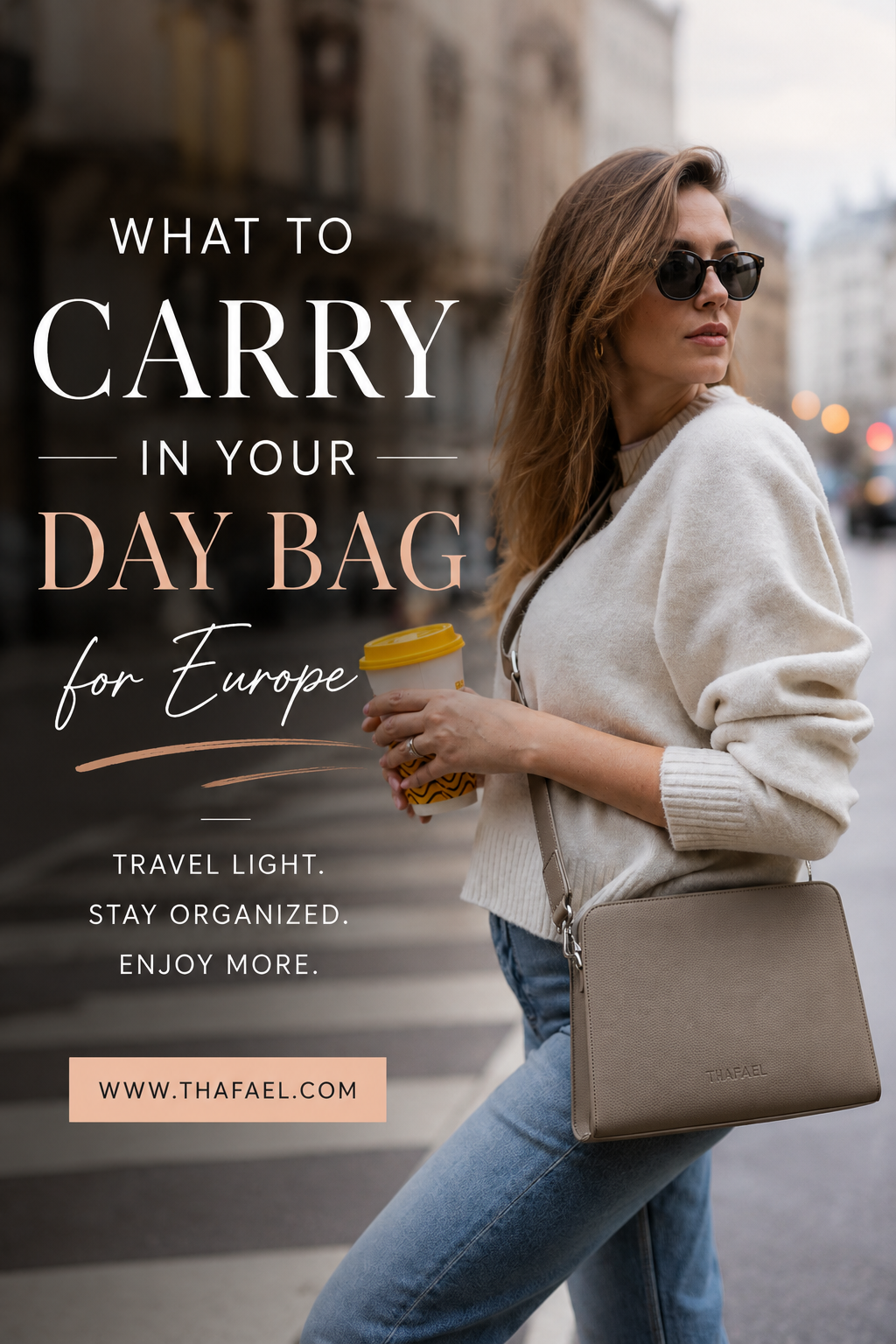
Ask for help if you need it. Using a map or asking staff at a shop or hotel for directions is completely fine. Most people who stop you to ask a question are simply asking, but distraction is a technique some thieves use, so if someone approaches unexpectedly while you’re carrying your phone or bag, it’s fine to stay aware and keep walking. For more day-bag ideas, see what to carry in your day bag for Europe.
Adapt to the City, Season and Occasion
Yes, to a degree. Europe is not one culture and there is no single European look. What blends in perfectly in one city can stand out in another, and the season and the occasion matter too. These are general impressions, not rules. For a city example, see our Paris safety guide.
Paris. Many visitors find that simple, well-fitted pieces in neutral tones work well, and that very casual or very showy outfits stand out.
Rome and Italy. Locals often dress a little more polished for daytime, even in casual settings. A linen dress or tailored trousers fit well, and athletic casual can stand out.
Barcelona and Spain. A more relaxed style than Paris or Rome, though often still fairly put-together in city centers.
London. More varied. Large backpacks, stopping on the wrong side of an escalator and very loud conversation on the Tube are the usual visitor tells.
Amsterdam and northern Europe. Practical and unfussy. Cycling culture makes flat shoes and practical bags completely normal.
Season and occasion matter too: a coastal town in July, a city in January and an evening at the opera call for different clothes. The consistent thread: simple, comfortable and suited to the setting.
Common Tourist Habits and Easy Alternatives
Some habits are completely normal at home and simply read differently in a European city. These are the ones not covered above:
- Counting cash openly at market stalls or ticket windows. Take out what you need before you reach the counter, complete the transaction, and put everything away before you move.
- Leaving your bag on the back of a café chair or on the floor beside you. It is easy to forget or lift there. Keep it on your lap, across your body, or, when appropriate, securely attached to the chair. Use a bag you can secure to your chair, like this one.
- Moving in a large group through narrow streets. Smaller groups and single file make it easier for everyone, including locals trying to get through.
- Stopping for photos in doorways or at the top of stairs. Step aside so you’re not blocking the way.
None of these habits are character flaws. Knowing what they are is usually enough to change them.
Situation → More Comfortable or Considerate Alternative
A quick summary of the main fixes from this guide:
| Situation | Easy alternative |
|---|---|
| Checking your phone in the middle of the pavement | Step to the side, check your route, keep moving |
| Wearing a backpack on your back in a crowd | Wear it in front, or switch to a crossbody |
| Wearing a full workout set to a museum or restaurant | Choose simple separates or add a layer |
| Wearing a camera around your neck all day | Take your photo, then put it in your bag |
| Wearing flip-flops on cobblestones | Choose sneakers, loafers or secure sandals |
Questions About Blending In While Traveling
How do I not look like a tourist in Europe as a woman?
Dress simply in well-fitted clothing in neutral tones, carry a crossbody bag worn in front rather than a backpack on your back, wear comfortable shoes you have already broken in, and keep your phone away while you walk. Walk with purpose, even when you’re not sure where you’re going. These habits remove many of the signals that mark someone as an obvious visitor.
What should you not wear in Europe as a tourist?
There is no single rule, but athletic shorts, sports team apparel, matching athletic sets, oversized branded t-shirts, chunky athletic trainers, ponchos and fanny packs worn at the waist can stand out in everyday city settings. None of them is wrong to wear. They can simply make you look like a visitor, and what stands out depends on the city and the setting.
What bag should I carry in Europe to not look like a tourist?
A sleek crossbody bag worn across your chest in front of your body. Crossbody bags are common in many European cities, and a large backpack worn on your back is harder to keep in view in crowded places. The Thafael anti-theft crossbody purse looks like a stylish everyday bag and has lockable zippers and slash-resistant lining, designed to help reduce the risk of opportunistic theft in busy tourist areas.
Does dressing like a local actually prevent pickpocketing?
No. Dressing simply may help you feel more comfortable and draw less attention, but opportunistic theft can happen to anyone. Habits matter more: keep your bag closed and in front of you in crowded places, keep your phone off tables, and stay aware of your surroundings. Features like lockable zippers and slash-resistant lining are designed to help reduce the risk, but no bag eliminates it.
What shoes should women wear in Europe in summer?
Comfortable, broken-in shoes come first. Slim-profile clean sneakers in neutral or white tones, simple leather loafers or flats for the day, and low block-heeled sandals or mules for evenings all work well. City days often involve more walking on cobblestone than people expect, and new shoes will cost you.
Is it rude to try to blend in as a tourist in Europe?
No. There is nothing disrespectful about being aware of local customs, dressing with intention, and moving through a city with consideration for the people who live there. The goal is not to pretend you are local. It is to be a respectful, aware, and confident visitor rather than an obvious and distracted one.
Can I wear sneakers in Europe without looking like a tourist?
Yes. Sneakers, including white sneakers, are worn in European cities every day. Clean, slim-profile styles in white, cream or neutral tones often look polished, but comfort matters most on long walking days. Choose a pair that is comfortable and already broken in.
Are shorts or leggings acceptable in European cities?
Often, yes, especially in warm weather and casual settings. Tailored shorts, or leggings with a longer top or a light layer, can look polished. Some churches and religious sites ask visitors to cover their knees and shoulders, and some restaurants are dressier, so check local norms and carry a light layer.
Do I need to buy a new wardrobe for my trip?
No. Start with neutral, well-fitting pieces you already own and adjust a few items: shoes you have broken in, a crossbody bag and a light layer. Our Europe packing list for women shows how to build a small, mix-and-match wardrobe.
Is a belt bag always a tourist giveaway?
No. Many people wear belt bags. If you wear one, wear it across your chest or in front of you rather than at the back of your waist, where it’s harder to keep in view.
How can I check directions without blocking the pavement?
Download offline maps and check your route before you leave. When you need to look again, step to the side, into a doorway or against a wall, check the route, put the phone away and keep walking. You can also ask staff at a shop or hotel.
Knowing how to not look like a tourist in Europe is not about pretending to be someone you are not. It is about choosing simple clothing in neutral tones, a practical crossbody bag worn in front, comfortable shoes you have already broken in, and a phone you keep away while you walk. Together those habits can help you move through a European city with more ease and fewer awkward moments.
Travel smart and enjoy every city.
Arielle
This post is part of the Thafael solo female travel safety series. For city-specific safety guides, see: Is Paris Safe for Solo Female Travelers? and How to Avoid Pickpockets in Barcelona.
About the Author
Arielle is the founder of Thafael, a travel accessories brand built around one idea: that women should not have to choose between feeling safe and feeling stylish when they travel. She created La Trotteuse, Thafael's anti-theft crossbody bag, after spending time in Europe and realizing that most secure travel bags looked exactly like what they were: functional, obvious, and nothing she actually wanted to carry. Thafael is named after her two children, Thaliya and Rafael, which is as good a reason as any to build something that lasts. She writes about European travel, packing smart, and moving through the world with a little more ease and a lot more confidence.


1 comment
Bravo Arielle, I really hope that your advice will be followed by the visitors in Europe.
Maybe you could let them know that often if they are stopped in the street by anyone asking for their way or anything else is also often a very clever way to be distracted, so pickpockets (man, woman, or even children) can cleverly rob you. Talk to you soon…
Catherine Fare Dyer
Leave a comment
This site is protected by hCaptcha and the hCaptcha Privacy Policy and Terms of Service apply.