

What to Wear in Spain in December: Winter Outfits for January & February
Winter travel guide · Spain
If you're wondering what to wear in Spain in December, the answer depends quite a bit on where you're going. During the winter months, Spain often has mild temperatures compared with most European countries, though winter in Madrid can feel very different from winter in Barcelona, Seville or northern Spain, so the key is to pack layers rather than plan for one type of weather across the entire country.
I'm actually traveling to Spain this winter myself. Barcelona and Madrid are the final stops on my family's European Christmas trip, after several colder days in Paris, Strasbourg and Colmar. That has made packing especially interesting: I need clothes warm enough for Christmas markets in France, but I don't want to arrive in Spain with a suitcase full of heavy winter pieces I don't need.
As I shared in my European winter outfits guide, I'm building most of my winter wardrobe around versatile layers and a simple neutral palette that can be mixed and matched throughout the trip.
For Spain, that's exactly the approach I'd recommend. Think sweaters, trousers or jeans, comfortable walking shoes, a versatile coat and lighter layers that you can add or remove throughout the day. You want to be warm enough for chilly mornings and evenings without dressing as though you're heading to the coldest parts of Europe.
In this guide, I'll cover what to wear in Spain in winter, including December, January and February, plus what works best in Madrid, Barcelona, southern Spain and the cooler, wetter north.

Key Takeaways
-
Layers are the most important part of a Spain winter wardrobe. Temperatures can change considerably between morning, afternoon and evening.
-
Where you're going matters. Madrid is colder than many visitors expect, while Barcelona and southern Spain generally have milder winters.
-
You probably don't need your heaviest winter wardrobe everywhere in Spain. A versatile coat with sweaters and layers will be more useful for many itineraries.
-
Comfortable shoes are essential. If you're sightseeing, expect to spend a lot of time walking.
-
Pack pieces that work together. A neutral capsule wardrobe makes it much easier to create different outfits without overpacking.
-
Don't forget about your day bag. A comfortable, secure crossbody is particularly useful for sightseeing, public transportation and crowded tourist areas.
-
Check the forecast for your actual destinations before you leave. Spain's winter climate varies too much to pack based on the country alone.
What Is the Weather Like in Spain in Winter?
One of the biggest mistakes you can make when planning Spain winter outfits is assuming the entire country has the same climate.
It doesn't.
Spain has considerable regional variation, and weather conditions can shift a lot by region, so what feels appropriate on a winter afternoon in Seville may not be enough for an evening in Madrid. Northern Spain can also be cooler and wetter, while destinations along the Mediterranean coast tend to have milder winters.
That's why I wouldn't build a Spain winter wardrobe around one extremely heavy coat and thick clothing underneath it. Instead, think in layers: a comfortable base, a sweater or knit, and outerwear appropriate for the city you're visiting. You can then adjust as temperatures change.
If Spain is only one stop on a longer European winter trip, this becomes even more important. You don't necessarily need an entirely separate wardrobe for Spain. The goal is to make your existing winter pieces adaptable. Also, average temperatures and daytime temperatures can vary widely between regions, even compared with other European countries.
Madrid in Winter
Madrid is inland and at a relatively high elevation, so winter can be colder than many travelers expect. Mornings and evenings can feel particularly chilly, even when a sunny afternoon feels much more comfortable.
For Madrid, I'd plan on wearing a proper coat over a sweater or long-sleeve layer, with jeans or trousers and closed-toe shoes. A scarf is easy to carry and can make a noticeable difference once the temperature drops in the evening.
Madrid is also one of the cities I'm visiting on my upcoming trip, so I'm planning outfits that can handle a full sightseeing day without requiring me to go back to the hotel and completely change before dinner.
Barcelona in Winter
Barcelona's Mediterranean location generally gives it a milder winter than Madrid, but mild doesn't mean warm.
You'll still want a jacket or coat, especially in the morning and evening. The difference is that layering becomes particularly useful here because you may find yourself wanting to remove a layer during a sunny afternoon and put it right back on later.
Barcelona is also a destination where I pay attention to what I'm carrying while sightseeing. Busy tourist areas and public transportation are exactly the situations where I prefer a hands-free bag that keeps my belongings close to my body.
If Barcelona is on your itinerary, I also recommend reading my guide on how to avoid pickpockets in Barcelona before your trip. It covers the specific areas and situations where travelers should be more aware, including the Metro, Las Ramblas and other busy tourist areas.
Seville & Southern Spain in Winter
Southern Spain tends to have some of the country's mildest winter weather, so this is where you need to be especially careful about overpacking heavy clothing.
A lighter coat or jacket combined with knitwear and long trousers can be much more practical than dressing for deep-winter conditions all day. Even so, don't plan your wardrobe based only on afternoon temperatures. Once the sun goes down, you'll appreciate having another layer available.
If your itinerary includes several regions of Spain, pieces that can be layered are much more valuable than packing separate outfits for every climate.
Northern Spain & Galicia in Winter
Northern Spain is where I'd pay much more attention to rain protection.
If you're heading to destinations such as Galicia or other parts of the north, consider a water-resistant outer layer, an umbrella and shoes that can handle wet streets comfortably.
This is also a good example of why checking the forecast shortly before your trip matters more than following a generic "Spain in winter" packing list.
What to Wear in Spain in Winter
So, what should actually go into your suitcase?
My approach is to choose a relatively small number of pieces that can create several outfits. That's also the strategy I'm using for my own trip: rather than packing a completely different look for every day, I'm choosing pieces that work together and can take me from sightseeing to lunch, shopping and dinner.
1. A Wool Coat or Lightweight Puffer
For most winter trips to Spain, you need outerwear—but which coat you choose should depend on your itinerary.
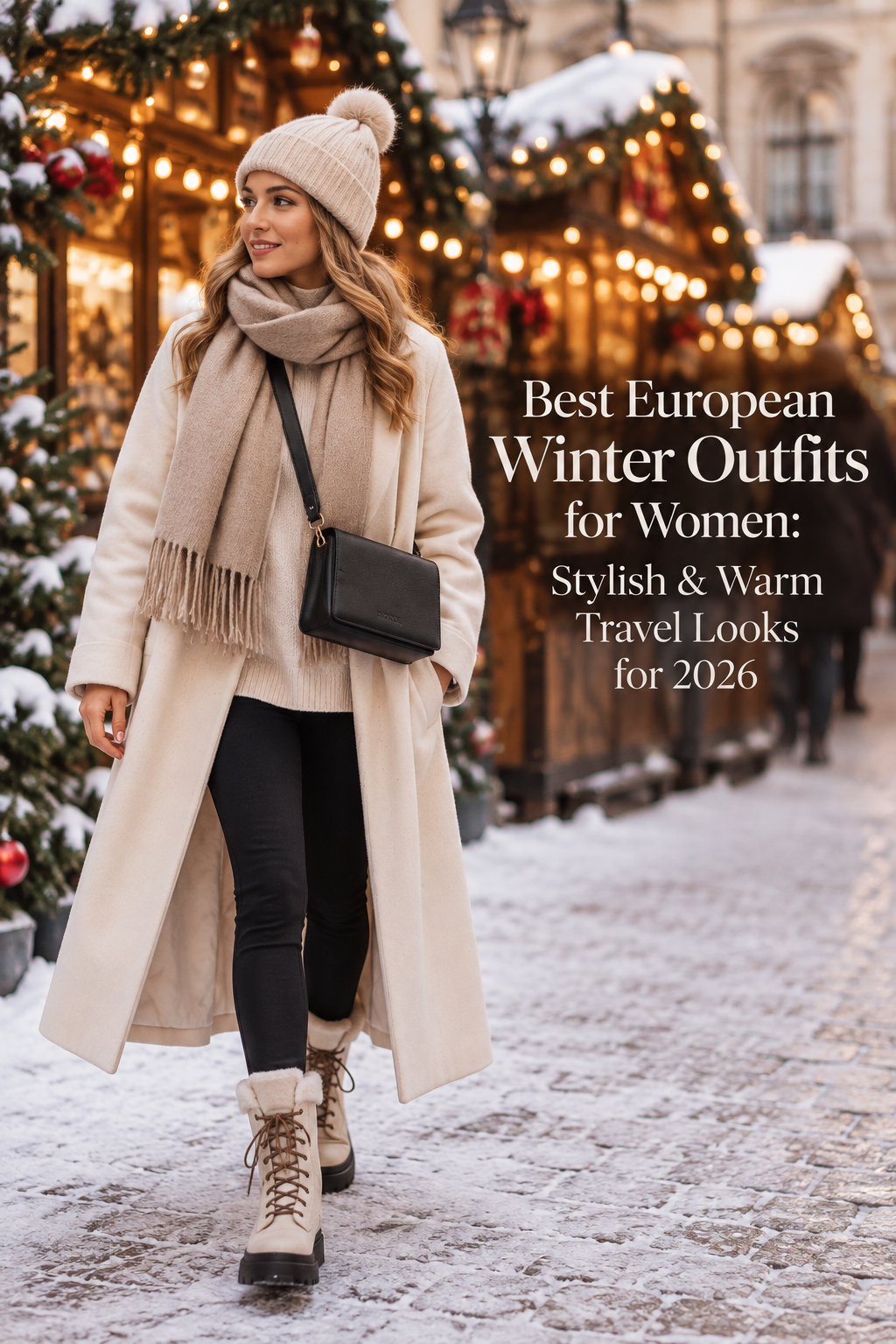
A wool coat is one of my favorite options because it looks polished enough for restaurants and evenings while still working with jeans and casual daytime outfits. A lightweight puffer can be more practical if warmth, rain or long outdoor sightseeing days are your priority, while a light trench coat is perfect for occasional rain in Spain.
If you're traveling across Europe rather than Spain alone, don't automatically pack another coat just for Spain. I'm visiting colder destinations in France before heading to Barcelona and Madrid, so I'm thinking carefully about how one warm, versatile jacket can work across both climates rather than filling my suitcase with multiple bulky coats.
2. Sweaters & Easy Layers
Pack 2–3 warm sweaters for layering in winter, as they’re probably among the hardest-working pieces in a Spain winter wardrobe.
I like simple knits and turtlenecks because they can be worn alone, under a coat or over long sleeve shirts as a thinner base when it's colder. Neutral shades also make them easy to repeat without feeling like you're wearing exactly the same outfit every day.
For my broader European winter wardrobe, I've been planning around shades such as black, beige and ivory because they're easy to mix with denim and trousers and transition well from daytime to evening.
And don't underestimate a thin base layer. It takes almost no suitcase space, and merino is especially useful for its temperature-regulating properties. A good base layer helps you stay warm without adding bulk.
3. Jeans & Trousers
I would bring a combination of jeans and trousers rather than relying exclusively on one or the other.
Jeans are easy for sightseeing and casual days, while a comfortable pair of trousers can immediately make the same sweater and coat feel more polished for lunch or dinner.
This is where a coordinated color palette helps enormously. If nearly every top works with nearly every bottom, you can create many more Spain winter outfits from fewer clothes.
4. Comfortable Walking Shoes
This is one area where I wouldn't sacrifice comfort for style.
You may be walking for hours between attractions, restaurants, neighborhoods and shops, and many Spanish cities have historic cobblestone streets, so supportive walking shoes matter. A shoe that looks beautiful for twenty minutes but hurts after two hours is going to become a problem very quickly.
A clean, stylish sneaker can work extremely well for daytime sightseeing in Spain, and a nice pair will usually go with most outfits. In cooler weather, flat boots can also be a practical option. Whatever you choose, wear the shoes before your trip. Winter vacation is not the time to discover that your new shoes rub your heel after three miles. Pack at least one pair of reliable sightseeing shoes you can wear all day, so you spend your time exploring instead of recovering back in the hotel room.
5. Boots for Colder or Rainier Days
A comfortable ankle boot—especially leather boots, which are popular with Spanish women in winter—can be a useful second shoe, particularly for Madrid, colder evenings or rainy days.
I prefer something simple enough to wear with both jeans and trousers so it earns its space in the suitcase, and leather shoes or boots can also look more polished for dinner or evenings out. Unless your itinerary or weather forecast requires it, you probably don't need several pairs of boots.
6. Scarves & Winter Accessories
Accessories are one of the easiest ways to adapt an outfit without packing another complete look.
A scarf adds warmth but can also change the appearance of a coat you've already worn several times. Depending on your destination and forecast, gloves may also be useful—particularly in colder inland areas and during evenings.
For southern Spain, you may barely need them. Again, Spain isn't one winter climate.
7. A Secure, Stylish Crossbody Bag

Security is another consideration, particularly in busy tourist destinations. Pickpocketing can be a concern in crowded areas of Spain, and Barcelona is exactly the type of city where I want to be more conscious of how I'm carrying my phone, passport, wallet and other valuables while sightseeing or using public transportation.
Winter can make this even more important. When you're wearing a coat, sweater, scarf and several layers, there's more fabric between you and what's happening around your body. In a crowded Metro car or busy tourist area, you may be less likely to notice a light touch near your bag or someone trying to access an unsecured zipper.
That's why I prefer a crossbody bag that stays close to my body and has actual security features rather than relying on a standard zipper.
When choosing a bag for Spain, I would look for lockable zippers, slash-resistant straps and lining, RFID-blocking pockets, good interior organization and a way to secure the bag when you're sitting at a café or restaurant. I also want something compact and comfortable enough to carry all day, because a security bag isn't very useful if it's so bulky that you eventually take it off.


I'll be carrying La Trotteuse during my trip. It has lockable zippers, slash-resistant protection, RFID pockets and multiple interior compartments, but the exterior is intentionally minimalist. It ticks all the boxes for security, organization and style, and I can wear it sightseeing during the day and still feel comfortable taking the same bag to a restaurant later.

I also like having the option to secure my bag to a chair when I'm sitting at a café or restaurant. Instead of constantly checking where my bag is, I can relax and enjoy the experience. That's really what I want from an anti-theft bag: not to spend my trip thinking about my bag.

If you're still deciding what type of bag to bring, my ultimate guide to the best travel purse for Spain goes deeper into the features that are especially useful when exploring Spanish cities.
You can also read my broader guide to choosing the best crossbody bag for Europe travel, including what to look for when it comes to size, organization, comfort and security.

Thafael anti-theft crossbody
The bag that goes with every winter outfit.
La Trotteuse helps protect against pickpockets. Secure enough for crowded metros and streets, pretty enough for dinner in Madrid.
Shop La TrotteuseSpain Winter Outfit Ideas

Knowing what to pack is one thing, but figuring out how to actually put those pieces together is what makes packing easier. I like to think in terms of complete outfits rather than individual items. If the same coat, shoes and trousers can work in several combinations, I know I'm bringing pieces I'll actually wear.
Here are a few easy outfit formulas that work well for winter sightseeing in Spain.
Sightseeing Outfit

For a full day of sightseeing, I'd keep things simple: comfortable jeans or trousers, a fitted long-sleeve top or turtleneck, a sweater if needed, a coat and comfortable sneakers.
Add a scarf on colder days and carry a crossbody bag so your hands stay free while you're walking, taking photos or using public transportation.
For Madrid, you may need an extra thermal layer underneath. In milder Barcelona weather, you might find yourself removing your scarf or opening your coat during the afternoon.
The goal isn't to dress for the coldest possible moment of the day. It's to wear layers you can easily adjust as the temperature changes.
Casual Lunch & Shopping Outfit

For a day that includes shopping, exploring neighborhoods and stopping for lunch, I'd wear trousers or dark jeans with a knit sweater, a wool coat and either clean sneakers or ankle boots.
This is the type of outfit I love for Europe because it's comfortable without looking overly casual. You can spend hours walking and still feel put together when you sit down at a nice café or restaurant.
A scarf, sunglasses or simple jewelry can also make a repeated sweater-and-coat combination feel different without adding much to your suitcase.
Dinner Outfit

I don't like packing an entirely separate wardrobe for dinner. For going out at night, some restaurants or bars can feel dressier than daytime sightseeing, but casual-smart pieces usually cover typical dress codes without needing a separate formal wardrobe.
Instead, I'd switch one or two pieces: trousers instead of casual jeans, ankle boots instead of sneakers, perhaps a nicer knit or fitted top, and simple jewelry.
A wool coat works particularly well here because it can look just as appropriate over a sightseeing outfit as it does over something dressier.
This is also why I prefer traveling with a crossbody bag that doesn't look overly sporty or utilitarian. I want to be able to carry the same bag during the day and take it to dinner without thinking about it.
Rainy-Day Outfit
For rainy winter days, practicality comes first—but that doesn't mean the outfit has to look completely different.
Start with comfortable trousers or jeans, a sweater or long-sleeve layer and water-resistant outerwear. Choose shoes that won't leave you miserable if the streets are wet, and carry a compact umbrella.
If rain is in the forecast, I'd avoid making that the day you wear your most delicate shoes or a coat that doesn't handle moisture well.
What to Wear in Spain in December

If you're specifically wondering what to wear in Spain in December, layers should be the foundation of your wardrobe.
December can also mean fewer tourists than during peak seasons in many destinations.
December can bring chilly mornings and evenings, while daytime conditions vary considerably depending on where you are. Madrid requires a warmer approach than southern Spain, while Barcelona falls somewhere in between.
For Madrid in December, I'd plan around a warm coat, sweaters or turtlenecks, jeans or trousers, closed-toe shoes and a scarf. A thin thermal layer underneath can be useful without adding bulk.
In Barcelona, I'd still bring a coat, but I would make sure the layers underneath can stand on their own if the afternoon feels milder. A sweater, trousers or jeans, comfortable sneakers and a versatile coat make an easy sightseeing uniform.
If you're heading farther south, you may find that lighter outerwear is sufficient during parts of the day, but I'd still bring something warmer for the evening.
December also means Christmas travel. If you're visiting holiday markets, spending evenings outdoors or walking around to see Christmas lights, you'll be outside after sunset more than you might be on a typical sightseeing trip. Dress for those colder evening hours, not just the afternoon forecast.
That's particularly relevant to my own trip because we're arriving in Spain after spending Christmas in France. I'm planning my wardrobe so my colder-weather pieces can still be used in Madrid while my lighter layers become more useful in Barcelona.
If Spain is part of a larger European Christmas itinerary like mine, I've also put together a complete Europe Christmas packing list covering what to bring for a multi-destination winter trip.
What to Wear in Spain in January
January is typically one of the colder parts of winter, so this isn't the month when I'd assume that "Spain is warm" and leave proper outerwear at home.
For Madrid and other inland destinations, plan on a warm coat, sweaters, long trousers or jeans and closed shoes. A scarf and thin thermal base layer give you additional warmth without requiring several bulky sweaters.
Barcelona's winter remains comparatively milder, but you'll still want a coat or jacket and layers, especially early and late in the day.
If you're traveling through several Spanish cities, this is where a capsule wardrobe really pays off. Instead of packing a different wardrobe for each stop, use the same basic pieces and adjust the number of layers.
For example:
Colder day: thermal top + sweater + coat + trousers + boots + scarf.
Milder day: long-sleeve top + lighter sweater or jacket + jeans + sneakers.
The individual pieces don't change very much. You're simply changing how you wear them.
What to Wear in Spain in February
By February, you're moving toward the end of winter, but I still wouldn't pack as though spring has fully arrived.
You can encounter beautiful sunny days, but mornings and evenings can remain chilly, particularly in Madrid and inland areas. Northern Spain can also still be cool and wet.
The same winter capsule works well: trousers or jeans, long-sleeve tops, knitwear, a versatile coat, comfortable walking shoes and a few accessories.
If you're visiting southern Spain in February, lighter layers become even more useful, and it's smart to include lighter items for a warm day in milder destinations. Rather than automatically packing your warmest coat, check the forecast shortly before departure and choose outerwear based on your actual destinations.
That's really the rule I'd follow for December, January and February: don't pack for "Spain." Pack for the cities you're visiting.
What Do Women Wear in Spain in Winter?
You don't need to completely change your personal style to visit Spain.
But if you want to feel polished while traveling, I'd lean toward simple, put-together casual outfits rather than packing only athletic clothing because you'll be sightseeing. In many cities, people wear polished casual outfits more often than head-to-toe sporty looks.
Think straight or wide-leg trousers, jeans, sweaters, fitted turtlenecks, coats, ankle boots and clean sneakers. Spaniards typically dress sharply and avoid casual athletic wear for sightseeing, so simple elevated basics usually blend in better than gym-style clothing. Neutral colors also make it much easier to repeat pieces in different combinations.
That doesn't mean you need to "dress like a Spanish woman." I don't think travelers should feel they have to imitate locals to avoid looking like tourists.
I'd rather look like myself—just a comfortable, polished version of myself.
For me, that means simple silhouettes, neutral colors and pieces that feel elegant without being complicated. While many locals love understated basics, a scarf or knit in vibrant colors can also feel very at home in Spain. It's also much more practical when traveling because nearly everything works together.
What I'm Packing for My Winter Trip to Spain
Since I'm actually traveling to Barcelona and Madrid this December, I'm putting all of this advice into practice myself.
Spain is the last part of a longer European trip for my family. Before Spain, we'll be in Paris, Strasbourg and Colmar, where I'm expecting colder weather. That means my biggest packing challenge isn't simply what do I need for Spain? It's figuring out how to make one wardrobe work across very different winter conditions.
My plan is to rely heavily on layers and neutral colors.
I'm building my wardrobe around easy-to-combine shades like black, beige and ivory, including turtlenecks and other pieces that I can layer over thermals when we're in colder destinations and wear with fewer layers once we reach Spain.
I'm also being selective with outerwear. Rather than filling my suitcase with several heavy coats, I want pieces that cover different temperature ranges and can be worn with most of my outfits. I'll use packing cubes to save space and stay organized on a multi-stop winter trip.
For bottoms, I'm planning mostly jeans that can work for sightseeing but still look polished enough for lunch or dinner. And for shoes, comfort is non-negotiable. We'll be walking a lot, so anything I bring needs to survive a full sightseeing day.
I'll also be taking La Trotteuse as my everyday sightseeing antitheft bag. For me, that's one less decision to make: it works with the neutral wardrobe I'm planning, holds the things I want with me during the day, and gives me the anti-theft features I specifically want while we're exploring Barcelona and Madrid.
Most importantly, I'm trying not to pack for imaginary situations.
If something only works with one outfit, requires another pair of shoes or is something I might wear once, I'm questioning whether it deserves space in my suitcase.
Once I'm back from Spain, I'll update this section with what I actually wore, what I didn't need and anything I wish I had packed differently. Beyond clothing, travel essentials like chargers, any needed adapter for European outlets, and a phone ready for Google Maps matter just as much.
What NOT to Wear in Spain in Winter
There aren't strict rules about what you can and can't wear in Spain. This is really about avoiding the things that can make a winter trip less comfortable or lead to unnecessary overpacking.
Don't bring several bulky coats unless your itinerary genuinely requires them. Outerwear takes up enormous suitcase space. A couple of versatile options with good layering underneath will usually give you more flexibility.
Don't break in new shoes in Spain. Even comfortable-looking shoes can become painful after hours of walking.
-
Don't rely on sandals or flip flops for city sightseeing in winter.
Don't pack outfits that can't be layered. A beautiful sweater that's too bulky to fit underneath your coat isn't nearly as useful as you thought it would be.
Don't pack only for afternoon temperatures. A sunny winter afternoon can feel pleasant, but you'll notice the temperature difference once the sun goes down.
-
If your plans include churches or other religious sites, avoid overly bare or beachy outfits and dress a bit more modestly.
And most importantly, don't assume every destination in Spain has the same winter weather. What works in Seville may not be what you want in Madrid or Galicia.
Spain Winter Packing List
This isn't meant to replace a complete packing guide. It's simply the Spain packing list I'd use as a starting point for a winter trip to Spain.
Clothing: one versatile winter coat or jacket, sweaters, long-sleeve tops or turtlenecks, an optional t shirt as a thin base layer, optional thermal base layers, jeans, trousers and an optional dress or skirt if you'll wear it.
Shoes: comfortable walking sneakers plus ankle boots or another versatile second pair if your itinerary calls for them.
Accessories: scarf, sunglasses, compact umbrella, gloves for colder destinations, simple jewelry and a secure crossbody bag.
From there, adjust according to where you're going, how long you're staying and the forecast immediately before your trip, since winter clothes may vary if you're planning day trips outside your main city.
Conclusion: What to Wear in Spain This Winter
The biggest lesson from planning my own trip is that there's no single answer to what to wear in Spain in winter.
Madrid, Barcelona, southern Spain and the north can give you very different winter experiences. Instead of trying to prepare for every possible situation, build your wardrobe around layers, versatile outerwear, comfortable shoes and pieces you can mix and match.
That's the approach I'm taking for Barcelona and Madrid this December. I want to be warm and comfortable enough to spend the day exploring, but I also want to feel like myself—and I definitely don't want to drag around a suitcase filled with clothes I never wear.
If you're traveling to several European destinations this winter, you can also see my complete guide to European winter outfits and my Europe Christmas packing list. If your trip continues into Central Europe, see what to wear in Austria in winter.
And when I return from Spain, I'll update this guide with the outfits I actually wore, what worked best, what stayed in my suitcase and what I'd do differently next time.
Bon voyage, and have a wonderful time in Spain!
Arielle
Frequently Asked Questions About What to Wear in Spain in Winter
What should I wear in Spain in December?
For most destinations, start with layers: long trousers or jeans, a long-sleeve top or sweater, closed-toe shoes and a coat or jacket. Madrid generally requires warmer layers than Barcelona or southern Spain, so always check the forecast for the cities on your itinerary.
Is Spain cold in December?
Parts of Spain can absolutely feel cold in December, particularly inland and after sunset. Other regions have much milder winters. Spain's climate varies enough that it's more useful to look at the weather for Madrid, Barcelona, Seville or your specific destination than at a countrywide average.
Do I need a winter coat in Spain in December?
For Madrid and colder destinations, I'd bring one. In milder areas, a lighter coat or jacket with layers may be enough depending on the forecast. If you're traveling around Spain, choose outerwear that can adapt to several temperatures.
What shoes should I wear in Spain in winter?
Comfortable closed-toe shoes are the most practical choice for sightseeing. Clean sneakers work well for many days, while comfortable ankle boots can be useful for colder weather, rain and slightly dressier outfits.
Can I wear sneakers in Spain in winter?
Yes. Sneakers can be one of the most useful shoes you bring, particularly if you'll spend your days walking. Choose a comfortable pair you've already worn extensively rather than buying new shoes immediately before the trip.
What should I wear in Barcelona in December?
I'd pack trousers or jeans, sweaters and long-sleeve tops, comfortable walking shoes and a coat or jacket. Because Barcelona's winter is generally milder than Madrid's, layers are particularly useful—you can remove one during a pleasant afternoon and put it back on once temperatures drop.
If Barcelona is part of your itinerary, read my guide on how to avoid pickpockets in Barcelona as well, particularly before using the Metro or visiting crowded tourist areas.
What should I wear in Madrid in December?
Plan for colder conditions than you might expect from Spain. A warm coat, sweater or turtleneck, trousers or jeans and closed-toe shoes make a good base. Add a scarf and a thermal layer underneath on colder days or when you'll be outside in the evening.
Does it rain in Spain during winter?
It can, but the amount and frequency vary considerably by region. Northern Spain tends to be wetter, while conditions elsewhere depend on your destination and travel dates. A compact umbrella is easy to bring, and checking the forecast before departure will tell you whether water-resistant shoes or outerwear should be a priority.
Do I need a puffer jacket in Spain?
Not necessarily. A lightweight puffer is practical, especially if warmth and packability matter to you, but a wool coat can also work well depending on the destination and forecast. Choose the outerwear that makes sense for your itinerary rather than assuming a puffer is required simply because you're traveling in winter.
How do I dress in Spain without looking like a tourist?
You don't need to disguise yourself as a local. If you'd like to look a little more polished, choose simple pieces that work together—jeans or trousers, knitwear, a coat, comfortable but neat shoes and understated accessories. Most importantly, wear clothes that still feel like you.
Winter Outfits for Other European Destinations
Planning a longer European winter trip? These guides cover other destinations and packing:
What to Wear in Paris in Winter — stylish outfits and practical layers for Paris in colder weather.
What to Wear in Austria in Winter — layering for Vienna, Salzburg and Alpine Christmas markets.
What to Wear in Italy in Winter — layering and outfit ideas for Italy in December, January and February.
What to Wear in Portugal in Winter — outfit inspiration for a generally milder European winter.
What to Wear in Strasbourg and Colmar in Winter — cold-weather outfits for the Alsace Christmas markets.
European Winter Outfits for Christmas Markets — more ideas for staying warm and fashionable at festive markets.
What to Pack for Europe for the Holidays — a full Christmas packing list, from clothing to travel essentials.
About the Author
Arielle has traveled through Europe — including Paris, Madrid, Venice, Switzerland, Florence, Rome .... — and launched La Trotteuse after years of searching for a travel bag that kept her safe without making her look like a tourist. She is the founder of Thafael, a women's travel accessories brand. Thafael is named after her two children, Thaliya and Rafael. She writes about European travel, packing smarter, and moving through the world with confidence.


Leave a comment
This site is protected by hCaptcha and the hCaptcha Privacy Policy and Terms of Service apply.