
Article: Best European Winter Outfits for Women: Stylish & Warm Travel Looks for 2026
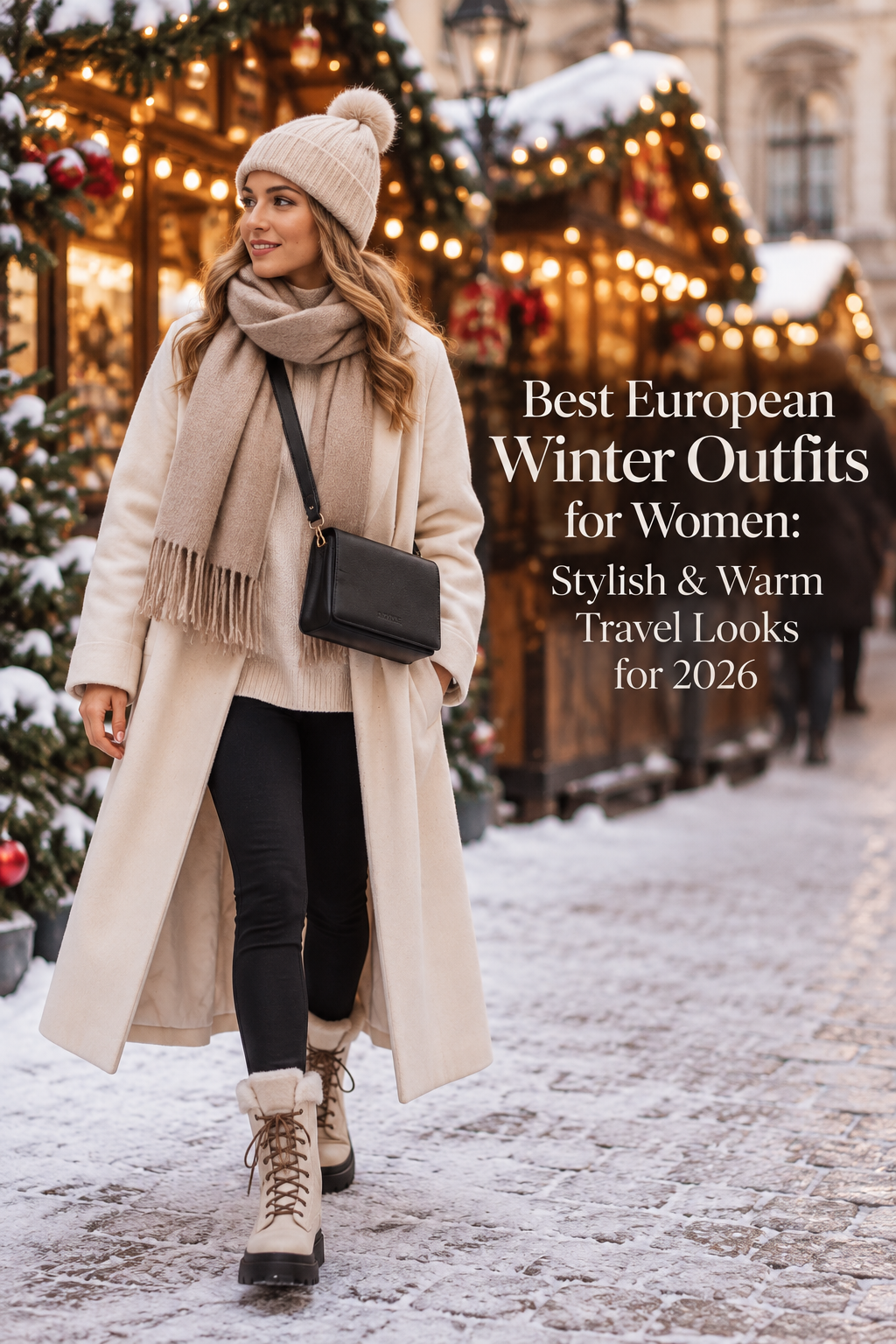
Best European Winter Outfits for Women: Stylish & Warm Travel Looks for 2026
I’m preparing for a winter trip to Europe this December 2026, and I honestly could not be more excited. This will be my first Christmas in Europe, and getting to experience the Christmas markets I’ve seen for years on Instagram feels like a dream come true.
This year, our trip will take us to Paris, Strasbourg, Colmar, Barcelona and Madrid, so we’ll actually be experiencing two very different sides of winter in Europe. We’ll start with the colder Christmas atmosphere of France and Alsace, including the Christmas markets of Strasbourg and Colmar, before heading south to Spain for Barcelona and Madrid. That also means I need a wardrobe that can work across different temperatures without packing an entirely different suitcase for every city.
There is just one problem: I really don’t like being cold.
So while planning my winter outfits, warmth is non-negotiable for me. But I also don't want to spend my first European Christmas bundled up in clothes I don't feel good in. I want outfits that keep me genuinely warm while still looking stylish enough for Christmas markets, cafés, family photos, dinners and exploring beautiful European cities.
That's exactly the kind of travel THAFAEL's anti-theft crossbody bags are built for — including our flagship La Trotteuse, secure enough for Christmas markets and train stations, still stylish enough for every outfit below.
My strategy is very similar to the one I use for my European spring wardrobe: build around a neutral capsule wardrobe where almost every top works with every bottom, then use layers, coats and accessories to adapt each outfit.
Below I'm sharing the European winter outfits I'm planning, the pieces I'm packing, and how I'm approaching the biggest challenge of winter travel: staying warm without sacrificing style.
Traveling in a different season? See our Best European Fall Outfits or Best European Summer Outfits guides.

Quick Answer: What Should You Wear in Europe in Winter?
For Europe in winter, I’m going to keep things simple. Winter clothes are heavier and bulkier, so I want to be especially careful not to overpack. For winter packing, I only need about a week’s worth of mix-and-match clothing, even for a longer trip, to save space. My plan is to mix and match as much as possible, choosing versatile pieces that work together to create multiple outfits.
I’ll build my winter wardrobe around thermal base layers, warm sweaters, jeans or warm trousers, a proper winter coat, waterproof walking shoes or boots, warm socks, gloves, a scarf and a hat. For particularly cold days, I can also wear thermal leggings underneath my jeans or trousers for an extra layer of warmth.
Choose neutral colors such as black, cream, camel, beige, grey and dark denim so your sweaters, trousers, coats and shoes can easily be mixed and matched. A comfortable crossbody bag keeps your hands free while sightseeing and visiting Christmas markets.
The exact amount of insulation you need depends heavily on where you're traveling. December in Barcelona is very different from December in Strasbourg, Vienna or Copenhagen, so always check the forecast for your destinations shortly before departure.
Table of Contents
Key Takeaways
-
Start with warmth, then style the layers. Your outfit won't feel chic if you're freezing.
-
Thermal base layers are one of the most useful winter pieces. They add warmth without forcing every visible layer to be bulky.
-
Use a neutral palette. Black, ivory, beige, camel, grey and denim allow almost everything in your suitcase to work together.
-
One excellent winter coat is more useful than several mediocre ones. It will appear in most of your outdoor photos anyway.
-
Don't underestimate your feet. Waterproof footwear and warm socks matter enormously when you're outside for hours.
-
Pack for your actual itinerary. Christmas-market evenings require different clothing from a mild afternoon in Barcelona.
-
Comfortable doesn't have to mean sloppy. Elevated sweatpants, wide-leg trousers, sweaters and clean sneakers can create stylish travel-day outfits.
-
A crossbody bag is practical in winter. It keeps your hands free and can be worn close to your body while navigating busy Christmas markets and public transportation.
-
Plan one dressier outfit. A dressy boot, black trousers and a beautiful sweater can take you to Christmas dinner without packing an entirely separate wardrobe.
What to Wear in Europe in Winter
My biggest rule for this trip is simple:
Dress for the weather you will actually experience—not for the outfit you wish you could wear.
The European winter outfits I like most have three things in common: warmth, layering and versatility.
Rather than packing ten sweaters and ten completely different outfits, I'm using a simple formula:
Base layer + sweater/top + warm bottom + coat + warm accessories + weather-appropriate shoes + crossbody bag
The base layers do much of the invisible work, and this works especially well for a winter europe trip with changing temperatures between cities. That means the pieces everyone actually sees can still be stylish.
I'm also deliberately using neutral colors. My sweaters are beige, ivory and black. My bottoms are white, blue denim, dark denim, black, beige and grey.
That means I don't have to think very hard when I'm getting dressed.
An ivory turtleneck can work with dark jeans, black pants, white wide-leg jeans or beige trousers. A black turtleneck works with practically everything.
And because I'm traveling with my family, I want getting dressed in the morning to be easy. I don't want to spend 30 minutes figuring out which sweater matches which pants when there's a Christmas market waiting outside.
My European Winter Capsule Wardrobe for 2026
The foundation of my winter wardrobe is based largely on pieces I already know I'll wear repeatedly. For a full packing breakdown beyond outfits, see our Ultimate Europe Packing Guide.
Bottoms
I'm planning to bring a combination of key denim shapes, including straight leg jeans:
-
White wide-leg jeans
-
Straight-leg blue jeans
-
Black high-waisted pants or jeans (or tailored trousers if you want a more polished option)
-
High-rise dark denim jeans
-
Very warm black thermal leggings
-
Elevated beige sweatpants
-
Elevated grey sweatpants
I particularly like the idea of bringing classier sweatpants rather than obvious gym clothes. On travel days, long train rides or more relaxed sightseeing days, I want something extremely comfortable that still looks intentional with a beautiful sweater, coat and sneakers.
Tops & Layers
I'm keeping the colors simple so that every top works with almost every bottom.
My main sweaters will be:
-
Thick beige turtleneck
-
Thick ivory turtleneck
-
Thick black turtleneck
These visible layers work best in wool or cashmere since both add reliable mid-layer warmth.
Underneath, I'm packing thermal tops, ideally in Merino wool for moisture-wicking performance.
These don't need to be seen. Their job is simply to create another layer between my skin and the cold.
Depending on how cold the destination is, I'll also use thermal base layers underneath my jeans or trousers.
Outerwear
I'm planning:
-
1 proper winter coat for cold days and Christmas-market evenings
-
1 lighter coat for warmer winter days and milder destinations; in Spain or elsewhere in Southern Europe, a medium-weight waterproof jacket or a wool blend coat can be enough on milder winter days
I don't think it's necessary to bring five coats to create different outfits; it's more about choosing the right coat.
A wool coat with a belt can also look polished while blocking wind better than a more open silhouette.
Your scarf, sweater, pants, shoes and accessories can change the look while your main coat remains the same.
Accessories
I'm bringing:
-
1 warm neutral beige scarf
-
Warm mittens or gloves
-
Warm socks; pack a few pairs so you can rotate them on cold or wet days
-
Heated socks for especially cold outdoor days
-
A warm hat or beanie
Shoes
My three-shoe strategy is:
-
1 comfortable warm pair of waterproof leather boots
-
1 waterproof white sneaker for milder days
-
1 dressier pair of ankle boots for dinners, Christmas celebrations and evenings
That's enough variety without filling half the suitcase with shoes.
12 Best European Winter Outfits for Women

1. Ivory Turtleneck + Dark Jeans + Long Winter Coat
This is probably the European winter outfit I'll wear most.
Start with a warm base layer, add an ivory turtleneck and high-rise dark denim, then finish with your winter coat.
Why it works for Europe: It's simple, polished and extremely easy to repeat. Dark denim is practical, while ivory brightens an otherwise heavy winter outfit.
Wear it for: Paris, Strasbourg, Christmas markets, sightseeing, cafés and train days.
Style it with: Waterproof boots, beige scarf, gloves and a structured crossbody.
2. Beige Turtleneck + Black High-Waisted Pants + Black Boots
A monochromatic or neutral outfit can look extremely polished without requiring complicated styling.
The beige sweater softens the black trousers and boots while still coordinating with a black, camel or neutral coat.
Why it works for Europe: It's comfortable enough for sightseeing but polished enough to continue straight into dinner.
Wear it for: Museums, shopping, restaurants, Christmas markets and city sightseeing.
Style it with: Gold jewelry, neutral scarf and black crossbody bag.
3. Black Turtleneck + White Wide-Leg Jeans + Winter Coat
I love white in winter.
White or cream jeans immediately make a winter outfit feel lighter and more intentional, particularly when paired with black.
The important thing is choosing the right day. White wide-leg jeans would not be my first choice during heavy rain, snow or slushy conditions.
Why it works for Europe: The black-and-white combination feels classic and creates contrast underneath a neutral winter coat.
Wear it for: Dry sightseeing days, cafés, museums, shopping and lunch.
Style it with: Black boots, sunglasses and a black structured crossbody.
4. Thermal Leggings + Oversized Turtleneck + Warm Boots

This is the outfit for the days when warmth wins.
Choose thick thermal leggings rather than thin fashion leggings, then add a longer oversized sweater or turtleneck and your warmest coat.
Why it works for Europe: It's comfortable and allows you to add significant insulation without creating a complicated outfit.
Wear it for: Cold Christmas-market evenings, outdoor activities and casual sightseeing.
Style it with: Warm waterproof boots, wool socks to keep your toes warm on very cold days, scarf, gloves and beanie.
5. Straight Blue Jeans + Ivory Sweater + Camel Coat

Blue denim prevents an all-neutral winter capsule from becoming repetitive.
An ivory sweater, classic denim and camel or beige outerwear creates an easy daytime combination.
Why it works for Europe: Almost everyone already owns some version of these pieces, and they can be restyled repeatedly.
Wear it for: Sightseeing, cafés, museums, lunch and relaxed city days.
Style it with: Waterproof sneakers on mild days or boots when it's colder.
6. Beige Elevated Sweatpants + Black Turtleneck + Long Coat
Sweatpants don't automatically have to look like gym clothes.
Choose a heavier pair with a clean silhouette and minimal visible branding. Pair them with a fitted black turtleneck and structured coat.
Why it works for Europe: You get the comfort of sweatpants without looking like you came directly from the gym.
Wear it for: Flights, long train journeys, travel days and casual sightseeing.
Style it with: Clean waterproof sneakers and a structured crossbody.
7. Grey Elevated Sweatpants + Ivory Knit + White Sneakers
This is another travel-day outfit I'm planning because I want to be comfortable without feeling sloppy.
Grey and ivory create a softer winter palette.
Why it works for Europe: It's ideal for the days when you're moving between cities and spending hours sitting on a train.
Wear it for: Train travel, airports, hotel arrival days and casual mornings.
Style it with: White waterproof sneakers, long coat and crossbody bag.
8. Dark Denim + Black Turtleneck + Camel Coat

An almost entirely black outfit is incredibly easy to style.
Use dark denim to create a slight contrast, then add your black turtleneck, boots and coat.
Why it works for Europe: It's polished, practical and transitions easily from day to evening.
Wear it for: Paris evenings, restaurants, shopping and museums.
Style it with: A beige scarf to break up the black and a structured handbag.
9. White Wide-Leg Jeans + Beige Turtleneck + Camel Coat

This may be one of my favorite looks for photos.
Cream, beige, white and camel work beautifully together in winter and look especially good against European architecture and Christmas decorations.
Why it works for Europe: The tonal palette feels elevated even though the individual pieces are simple.
Wear it for: Dry winter days, Christmas photos, cafés and shopping.
Style it with: Neutral boots, beige scarf and a taupe or black crossbody.
10. Black Pants + Ivory Turtleneck + Dressy Boots
You don't necessarily need to pack dresses for every nice dinner.
A pair of beautifully fitted black trousers, ivory knit and elegant boots can be more practical in winter. If you prefer a dress, a sweater dress with opaque tights and dressy boots also works well for winter dinners.
Why it works for Europe: It's warm, easy to pack and dressier than denim without requiring an entirely separate evening wardrobe.
Wear it for: Christmas dinner, nice restaurants, holiday concerts and evening outings.
Style it with: Jewelry, a beautiful coat and structured handbag.
11. Dark Jeans + Beige Turtleneck + Waterproof White Sneakers
Not every winter day in Europe requires your heaviest boots.
For milder destinations or warmer afternoons, waterproof sneakers can give your feet a break from boots.
Why it works for Europe: It creates a more relaxed outfit while still looking polished.
Wear it for: Barcelona, warmer winter days, museums, indoor-heavy itineraries and travel days.
Style it with: Lighter coat, scarf and crossbody.
12. Thermal Base Layers + Favorite Sweater + Jeans + Winter Coat
Sometimes the best winter outfit isn't about what people can see, especially in cold weather when thermal base layers matter most.
On the coldest days, I'll wear thermal layers underneath the same jeans and sweaters I've been wearing throughout the trip.
That's one of the easiest ways to make your wardrobe work across different temperatures without packing completely different clothes.
Why it works for Europe: The outfit still looks like a normal stylish winter outfit, while the invisible layers provide additional warmth.
Wear it for: Strasbourg, Christmas markets, cold evenings and extended outdoor sightseeing.
Style it with: Your warmest boots, socks, scarf, mittens and hat.
How to Layer Clothes for Europe in Winter
If you're like me and really dislike the cold, layering is probably more important than buying a dozen giant sweaters.
Think in three main layers.
Layer 1: Base layer
This sits against your skin. Choose a comfortable thermal or moisture-managing long-sleeve layer when the weather calls for it; Merino wool base layers are especially useful because they wick moisture while adding warmth.
For your legs, thermal leggings can also be worn underneath looser trousers when necessary.
Layer 2: Insulating layer
This is your visible sweater: turtleneck, wool or wool-blend sweater, cashmere sweater, fleece-lined piece or another warm knit.
Layer 3: Outer layer
Your coat protects you from the conditions outside. The right choice depends on the destination, but in genuinely cold conditions, prioritize insulation and weather protection over appearance alone.
Then protect the areas that lose comfort quickly: feet, hands, neck, ears and head.
That last part matters enormously to me. I can tolerate a cold breeze for a few minutes. I do not want to spend two hours at a Christmas market unable to feel my toes, so choose footwear that will keep your feet warm when you're outdoors for hours.
Best Pants & Jeans for European Winter Travel
You don't have to live in leggings all winter.
Jeans are perfectly workable for many European winter trips, but denim alone isn't particularly insulating.
On colder days, I plan to use a thin thermal layer underneath jeans or trousers where the fit allows.
My winter bottoms fall into four categories:
Dark jeans: probably the easiest everyday option.
White wide-leg jeans: beautiful for dry days and photos but less practical for wet or slushy weather.
Black pants: excellent for creating outfits that transition into dinner.
Elevated sweatpants: my comfort option for trains and relaxed days.
And then I have thermal leggings for especially cold days or as an under-layer.
What Tops & Sweaters to Pack for Europe in Winter
I'm deliberately limiting my main sweaters to three neutral turtlenecks: beige, ivory and black.
Why?
Because each works with practically every bottom I'm packing.
Rather than bringing seven bulky sweaters, I'd rather repeat three good ones and change the pants, scarf, coat and accessories.
Underneath, I can rotate my base layers.
That saves considerable suitcase space because thick winter knits take up room very quickly.
What Coat Should You Wear in Europe in Winter?
If there's one winter piece I wouldn't choose based purely on appearance, it's the coat.
Your main winter coat needs to work for the coldest destination and longest outdoor period on your itinerary. In Southern Europe, a medium-weight waterproof jacket may be enough.
Look at insulation, wind protection, rain/snow resistance, length and whether you can comfortably fit your sweater and base layers underneath it.
I'm bringing one proper winter coat and one lighter coat. If you're heading somewhere colder, that main layer may need to be a heavy coat.
The lighter coat gives me another option for milder destinations and warmer days without forcing me to wear my heaviest coat everywhere. A wool coat with a belt is a polished option that also helps block wind.
And because your coat will appear in so many vacation photos, I recommend choosing a neutral color that works with your entire capsule wardrobe.
Best Shoes for Europe in Winter
Winter footwear has to do more than look good.
European trips often involve long periods on foot, and winter adds wet pavement, rain, and potentially snow or ice on cobblestone streets depending on your destination.
My priority order is:
Comfort → weather protection → warmth → style.
My main boot needs to be comfortable enough for genuine sightseeing, have good grip for slippery winter surfaces, and be appropriate for expected conditions.
Then I'll bring waterproof white sneakers for warmer/drier days and one dressier boot for evenings and Christmas dinner.
I wouldn't bring three beautiful pairs of boots that hurt after an hour.
Cobblestones don't care how good your shoes looked in your hotel mirror. Break in winter footwear for at least ten days before travel.
Winter Accessories That Actually Keep You Warm
Winter accessories aren't just finishing touches.
For me, they're part of the actual warmth strategy.
I'm packing a large neutral beige scarf because it coordinates with every outfit and protects my neck.
I'm also bringing mittens or warm gloves and a warm hat.
Mittens can be especially cozy because your fingers share warmth, although gloves may be more practical if you frequently need to use your phone.
And then there are the socks.
Are Heated Socks Worth Bringing to Europe?
For someone like me who really dislikes cold feet, heated socks are absolutely something I'm considering for long outdoor days.
Battery-powered heated socks use heating elements built into the sock to provide additional warmth. They're particularly interesting for situations where you'll be standing outside rather than constantly moving—exactly what can happen at Christmas markets.
I wouldn't rely on them as your only source of warmth. You still need weather-appropriate boots and proper socks.
Also check the manufacturer's safety instructions, battery requirements and your airline's current rules for carrying rechargeable lithium batteries before flying.
But for an evening spent slowly wandering an outdoor Christmas market in December?
They're going in my suitcase.
What Bag to Carry in Europe in Winter
Your winter travel bag needs to work with a slightly different wardrobe than your summer bag.
You're wearing coats. You're wearing gloves. You may be carrying an umbrella. And at Christmas markets, you may have food, drinks or shopping in your hands.
That's one reason I prefer a secure crossbody bag.
It leaves your hands free and allows the bag to stay close to your body while you're walking through busy markets, train stations and tourist areas.
I'd look for:
-
Secure or lockable zippers
-
Slash-resistant construction
-
RFID organization
-
An organized interior
-
A comfortable adjustable strap
-
Enough room for everyday essentials
-
A design that works with your winter wardrobe
For a full breakdown of what to look for, see our Ultimate Guide to Choosing the Perfect Anti-Theft Bag.
Our Pick: THAFAEL La Trotteuse

THAFAEL's La Trotteuse was designed around exactly this balance: a travel-focused bag that doesn't look like traditional travel gear.
Its lockable main zippers, slash-resistant construction, RFID organization and multiple internal compartments provide additional security and organization while traveling.
And because the design is structured and minimalist, it works with the outfits in this guide—from jeans and sneakers to a polished Christmas-dinner look.
Security features don't replace normal awareness, but they can make belongings more difficult to access unnoticed.
What to Wear to European Christmas Markets
This is probably the part of the trip I'm most excited about.
And it's also where I expect to need my warmest outfits.
At a Christmas market, you're often outdoors for much longer than you realize. You're not necessarily power-walking from attraction to attraction—you may be slowly browsing stalls, stopping for food, taking photos and standing around.
My Christmas-market formula will be:
Thermal top + thermal leggings if needed + sweater + jeans/trousers + proper winter coat + scarf + mittens + warm socks + waterproof boots + crossbody bag
And on especially cold evenings: heated socks.
This is one occasion where I'd rather have an extra invisible layer than spend the entire evening wishing I were back at the hotel. It also helps when you end up lingering over mulled wine longer than planned.
Still finishing your packing list? See our Christmas Packing List 2026 for everything else to bring.
What to Wear for Christmas Dinner in Europe
You don't need to bring an elaborate cocktail wardrobe unless your plans specifically call for one.
I'm planning around pieces already in my suitcase.
For example:
Black high-waisted trousers + ivory turtleneck + dressy boots + jewelry + beautiful coat + structured handbag
Or:
Dark denim + black turtleneck + dressy boots + statement earrings
If you want something dressier than trousers, a midi skirt with opaque tights and ankle boots also works well for winter dinners.
The accessories and shoes can elevate pieces you've already worn during the trip.
That means one dressier pair of boots can transform several outfits without taking up the suitcase space of multiple evening looks.
European Winter Outfits by Destination
Europe's winter climate varies dramatically, so the outfits in this guide should be adjusted to your actual itinerary.
Paris
Think warm knits, jeans or trousers, a winter coat, scarf and weather-appropriate footwear. A black, camel, cream and denim capsule works particularly well.
Strasbourg & Alsace
If you're visiting for the Christmas markets, prepare for extended time outdoors. This is where I'd prioritize thermal layers, a genuinely warm coat, waterproof boots, scarf, gloves and warm socks, since market evenings can dip into freezing temperatures.
London
Layers and rain protection are important. Jeans, sweaters, a coat and waterproof footwear create an easy foundation.
Amsterdam
Prepare for cold, damp or windy conditions. In northern Europe, sustained winter rain can make reliable waterproof gear especially important, so a wind-protective outer layer and weather-resistant footwear become particularly valuable.
Vienna, Prague & Central Europe
Winter markets and extended outdoor sightseeing make thermal layers, warm outerwear and good footwear especially important.
Barcelona, Lisbon & Southern Europe
Winter can be considerably milder than farther north, so this is where the lighter coat and waterproof sneakers may get much more use; the same often applies in southern Italy.
The key is not packing one generic "Europe winter wardrobe."
Pack for the cities you're actually visiting.
What Not to Wear in Europe in Winter
I wouldn't worry about arbitrary rules about what Europeans supposedly do or don't wear.
I'd worry about whether your clothes make sense for your trip.
Avoid building your wardrobe around:
-
Shoes you haven't broken in well before departure
-
Boots that look warm but aren't weather appropriate
-
Thin socks with inadequate footwear
-
Sweaters that only coordinate with one pair of pants
-
Too many bulky coats that take up too much room in your suitcase
-
Jeans that become uncomfortably tight with a thermal layer underneath
-
A beautiful evening wardrobe you'll barely use
-
Clothing that leaves you miserable outdoors simply because it photographs well
-
Don't forget cold-weather basics like gloves, hats, or base layers
And I wouldn't pack only for daytime temperatures.
If your itinerary includes Christmas markets, evening sightseeing or outdoor dinners, think about how the weather will feel after sunset and while you're standing still.
Conclusion: Staying Warm Doesn't Mean Sacrificing Style
Planning this wardrobe has made me realize that dressing stylishly for a European winter isn't really about packing more.
It's about making the layers underneath your outfit work harder.
If my thermal top, warm socks, boots and coat are doing their jobs, I can still wear the ivory sweater, white jeans, dark denim and neutral pieces I actually like.
My winter capsule is intentionally simple: neutral sweaters, interchangeable bottoms, one great winter coat, practical shoes and a few accessories that change the look.
And because this will be my first Christmas in Europe, I want to spend my time thinking about the lights, food, Christmas markets and experiences—not counting the minutes until I can get back inside because I'm freezing.
That's my goal for every outfit in this guide:
Warm enough to stay outside. Comfortable enough to explore. Stylish enough to feel like myself.
And hopefully, after years of seeing those Christmas markets on Instagram, I'll finally get my own photos there—without looking frozen in every single one.
FAQ About European Winter Outfits
What should women wear in Europe in winter?
Build outfits around thermal or warm base layers, sweaters, jeans or trousers, a weather-appropriate winter coat, comfortable waterproof footwear and warm accessories such as a scarf, gloves and hat. Adjust the amount of insulation according to your destination and forecast.
How do I look stylish in Europe in winter?
Use a cohesive color palette and focus on fit, texture and accessories rather than packing many different outfits. Neutral sweaters, dark denim, tailored black trousers, a flattering coat and structured crossbody can create numerous polished combinations, and neutral colours make mixing and matching even easier.
Can I wear jeans in Europe in winter?
Yes. Jeans are an easy winter travel staple. On particularly cold days, consider wearing a thin thermal layer underneath if the jeans have enough room to remain comfortable.
Are wide-leg jeans good for Europe in winter?
They can be, particularly on dry days. Be careful with very long hems during rainy or snowy conditions because they can drag on wet pavement.
Can I wear white jeans in Europe in winter?
Absolutely. White and cream denim can look beautiful with black, beige, camel and ivory winter pieces. They're simply less practical during rain, snow or slushy conditions.
Can I wear sneakers in Europe during winter?
Yes, when conditions allow. Weather-resistant or waterproof sneakers can work well on milder winter days, particularly in destinations without snow or ice. Boots may be more appropriate for colder, wetter or snowier conditions.
What shoes are best for European Christmas markets?
Comfortable, warm, weather-resistant footwear with good traction is ideal. You'll often spend extended periods standing and walking outdoors, so prioritize comfort and conditions over appearance alone. For truly snowy destinations, snow boots are usually a better choice than standard city boots.
Do I need thermal leggings for Europe in winter?
Not necessarily for every destination or every day, but they're useful for colder conditions and long periods outdoors. Thin thermal leggings can also be worn underneath looser trousers for additional insulation.
Are heated socks good for European Christmas markets?
They can provide additional warmth for people who get particularly cold feet, especially during long outdoor periods. Use them according to the manufacturer's instructions and check current airline requirements for rechargeable batteries before traveling.
How many coats should I pack for Europe in winter?
For many trips, one appropriate winter coat plus one lighter outer layer can be enough. Often, choosing the right coat matters more than bringing multiple options. Your exact needs depend on your destinations, trip length and expected weather.
What should I wear to a European Christmas market?
Use warm layers: a base layer, sweater, winter coat, trousers or jeans, warm socks, waterproof boots, scarf, gloves and hat. Because Christmas markets involve considerable time outdoors, dress for the evening temperature rather than simply how warm it feels when you leave your hotel.
What type of purse should I carry in Europe in winter?
A crossbody is practical because it keeps your hands free and can stay close to your body while sightseeing or walking through crowded markets. Travelers who want additional security can consider features such as lockable zippers, slash-resistant construction and RFID organization.
How do I pack winter clothes without overpacking?
Create a capsule wardrobe using a small color palette. Bring a few sweaters that work with every bottom, repeat your coat, limit shoes, and use base layers to adjust warmth instead of packing a completely different outfit for every temperature. For carry on travel, wear your bulkiest items in transit to save space.
About the Author
Arielle is the founder of THAFAEL, a travel handbag brand created for women who want to explore the world with confidence without sacrificing personal style. THAFAEL creates stylish, security-focused travel handbags that combine thoughtful organization with features designed for international travel.
Through THAFAEL's travel guides, Arielle shares practical advice on travel style, packing and security to help women feel confident, independent and free to enjoy the journey.

Leave a comment
This site is protected by hCaptcha and the hCaptcha Privacy Policy and Terms of Service apply.