
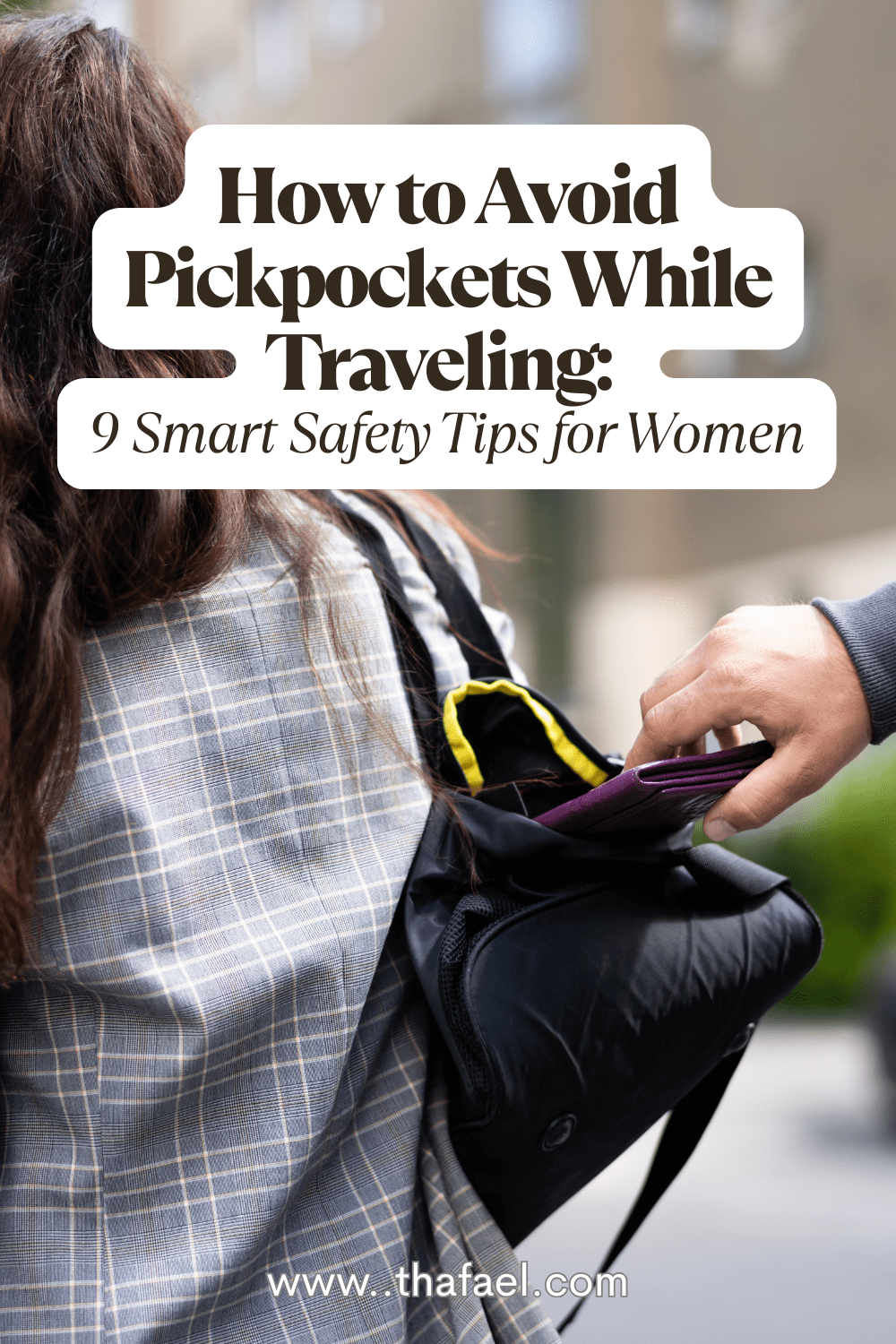
How to Avoid Pickpockets in Europe (2026 Guide for Women)
Introduction
Traveling through Europe is an unforgettable experience, but it comes with its own set of challenges—one of the most common being pickpocketing. This guide is designed for solo female travelers and tourists exploring Europe who want to enjoy their trip with confidence and peace of mind. Here, you'll find practical strategies to avoid pickpockets, understand the most common theft tactics (including distraction scams), and learn how to protect your valuables in crowded tourist areas. Avoiding pickpockets is crucial not just to safeguard your belongings, but also to ensure your trip remains stress-free and enjoyable.
The most effective way to avoid pickpockets in Europe is to wear a secure crossbody purse in front of your body, stay alert in high-risk zones like metro stations and crowded tourist attractions, and learn to recognize the distraction scams professional thieves use before they happen to you. (Distraction scams are the most common tactic used by pickpockets, especially in crowded tourist areas.) Those three things together prevent the vast majority of incidents.
Pickpocketing is one of the most common travel crimes in Europe, and it happens faster than you think. A crowded metro platform. A street performer drawing a crowd. Someone asking you to sign a petition. In the time it takes you to process what's happening, your phone, wallet, or passport is already gone.
I've seen it happen to people I know. Zipped bag. Short distraction. No warning. What followed wasn't just the loss of valuables. It was hours of stress, cancelled plans, and a trip that never quite recovered its rhythm.
This guide explains how to avoid pickpockets in Europe using practical habits that actually work. It's not about making you paranoid. It's about making you prepared.
This post is part of a broader guide on solo female travel safety. If you want the full framework, start here: Solo Female Travel Safety: How to Travel Alone with Confidence in 2026.

Key Takeaways
• Pickpocketing is most common in crowded tourist zones and public transport
• Crossbody bags worn in front reduce access and visibility for thieves
• Anti-theft features matter more than brand, size, or price
• Distraction scams are the most common theft tactic Distraction scams are the most common tactic used by pickpockets, especially in crowded tourist areas)
• Awareness and preparation prevent most incidents
Table of Contents
Is Pickpocketing in Europe Really That Bad?
Yes, but not in the way most people imagine. You are not going to be mugged. Violent crime against tourists in Europe is genuinely rare. What is common is fast, quiet, professional theft carried out in busy places by people who do this every single day. Pickpocketing is a form of petty crime, but it can quickly become a major inconvenience if your passport, phone, or wallet disappears.
According to the European Pickpocketing Index 2024 by Quotezone, Italy logs 478 pickpocketing incidents per million visitors at its top attractions, the highest rate on the continent. France follows at 251. Spain and Germany are each at 111. The Netherlands sits at 100.
Those numbers tell you two things. First, the risk is real and concentrated in specific cities and specific types of locations. Second, the overwhelming majority of visitors come home with everything intact. The difference between those two groups is almost always preparation, not luck.
Pickpockets are professionals. They are fast, practiced, and they work in environments where your attention is naturally divided. They are not targeting careless people. They are targeting distracted ones. And distraction happens to everyone.
Understanding that changes how you approach a trip. You do not need to be fearful. You need to be deliberate.
👉 For a full picture of safety across Europe: Is Europe Safe for Solo Female Travelers? What You Need to Know (2026).
Which European City Has the Worst Pickpockets?
These cities consistently appear at the top of pickpocketing reports. If you are visiting any of them, building awareness into your daily routine from day one is worth it.
Barcelona tops most lists. Las Ramblas and the metro system, particularly Line 3, are the highest-risk areas in the city. The volume of tourists year-round and the concentration of professional operations make it the most frequently cited city in Europe for pickpocketing incidents. 👉 See the full breakdown: How To Avoid Pickpockets in Barcelona?
Rome is a close second. The areas around the Colosseum, Vatican, and Trevi Fountain attract enormous crowds of people who are distracted, often with phones raised for photos, and frequently carrying everything they own. 👉 Read more: Is Rome Safe for Tourists? What to Watch Out For.
Paris sees high incident rates on the Metro and at major landmarks including the Eiffel Tower and the Louvre. The steps of Sacré-Coeur, Pont des Arts, and the area around Gare du Nord are also consistently flagged. 👉 Full guide: How to Avoid Pickpockets in Paris (2026 Safety Guide).

Me on Pont Saint-Louis, La Seine, Paris
Madrid has hotspots around Puerta del Sol, El Rastro market on Sundays, and the busiest transit corridors in the city center.

Me , in Puerta del Sol , Madrid
Prague is frequently underestimated by travelers. The Old Town Square and Charles Bridge are stunning and heavily trafficked, and the distraction those beautiful surroundings create is exactly what professional thieves look for.
Athens has seen rising incidents particularly around Monastiraki and near the Acropolis. In late 2025, police detained an organized group operating at Monastiraki, a reminder that theft here is coordinated, not opportunistic.
Knowing which cities and which areas carry the highest risk lets you adjust your habits accordingly rather than staying on high alert everywhere.

What is the Best Bag to Avoid Pickpockets in Europe?
Why Crossbody Bags Work
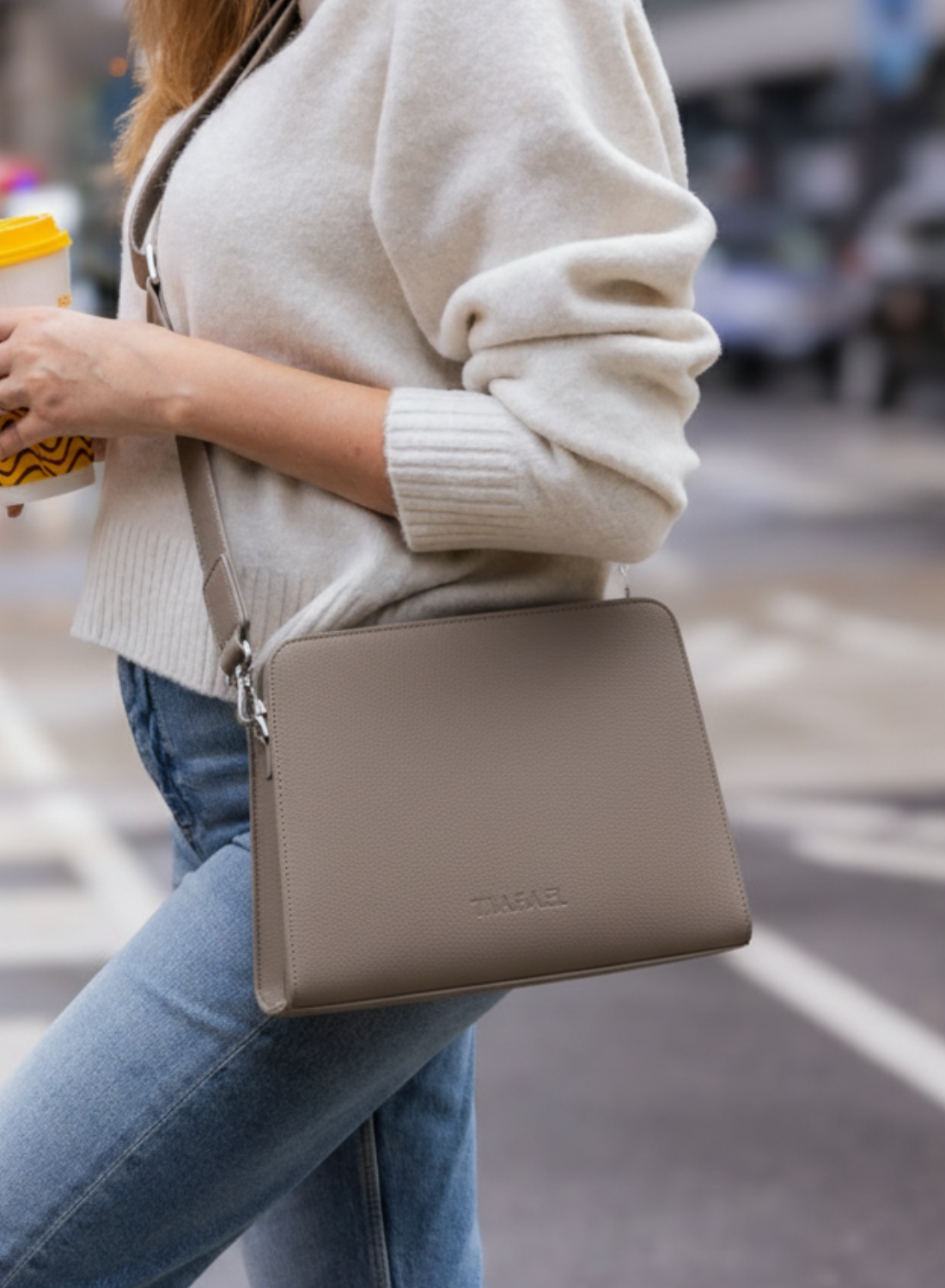
A secure anti-theft crossbody bag worn across your chest, resting in front of your body, is the single most effective piece of gear you can travel with in Europe.

With my Thafael antitheft crossbody bag in Ponte alle Grazie, Florence, Italy
The position alone matters enormously. A bag you can see is a bag you can protect. A bag on your back, or dangling from one shoulder, is a bag you cannot monitor. Wearing a crossbody in front means any attempt to access it happens directly in your line of sight.
Essential Anti-Theft Features
But the bag itself matters too. Not all crossbody bags are genuinely secure. Here is what to look for:
-
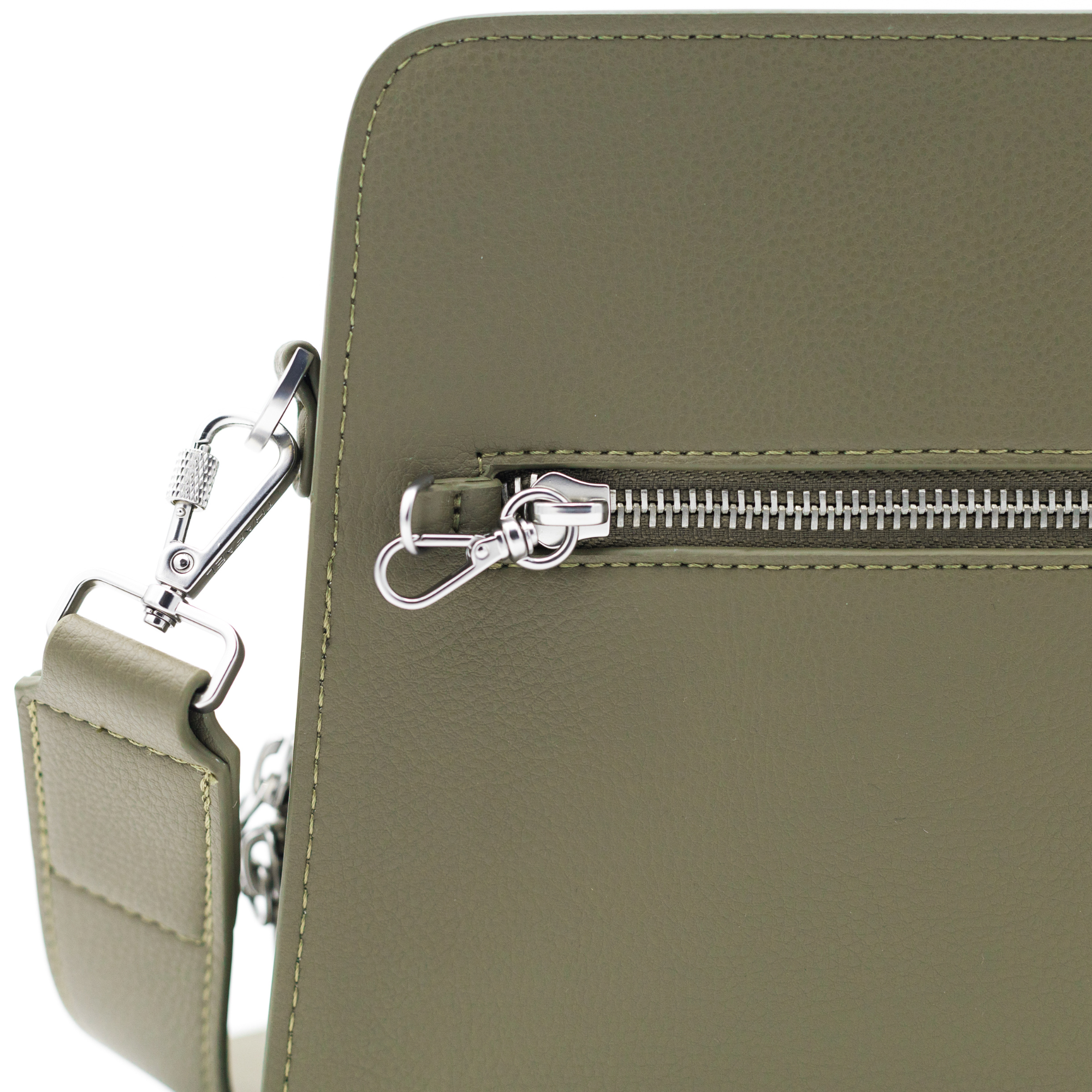
Slash-resistant straps and lining (Slash-resistant straps prevent bag slashing theft): Reinforced materials that prevent thieves from cutting the strap or bag to steal it.
-
Locking zippers (Anti-theft bags often feature locking zippers): Zippers that clip or lock shut, requiring deliberate effort to open and deterring quick theft.
-
RFID-blocking pockets (RFID-blocking pockets protect against identity theft): Special pockets that block wireless signals to prevent identity theft from card skimming.
-
Anchor or clip system: A strap or clip that lets you secure your bag to a chair leg when seated, preventing grab-and-run theft.
-
Good compartment design: A clear system for organizing your belongings so you always know where everything is (Anti-theft bags should have thoughtful compartment design).

Choosing the Right Bag
I use the Thafael crossbody because I wanted something that solved all of these problems without looking like it was trying to. No tactical branding. No obvious security features on the outside. Just a sleek bag that holds your phone, passport, cards, and daily essentials and does the security work quietly.
In cities like Rome and Barcelona where you are moving between metro stations, tourist sites, markets, and restaurants all day, that combination of security and ease changes the texture of your entire trip. You stop checking your bag every few minutes. You stop clutching it in crowds. You just move.

Me in the metro station in Madrid
👉 See how the Thafael crossbody is built for exactly this kind of travel.
👉 Not sure which bag is right for you? Read: How to Find the Perfect Crossbody Travel Bag for Europe 2026.
Are Backpacks Safe to Use in Europe?
Not in crowded areas, and not as your primary city bag. The fundamental problem with a backpack is that you cannot see what is happening behind you.
Experienced pickpockets can unzip a backpack and remove items while you are standing still on a metro platform, waiting to board, or moving through a turnstile. The motion and noise of the crowd masks everything. You feel nothing and notice nothing until later.
This does not mean you can never use a backpack in Europe. It means you need to be deliberate about when and how. In genuinely crowded environments, wear it on your front. Store valuables in inner compartments only, never in outer pockets. And if your backpack does not have lockable zippers, treat it as unsecured in any busy crowd.
For day-to-day city exploring, a crossbody is almost always the better choice. Save the backpack for day trips outside the city, hikes, or situations where you genuinely need the extra capacity and can monitor it properly.
👉 Full comparison: Crossbody Travel Bags vs. Backpacks: Which One Is Better for Travel?
What Anti-Theft Features Should a Travel Bag Have?
The anti-theft bag market is crowded and not all of it delivers on its promises. These are the features that make a real difference in the situations you will actually encounter in Europe.
Slash-resistant straps and lining. Bag slashing happens when a thief wants to grab and run without struggling with a strap. Reinforced materials mean this tactic does not work. This is the non-negotiable foundation.

Locking zippers. A zipper that clips or locks shut requires deliberate effort to open. That resistance is a deterrent. Pickpockets move fast and prefer easy targets. Even a small obstacle is often enough to make them move on.

RFID-blocking pockets. Wireless card skimming is a real threat in crowded transit environments. An RFID-blocking pocket eliminates that category of risk entirely with no impact on usability.

An anchor or clip system. A strap or clip that lets you secure your bag to fixed furniture while seated at a cafe or restaurant removes one of the most common theft scenarios completely.

Thoughtful compartment design. A bag with a clear system for where things live means you always know where your passport is, where your cards are, and where your phone goes. That clarity matters more than it sounds when you are moving quickly through a busy city.

👉 And: The Crossbody Travel Purse That Solo Women Travelers Swear By.
How Should I Organize My Valuables to Avoid Theft?
The Best Organization System
Putting everything in one place is one of the most common and costly mistakes travelers make. If a thief accesses one compartment and everything is there, everything is gone.
A simple system that works:
-
Cards and passport: Go in an RFID-blocking slot. Never in a general pocket. (RFID-blocking pockets protect against identity theft.)
-
Cash: Lives in a dedicated compartment in small amounts. Carry only what you need for the day and keep larger bills separate and harder to access.
-
Phone: Goes in a pocket that closes securely. Not tucked loosely into an opening and not held in your hand while walking through crowds.
-
Daily-use items: Like lip balm, transit cards, and hand sanitizer go in the most accessible compartment so you are not opening secure areas repeatedly in public.
The goal is not complexity. It is knowing exactly where everything is so you can check in on your valuables quickly and naturally without drawing attention to the process.
👉 Related: How to Choose the Right Travel Purse for City Trips (Women's Guide 2026).
What Should I Do With My Bag at a Cafe or Restaurant in Europe?
Never hang it on the back of your chair. This is one of the highest-risk things you can do in a European city and it happens constantly.
A bag on the back of a chair is out of your line of sight, easy to unzip, and easy to lift entirely while your attention is on your meal. Thieves work café terraces in pairs in cities like Rome, Paris, and Barcelona. One creates a distraction, asks a question, drops something, points at something behind you. The other lifts the bag. It takes seconds and you often do not notice until you go to leave.
The habits that actually protect you: loop your strap around a chair leg or table leg so the bag cannot be lifted without moving furniture. Keep the bag on your lap or between your feet where you will feel any movement. If your bag has an anchor clip, use it. Keep it zipped and facing inward even while it is secured.

Once it is secured, you can forget about it and enjoy your meal. That is the goal.
Where Are Pickpockets Most Active? Tourist Attractions, Metros & Crowded Places
Pickpockets concentrate where tourists concentrate and where attention naturally scatters. Knowing which specific environments carry the highest risk is more useful than generalized vigilance. These scams are most common in busy areas where your attention is divided.
Metro stations and public transport. The moments of boarding and exiting are the highest-risk points. Crowds compress, people push, and the movement masks contact. Keep your bag in front and your hand on it through every transition. Be extra careful when boarding or leaving trains and metros, as these moments create the perfect opportunity for distraction theft.
Tourist attractions with queues. Anywhere people wait in line and get absorbed in anticipation or their phones. The Vatican queues, the Colosseum entrance, the base of the Eiffel Tower, the Sagrada Familia.
Street performers and public gatherings. A crowd watching something is a crowd with divided attention. This is a deliberate tactic used by organized pickpocket teams, not a coincidence.
Markets and shopping streets. Las Ramblas in Barcelona. Portobello Road in London. El Rastro in Madrid. You are browsing, your hands are occupied, and your focus is on the stalls. High risk across every major European city.
Escalators and staircases. Movement and proximity create cover. Keep your bag in front through any escalator in a busy station.
Airport security lines. You are managing your belongings, removing shoes, and watching items go through the scanner. Do not put your phone or wallet in the tray until the last possible moment and collect everything immediately on the other side. Never leave your luggage unattended while collecting your belongings after security screening.
👉 Planning a trip to Italy? Read: How to Stay Safe in Italy as a Tourist (2026 Guide).
👉 Visiting Spain? See: Is Barcelona Safe for Tourists? (Pickpockets, Scams and Tips).
What Are the Most Common Pickpocket Scams in Europe?
Professional pickpockets rarely reach into a bag in plain sight. They create the conditions for theft first. These are the most common tactics used across European cities right now. (Distraction scams are the most common tactic used by pickpockets, especially in crowded tourist areas):
-
The bracelet scam: Someone approaches and starts tying a friendship bracelet on your wrist before you have agreed to it. While your attention and one hand are occupied, an accomplice accesses your bag or pockets. This is documented extensively near Sacré-Coeur in Paris and around major monuments in Italy. If someone grabs your wrist without your invitation, step back immediately and say no clearly.
-
The petition or clipboard scam: A person with a clipboard asks you to sign something for a charity, often claiming to represent a deaf organization. While you read and sign, their partner is beside or behind you. The petition is fake. The distraction is entirely real.
-
The spill scam: Someone bumps into you or spills something on you, then immediately and helpfully starts cleaning it up. The cleaning is the theft. If this happens, your first move is to secure your bag, not address the spill.
-
The crowding technique: A group boards the metro just as the doors are closing, pressing close on all sides. This is sometimes organic crowd behavior. It is sometimes entirely deliberate. In these moments, hold your bag in front with both hands.
-
The fake tourist police: Someone flashes what looks like a badge and asks to inspect your wallet for counterfeit currency. Real police do not do this. Do not hand your wallet to anyone. Walk away.
-
The good samaritan: Someone points out that you dropped something, that there is something on your jacket, or that your bag is open. While you look and react, they or an accomplice takes advantage. Check these things yourself without taking your hands off your bag.
Once you know what these approaches feel like, your instincts pick up on them early. Pattern recognition is genuinely protective.
👉 Related: Solo Female Travel Safety Tips: What Actually Keeps You Safe (2026 Guide).
Is a Money Belt Worth It in Europe?
A money belt works in the sense that it is very hard to access without you noticing. Worn under your clothing against your skin, it is essentially invisible to a thief. For that reason, many experienced travelers swear by them.
The honest tradeoffs: they are uncomfortable to wear for a full day of walking in summer heat. Accessing your cash or cards means reaching under your clothes in public, which is awkward and draws its own kind of attention. And because everything lives in one place, losing it or being forced to access it publicly is a real vulnerability.
A well-designed anti-theft crossbody bag with RFID-blocking pockets protect against identity theft), locking zippers (Anti-theft bags often feature locking zippers), and slash-resistant construction (Slash-resistant straps prevent bag slashing theft). You can access what you need naturally throughout the day without a production.
👉 See why women travelers choose the Thafael crossbody over a money belt: Why Thafael Is the Ideal Crossbody Bag for Sightseeing in Europe.
How Do I Avoid Looking Like a Tourist in Europe?
Pickpockets make fast assessments. They look for signals that someone is distracted, carrying valuables, and unfamiliar with their surroundings. A few habits that reduce both your visibility as a target and your actual vulnerability:
Keep your phone in your bag when you are walking, not in your hand. Phone snatching has become one of the most common theft types in European cities. A phone in your hand in a crowded street is an obvious and easy target.
Walk with purpose even when you are not entirely sure where you are going. Hesitation and confusion are signals. Check your route before you step out of the metro, not on the pavement in the middle of foot traffic.
Avoid wearing your camera around your neck all day in busy tourist areas. Use it, put it away.
Skip flashy jewelry and large designer logos for city days. Save them for evenings in lower-risk settings.
Do not count cash openly at market stalls or ticket windows. Take out what you need, complete the transaction, put everything away before moving on.
Dress in a way that fits the city. The less you signal tourist, the less you are prioritized as a target.

Me in Toledo, Spain
What to Do If You're Pickpocketed
Immediate Steps
First: do not panic. It is a stressful experience but it is manageable and the steps are straightforward.
-
Report it to local police immediately. Go to the nearest police station or find a tourist police office. Many major European cities have dedicated tourist assistance points. File a report and get a crime reference number. You will need this for any travel insurance claim.
-
Contact your bank right away. Call the number on the back of your card or use your bank's app to freeze or cancel any compromised cards immediately. Most banks can issue emergency replacement cards within 24 to 48 hours.
-
Contact your country's embassy or consulate if your passport was taken. They can issue an emergency travel document. If you have a photo of your passport's data page saved in your email or cloud storage, bring it. It speeds up the process significantly.
-
File a travel insurance claim. You will need the police reference number. Keep any receipts for emergency expenses incurred as a result of the theft, as many policies cover these.
-
Change any passwords on accounts that may have been accessible on your stolen phone. Do this from another device as soon as possible.
Preparation Tips
The best preparation for this scenario is to have already done a few things before you travel. Save a photo of your passport to your email. Have your bank's international phone number saved separately from your phone. Know which cards you are carrying and have at least one backup stored separately in your accommodation.
Most people who get pickpocketed in Europe recover quickly and go on to have the rest of their trip. It is an inconvenience. With the right preparation, it does not have to be a catastrophe.
👉 For the full safety framework: How to Travel Solo as a Woman in 2026: Safety, Confidence and Smart Travel Tips.
Conclusion
Now you know how to avoid pickpockets in Europe without letting security concerns take away from your trip.
Pickpocketing in Europe does not happen because you were careless. It happens because busy cities create easy opportunities for distraction and professional thieves are very good at engineering those moments.
Finally, the good news is that most incidents are entirely preventable.
When you understand where pickpockets operate, how they create distractions, and how to protect your belongings with a few simple habits, you dramatically reduce your risk. A secure crossbody bag. Valuables organized so you always know where everything is. The ability to recognize a scam before it unfolds. None of these things are complicated. Together they change everything.
The goal is not to travel defensively. It is to travel confidently. With the right preparation, your attention can stay where it belongs: on the experience.
Travel smart. Stay aware. Trust yourself out there.
Arielle
FAQ
How do I avoid pickpockets in Europe as a solo female traveler?
The most effective combination is a secure antitheft crossbody bag worn in front of your body, awareness of the highest-risk environments, and knowing what the common distraction scams look like. You do not need to be on high alert every moment. You need systems that work quietly so your attention can stay on the experience, not on your belongings. Start with: Solo Female Travel Safety Tips: How to Stay Safe and Confident (2026 Guide).
Which European city has the worst pickpocketing?
Barcelona attracts many tourists year-round, making it one of Europe's busiest environments for professional pickpockets.Barcelona consistently tops the lists, particularly around Las Ramblas and the metro system. Rome, Paris, Madrid, Prague, and Athens are also high-risk. The risk is concentrated in specific tourist-heavy areas within those cities rather than city-wide.
Is a crossbody bag really safer than a backpack in Europe?
Yes, for urban travel. A crossbody worn in front keeps your bag in your line of sight at all times. A backpack worn on your back cannot be monitored in a crowd.
What should I keep in my bag and what should I leave at the hotel?
Carry your daily essentials: phone, one card, some cash for the day, and your transit card. Leave secondary cards, large amounts of cash, and anything irreplaceable in your hotel room, preferably inside the hotel safe.. Reduce what you carry and you reduce what you can lose.
Do money belts actually work?
They work but they are uncomfortable and awkward to use in public. A well-designed anti-theft crossbody with RFID-blocking pockets and locking zippers is equally secure and far more practical for a full day of city exploring.
What do I do if I think I am being targeted?
Trust the feeling. Step away from the person or group, find a wall or quiet spot, check your belongings, and reorient. You do not need to confront anyone. Simply removing yourself from the situation is enough. Most pickpockets move to easier targets the moment someone becomes alert.
What should I do if I get pickpocketed in Europe?
Report it to local police and get a crime reference number. Contact your bank immediately to freeze any compromised cards. Contact your embassy if your passport was taken. Change passwords on any accounts accessible from a stolen phone. Having a photo of your passport's data page saved to your email before you travel speeds up every one of these steps.
About the Author
Arielle is the founder of Thafael, a travel accessories brand built around one idea: that women should not have to choose between feeling safe and feeling stylish when they travel. She created La Trotteuse, Thafael's anti-theft crossbody bag, after spending time in Europe and realizing that most secure travel bags looked exactly like what they were: functional, obvious, and nothing she actually wanted to carry. Thafael is named after her two children, Thaliya and Rafael, which is as good a reason as any to build something that lasts. She writes about European travel, packing smart, and moving through the world with a little more ease and a lot more confidence.

Leave a comment
This site is protected by hCaptcha and the hCaptcha Privacy Policy and Terms of Service apply.