
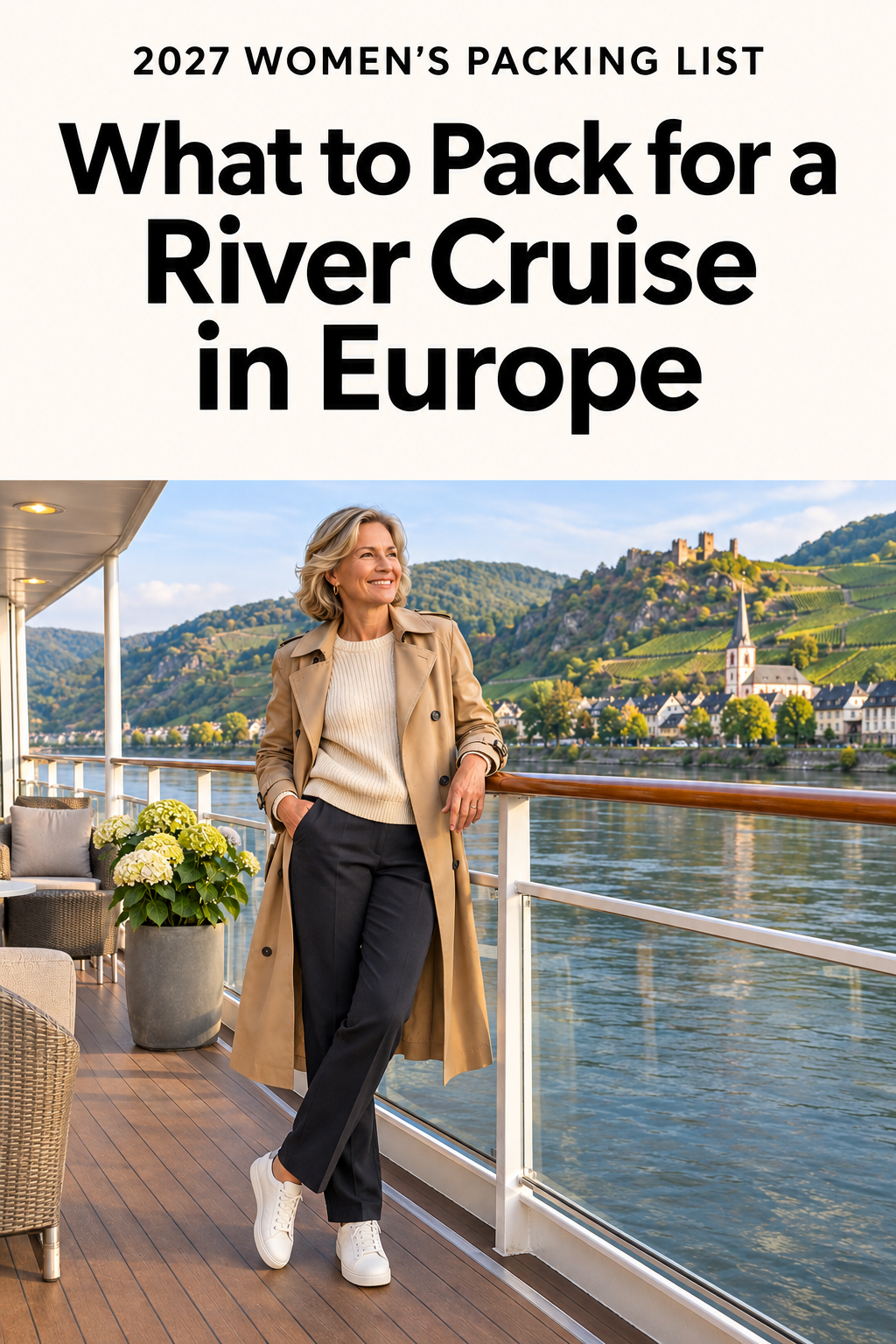
Quick answer: what should I pack for a European river cruise?
Pack layers, comfortable walking shoes, smart casual clothing for evenings, a compact day bag, and your key travel documents. Packing for a European river cruise focuses on comfort and layering rather than formalwear or volume.
Here are the top 10 items for your river cruise packing list:
-
Comfortable walking shoes with grippy soles for cobblestone streets
-
An anti-theft crossbody bag for port days
-
Light layers (cardigan, merino sweater, scarf)
-
EU power adapter (Type C or F)
-
Reusable water bottle
-
Passport and printed travel documents
-
Prescription medications in original containers
-
Packable rain jacket
-
Smart casual evening wear (no gowns needed)
-
Small toiletries kit with SPF
This guide is for women 45+ who want to feel comfortable, polished, and prepared when visiting Europe by river. For more ideas, see this Europe packing list for women.

What are the key takeaways for packing a European river cruise?
Before diving into the full guide, here is a quick overview of what matters most.
-
The dress code on river cruises is relaxed smart casual. No formal nights. No ball gowns. No tuxedos.
-
Comfortable walking shoes are the most important item you will pack. Shore excursions involve thousands of steps on uneven ground.
-
Layering is essential due to unpredictable weather, whether you sail in spring, summer, autumn, or the Christmas market season.
-
River cruise cabins are compact. Packing light with a capsule wardrobe of mix-and-match pieces in neutral colors saves space and stress.
-
A secure crossbody bag worn in front keeps valuables safe during walking tours through crowded old towns and Christmas markets.
-
River cruising on the Danube, Rhine, Seine, and Douro involves far more walking than ocean cruising. Your packing priorities should reflect that difference.
Table of Contents
-
How does the river cruise dress code actually work (smart casual, no formal wear)?
-
What clothes should I pack by season for a European river cruise?
-
What bag should I use for river cruise port days and walking tours?
-
What should I pack for a Christmas market river cruise on the Danube or Rhine?
-
What cabin essentials and travel documents do I need to bring?
-
What toiletries, medications, and personal care items belong on my river cruise packing list?
-
What electronics and accessories should I bring (and what can I skip)?
-
Is there a simple final river cruise packing checklist I can use?
-
What are the final thoughts on packing for a European river cruise?
How does the river cruise dress code actually work (smart casual, no formal wear)?
Most European river cruises have a relaxed dress code. There are no formal nights. Smart casual attire is standard for dinner, and casual attire is acceptable during daytime excursions.
Daytime wear:
-
Comfortable trousers and breathable tops are recommended for daytime wear. Cotton, linen, or moisture-wicking fabrics work well.
-
Light layers such as a cardigan or light jacket handle shifting temperatures between the sun deck and air-conditioned interiors.
-
Tank tops, casual pants, and walking shoes are perfectly fine for breakfast, lunch, and sightseeing.
Evenings onboard:
-
Smart casual is standard for dinner on river cruises. Women often wear sundresses or smart casual outfits for dinner. A nice blouse with trousers or a simple jersey dress works well in the dining room.
-
Men typically wear collared shirts and trousers for dinner.
-
Avoid athletic shorts, gym leggings, and beach flip-flops at dinner. Most passengers save those for relaxing in the cabin.
-
Dark, polished jeans are acceptable on many cruise lines, but check your specific cruise line policy.
Captain's dinner or farewell evening:
-
One evening may call for slightly elevated smart casual evening wear. Think a silk blouse with tailored black pants or a wrap dress. This is not a reason to bring heavy formalwear.

What clothes should I pack by season for a European river cruise?
The European river cruise season runs from March to December. The weather varies dramatically, so your clothing choices should match your sailing dates. Check the forecast before departure and allow room for rainy days.
Spring (March to May):
-
Temperatures range from about 41°F (5°C) on March mornings to around 68°F (20°C) on May afternoons. Cooler mornings and warmer afternoons are common.
-
Pack long-sleeve tops, a thin merino wool sweater, a light down or quilted jacket, and a packable rain jacket.
-
Bring 1 to 2 pairs of full-length trousers and a cotton scarf.
Summer (June to August):
-
Summer temperatures can exceed 86°F (30°C) in Southern Europe. The Douro can reach 93°F (34°C) in July and August.
-
Pack breathable dresses, linen trousers, short-sleeve tops, a wide brimmed hat, and UV sunglasses.
-
Keep a thin cardigan for air-conditioned ship interiors and a lightweight wrap for evenings on deck.
Autumn (September to November):
-
September highs reach around 72°F (22°C), dropping to about 41°F (5°C) on late-October mornings. November can bring winter temperatures as low as 30°F (-1°C) in Western Europe.
-
Similar to spring, but add slightly warmer sweaters, a trench or midweight coat, opaque tights, and a warm scarf. For November, add thermal base layers, wool socks, and a waterproof jacket to handle rain and wind along the river.
Capsule wardrobe approach:
Packing should accommodate a mix-and-match capsule wardrobe. Aim for 3 to 4 bottoms, 5 to 7 tops, 2 dresses or tunics, 1 to 2 layering sweaters, 1 lightweight waterproof jacket, and 1 warmer coat if sailing in the colder months. Stick to colors that coordinate for multiple outfits across a week-long trip.
What shoes are best for cobblestones and shore excursions?

Comfortable walking shoes are crucial for excursions. Many walking tours involve 5,000 to 10,000 steps per day on uneven cobblestone streets, castle stairs, and river promenades. Comfortable footwear is an absolute must.
-
Two pairs of shoes are recommended: one primary pair of supportive walking shoes or sneakers with a good grip for excursions, and one slightly dressier pair (loafers or low wedges) for evenings and lighter walking.
-
Footwear should have a grippy sole for cobblestone streets. Look for cushioned insoles, arch support, breathable uppers, and closed toes.
-
Avoid heels. They are dangerous on wet cobblestones, steep steps, and ship gangways.
-
For spring and autumn: water-resistant leather sneakers or ankle boots. For summer: breathable trainers or walking sandals with secure straps. Bike shorts under dresses can add comfort on long walking days.
-
For winter and Christmas market river cruises: insulated waterproof ankle boots with good tread.
-
Break in new shoes before your river cruise to avoid blisters. Start at least 2 to 3 weeks before departure. Pack blister patches regardless.
What bag should I use for river cruise port days and walking tours?
A compact day bag is essential for excursions. Port days involve busy old towns, train stations, and markets where pickpocketing is a known concern in tourist areas across Europe. The right bag makes a real difference. Learn more about how to avoid pickpockets in Europe.

-
A crossbody bag worn in front of the body is safer and more comfortable than an open tote or lightweight backpack in crowded areas. It keeps your phone, wallet, and travel documents close and accessible.
-
Look for these safety features: a lockable main zipper, a lockable rear zipper pocket for your passport, a slash-resistant body and strap, and RFID-protected card pockets.

On my own trips through Europe, I always clipped my crossbody to the chair at cafés and relaxed over a glass of wine instead of keeping one hand on my bag. In Lisbon I walked through the Alfama with both hands free, not checking my bag, not thinking about it. That shift in attention is exactly what you want on a port day: you get to enjoy the town instead of managing your belongings.

-
THAFAEL's La Trotteuse is an anti-theft crossbody bag for women with all of these features. The strap is reinforced with stainless steel cables. The strap also wraps around a café chair to anchor the bag when seated. It is designed to help reduce the risk of opportunistic theft. It looks like an elegant everyday handbag, not travel gear.
-
Comparing bags? See our guide to the best crossbody bag for Europe travel, or our breakdown of the best bags for cruise excursions for every kind of shore day.
-
What to carry inside on most port days: a small umbrella, a compact reusable water bottle, a light scarf, reading glasses, phone, hand sanitizer, tissues, lip balm, and local currency.
-
A structured crossbody is easier to manage in churches, museums, and cafés than a large backpack. Some European sights require backpacks to be worn on the front or checked entirely. A small crossbody like La Trotteuse is usually allowed.
Have you thought about how you'll protect your passport, cards and phone ashore?

Meet La Trotteuse, the THAFAEL travel crossbody.

Lockable zippers
Help keep unwanted hands out in crowded old towns.

RFID pockets
Help shield card and passport information.

Slash-resistant strap
Helps deter slash-and-grab theft at busy markets.

Locks to your chair
Makes a quick grab harder at café stops.
What should I pack for a Christmas market river cruise on the Danube or Rhine?
A Christmas markets cruise on the Danube or Rhine (typically late November to December) means cold weather and long evenings outdoors. Temperatures often range from 27°F (-3°C) to 41°F (5°C).
-
Outerwear: A knee-length insulated coat, preferably water resistant, with a hood. This is your most important layer for markets in Vienna, Nuremberg, or Cologne.
-
Thermal base layers: Merino wool or synthetic long-sleeve tops and leggings worn under trousers or dresses.
-
Accessories: Wool or fleece hat covering the ears, a warm scarf, touchscreen gloves, and thick wool or thermal socks for standing still on cold cobblestones.
-
Footwear: Insulated waterproof ankle boots with good tread, roomy enough for thick socks. Icy or slushy streets are common around market stalls.
-
Market extras: Hand warmers, a small folding tote bag for purchases, and a secure cruise purse such as La Trotteuse worn in front for busy market crowds. Most markets serve mulled wine in a mug you pay a small deposit on. Return it for your money back or keep it as a souvenir.
-
Onboard: The ship dress code remains smart casual. Warm knit dresses, opaque tights, and ankle boots work well for dinner after evenings at the markets.
For more cold-weather ideas, see our Europe winter packing list and our guide to European winter outfits for the Christmas markets.

What cabin essentials and travel documents do I need to bring?
River cruise cabins are compact but well designed. A few cabin comforts and organized travel documents make the trip smoother. Pack a carry-on size suitcase for river cruises.
Travel documents:
-
A passport valid for at least three months beyond the date you leave the Schengen area (many travelers aim for six). Check current entry requirements for your nationality before you go. Bring any required visas, cruise line confirmation, flight and hotel confirmations, travel insurance details, and an emergency contact list.
-
Travel documents should be kept in your carry-on luggage. Store copies separately, both printed and digital.
Cabin power and organization:
-
European power adapters are necessary for charging devices. Bring an EU plug adapter (Type C or F) and a compact multi-USB charger.
-
Packing cubes help organize limited cabin space. Many river cruise cabins have space under the bed for luggage.
-
Pack a sleep mask, earplugs, a slim folding hanger for handwashed items, and a fabric laundry bag.
-
Comfortable lounge clothing is suggested for relaxation on board between excursions.
-
Heating appliances like travel irons and kettles are usually prohibited because they pose a fire hazard. Rely on the ship's pressing or laundry service where available.
What toiletries, medications, and personal care items belong on my river cruise packing list?
Basic toiletries are typically provided on river cruise ships, but most people prefer their own trusted products.
-
Core toiletries: Travel-size shampoo, facial cleanser, moisturizer, body lotion, deodorant, toothbrush, toothpaste, and minimal makeup suited to smart casual evenings.
-
Sun and weather care: Sunscreen is important for sun protection on deck. Broad-spectrum SPF 30+ even in spring and autumn. SPF lip balm. A richer night cream for dry cabin air.
-
Health and hygiene essentials: Medications should be kept in carry-on luggage, not checked baggage. Bring a full supply of prescription medications in original labeled containers with copies of prescriptions. Include pain relief, anti-diarrheal tablets, allergy medication, and a small first aid kit with blister patches and antiseptic wipes.
-
For air travel: decant liquids into 100 ml containers and use a clear zippered pouch.
What electronics and accessories should I bring (and what can I skip)?
River cruising focuses on scenery and shore time. Electronics and adapters are necessary for staying connected, but keep things practical.
-
Essentials: Smartphone, charger, power bank, EU adapter, headphones, and an optional compact camera.
I learned this one the hard way. Last September in Europe, my power bank had not charged properly overnight, and by mid-morning my phone was dying with no maps and no way to contact anyone. My sister was with me that day and saved the situation. If I had been alone, it would have been a genuinely stressful experience. On a river cruise, charge your power bank in the cabin every night and check it before you go ashore.
-
An e-reader or lightweight tablet with downloaded books is perfect for quiet afternoons on the sun deck. Skip heavy hardback books.
-
Download offline maps and translation apps before departure for smaller towns without burning through roaming data.
-
Avoid heavy laptops or multiple cameras unless truly required. Cabins are small and port days are busy.
-
Keep devices zipped in your crossbody bag ashore. Use the in-cabin safe for tablets or spare phones during excursions.
What should I leave at home for a European river cruise?
Cabin wardrobes on a cruise ship are smaller than at home. Skip what you will not need.
-
Formal gowns, high heels, and evening wear meant for black-tie events. One or two elevated smart casual pieces cover every dinner.
-
Bulky hair appliances if the ship provides a hairdryer. Large bottles of toiletries. Multiple handbags.
-
Heating implements such as travel irons, kettles, and candles are normally prohibited for safety reasons.
-
Excessive gadgets, drones, large speakers, and valuable jewelry that could attract attention.
-
Towels and linens. The ship provides them.
-
A baseball cap works for sun, but leave anything you would not want to lose.
-
Leave room in your luggage for souvenirs from Christmas markets and vineyard regions along the Danube, Rhine, Seine, and Douro.
Is there a simple final river cruise packing checklist I can use?
Here is a scannable checklist for a 7 to 10 night European river cruise. Adjust by season and itinerary.
Clothing: 3 to 4 bottoms | 5 to 7 tops | 2 dresses or tunics | 1 to 2 sweaters or cardigans | Sleepwear and underwear | 1 packable rain jacket | 1 warmer coat (if winter) | 1 to 2 scarves
Shoes: Walking shoes with good grip | Dressy flats or low wedges | Optional lightweight sandals or slippers
Accessories and bags: Anti-theft crossbody bag such as La Trotteuse | Small foldable tote | Packable umbrella | Sun hat or warm hat by season | Simple everyday jewelry
Toiletries and health: Personal toiletries kit | Daily medications in original containers | Small first aid items | Sunscreen and SPF lip balm | Glasses and spare reading glasses
Documents and money: Passport | Copies of all documents | Travel insurance | Credit and debit cards | Some local cash | Emergency contacts | Printed cruise line details
Electronics: Phone and charger | EU adapter | Multi-USB charger | Power bank | E-reader or tablet | Optional camera
Try a quick dress rehearsal at home. Lay everything out, remove 20 to 25 percent of the clothes, and confirm every outfit mixes and matches before you close the suitcase.
What are the final thoughts on packing for a European river cruise?
Packing well for a river cruise is not about bringing more. It is about bringing the right things. Comfortable shoes, layered clothing, a secure crossbody bag and well-organized documents cover nearly every situation you will face on the Danube, Rhine, Seine or Douro.
Use the checklist above and adjust it for your season and itinerary. Then stop second-guessing and start looking forward to your trip. The towns, the vineyards, the slow pace on the water: that is the point. A thoughtful packing list simply lets you enjoy it all without distraction.
Have an amazing river cruise.
Arielle
FAQ: European river cruise packing questions answered
Do I need formal evening wear on a European river cruise?
No. River cruises do not have formal nights. Smart casual is the standard. A jersey dress, a silk blouse with tailored trousers, or a knit wrap dress handles every evening, including the captain's dinner. Long gowns can stay at home.
How many outfits should I pack for a 7-night river cruise?
Most people pack too much. Aim for 3 to 4 bottoms and 5 to 7 tops that all coordinate. Most ships offer a laundry service, so you can re-wear pieces and pack lighter. Two dresses give you variety for evenings onboard without filling your suitcase.
Can I wear jeans on a river cruise?
Dark, neat jeans are acceptable in many dining rooms. Avoid distressed or faded styles. Check your cruise line's dress policy before you rely on denim for dinner.
What is the best way to carry my valuables on shore excursions?
Use a secure crossbody bag worn in front of your body. Our anti-theft travel purse, La Trotteuse, has a lockable main zipper, a lockable rear zipper pocket, a slash-resistant body and a strap reinforced with stainless steel cables, and RFID-protected card pockets. It is designed to help reduce the risk of opportunistic theft while looking like an elegant everyday handbag.
What should I pack differently for the Danube versus the Douro?
The Douro runs hotter in summer, often above 93°F (34°C). The Danube and Rhine are cooler in spring and autumn, with more rain. Pack lighter fabrics and stronger SPF for the Douro, and warmer layers and waterproof gear for central Europe. The core packing principles stay the same.
Is laundry available on river cruises, and should that change my packing list?
Yes. Most ships offer laundry or pressing services, although turnaround times and prices vary by cruise line. If you plan to use them, you can pack fewer items and re-wear bottoms across the week.
How do I pack for pre- and post-cruise stays in cities like Paris or Budapest?
Choose versatile pieces that work both on the ship and for city sightseeing. The same walking shoes, crossbody bag and layered outfits carry you from a city stay to the ship and back. A lightweight jacket suits both settings.
What kind of coat do I need for a Christmas market river cruise?
An insulated, water-resistant, knee-length coat with a hood. Pair it with thermal base layers, a warm hat, gloves, a thick scarf and waterproof boots with good tread. You will spend hours standing outdoors on cold cobblestones.
Are river cruise cabins small, and how can I stay organized?
Yes. Cabins are compact. Use packing cubes and soft-sided luggage that fits under the bed. Keep your day bag packed and ready by the door for excursions, unpack into the drawers on day one, and store empty suitcases out of the way.
How early should I start planning my river cruise packing list?
Start 4 to 6 weeks before departure. That gives you time to break in walking shoes, gather the right layers and choose a secure day bag. One week before sailing, check the forecast for each port on your itinerary and make final adjustments.
About the Author
Arielle is the founder of Thafael, a travel accessories brand built around one idea: that women should not have to choose between feeling safe and feeling stylish when they travel. She created Thafael's anti-theft crossbody bag, La Trotteuse, after realizing that most secure travel bags looked exactly like what they were: functional, obvious, and nothing she actually wanted to carry. Thafael is named after her two children, Thaliya and Rafael, which is as good a reason as any to build something that lasts. She writes about European travel, packing smart, and moving through the world with a little more ease and a lot more confidence.


Leave a comment
This site is protected by hCaptcha and the hCaptcha Privacy Policy and Terms of Service apply.