
The Ultimate 2026 Europe Packing Guide for Women (What to Pack & What to Skip)
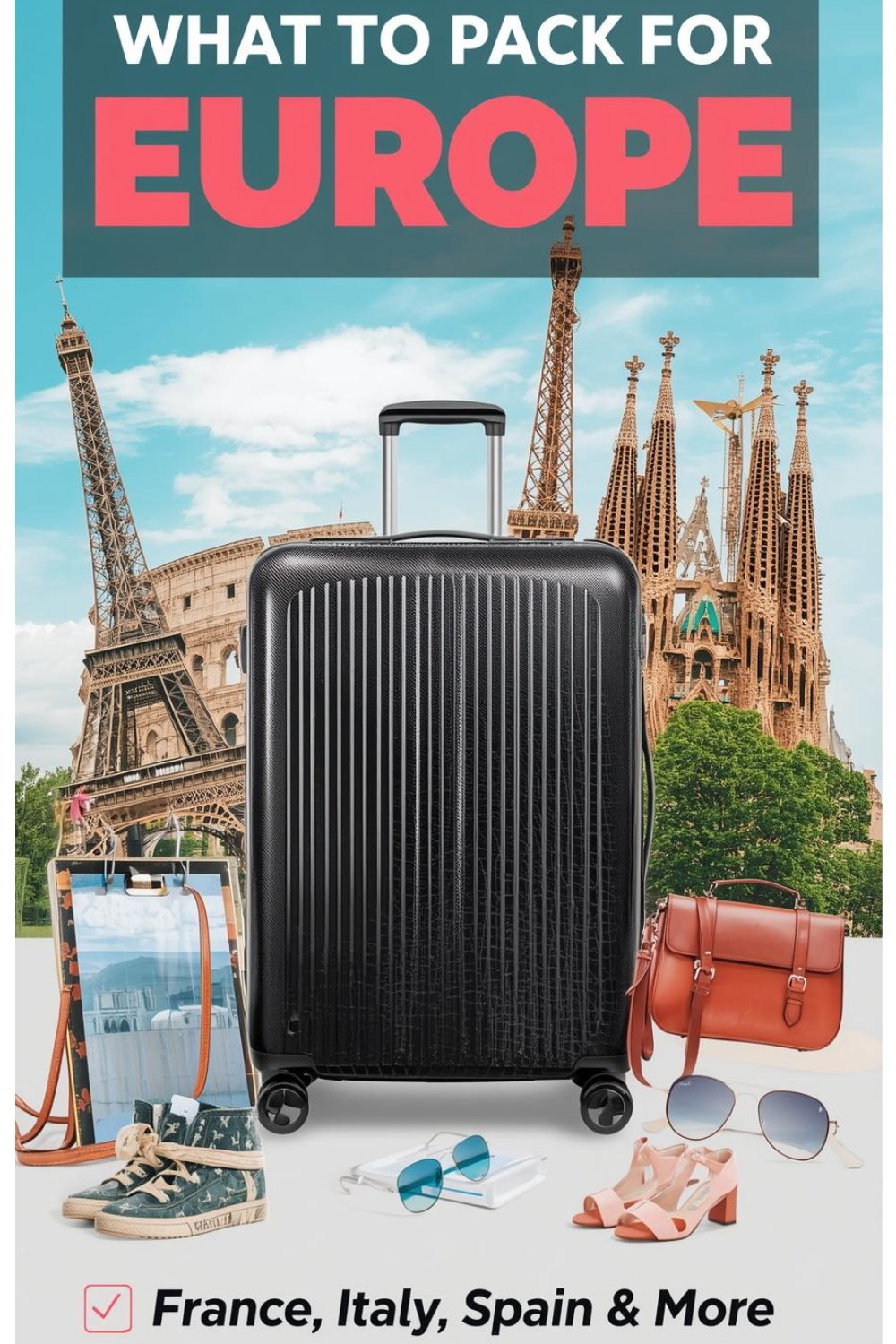
For a trip to Europe, pack breathable linen and cotton clothing in neutral tones, two pairs of comfortable shoes, a secure anti-theft crossbody bag, a universal adapter, a portable charger, and a light layer for cool evenings and air-conditioned spaces. Keep it to a carry-on wherever possible. Europe is walkable, cobblestone-heavy, and demands mobility over volume. Packing light genuinely changes how the trip feels.
What you pack can completely change how your trip feels. Europe is walkable, stylish, and busy, and it demands a different approach than most destinations.
Over the years, I’ve traveled across Europe in different seasons, and I’ve learned one thing the hard way: packing smart matters more than packing more. The right shoes, the right bag, and a few thoughtful essentials can turn long days of exploring into effortless, enjoyable experiences. The wrong choices? Blisters, stress, and constantly worrying about your belongings.
This Europe packing guide is designed to help women pack with intention. Instead of overwhelming you with endless lists, it shows you what actually matters ,what to skip, and how to adapt your packing based on season, destination, and travel style. Most travelers pack too much for Europe — and forget the few items that actually make the biggest difference once they arrive.
If you’re visiting Europe for the first time—or returning and want to pack better this time—this guide will help you feel confident, comfortable, and prepared from day one.

Key Takeaways: Europe Packing List Female
-
Packing for Europe is different than most destinations — walking, public transportation, and compact cities require thoughtful choices.
-
Comfortable shoes, versatile outfits, and lightweight layers matter more than trendy pieces.
-
A crossbody bag is more practical than large totes or backpacks for European cities.
-
Packing changes by season, but layering is essential year-round.
-
Adapting your packing by country helps you stay comfortable and blend in.
-
Overpacking leads to stress — fewer, better items create a smoother travel experience.
-
Smart packing supports safety, confidence, and freedom while exploring Europe.
Table of Contents
What Makes Packing for Europe Different
Europe isn’t a suitcase-friendly destination in the way many people expect. Cities are compact, historic, and built for walking—not rolling large bags over uneven streets.
You’ll likely spend long days on foot, navigating cobblestones, stairs, and public transportation. Elevators aren’t guaranteed, hotel rooms are often smaller, and trains require lifting your luggage on and off platforms quickly.
Weather also changes more than you might expect. Even in summer, mornings and evenings can feel cool. In spring and fall, rain and temperature swings are common—sometimes in the same day.
Then there’s the reality of crowded cities. Popular destinations mean busy metros, packed cafés, and close-quarters sightseeing. How you carry your belongings matters just as much as what you pack. Choosing a secure crossbody travel bag that keeps essentials close to your body makes moving through Europe easier and less stressful.
Packing for Europe is about mobility, comfort, and awareness—not excess.
The biggest packing mistake I see is preparing for Europe the same way you would for the U.S. or a resort destination.
Europe Packing List : Essentials Every Woman Needs
No matter where or when you're traveling in Europe, a few essentials consistently make the biggest difference.
What actually matters when packing for Europe isn't having more options — it's having the right ones.
Comfortable walking shoes are non-negotiable. Even the most stylish European cities require serious walking. Choose shoes you've already broken in and can wear all day without pain. A tip I use is to bring large bandaids , that you can put on the back of your feet in case that part hurts .
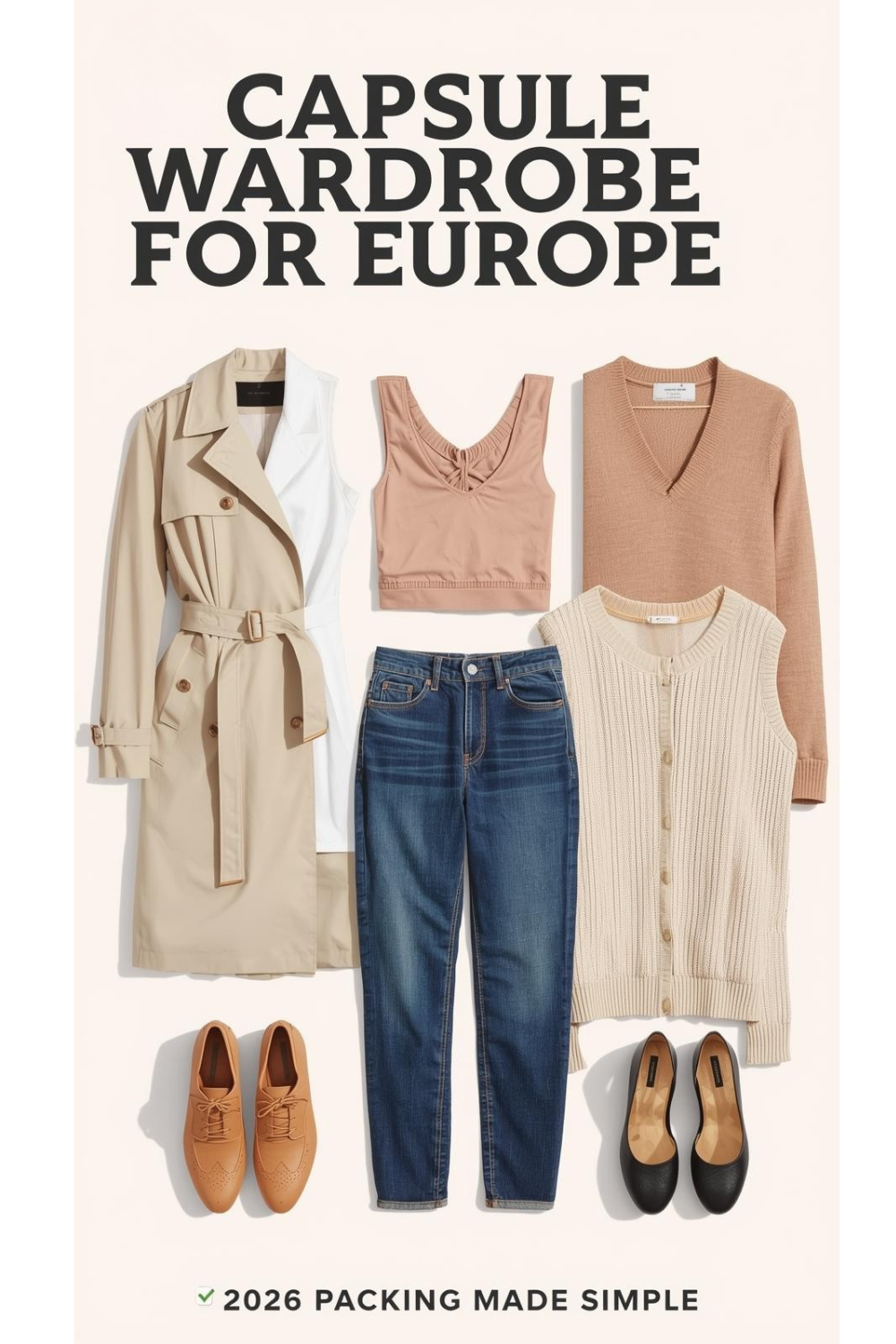
Versatile outfits are more valuable than trendy pieces. Choose comfortable and versatile clothing pieces for a travel capsule wardrobe, with neutral colors, simple silhouettes, and layers that let you create multiple outfits from fewer items. One outfit should work for sightseeing, lunch, and an evening stroll.
Lightweight layers help you adapt to changing temperatures. A thin sweater, scarf, or jacket can instantly make an outfit more practical.
A secure crossbody bag is one of the most important items you'll bring. It keeps essentials accessible while freeing your hands and works well in crowded environments.
Your beauty kit should be minimal. Travel-size essentials in travel-sized containers to comply with airline regulations, multi-use products, lightweight pajamas, and items you already love are enough.
Finally, don't forget tech basics: a universal adapter, charging cables, and a portable charger suitable for airline regulations, plus European plug adapters for charging electronics and a portable power bank for long sightseeing days. Packing minimal electronics also helps streamline travel preparations.
These essentials create a foundation you can adapt without overpacking.
How to Pack for Europe by Season
If you’re trying to pack light for Europe, knowing what to leave at home is just as important as knowing what to bring.

Spring in Europe (March–May)
Spring in Europe is unpredictable. Days can be sunny and warm, while mornings and evenings remain cool. Rain showers are common, especially in northern and coastal regions, so include a waterproof jacket for unexpected rain.
Layering is key. Think a lightweight jacket, a light jacket, closed-toe shoes, and pieces you can easily add or remove throughout the day. Fabrics that dry quickly are helpful.
If you're traveling south, guides like what to pack for Spain in spring or what to pack for Portugal in spring offer more specific advice depending on the climate.
Summer in Europe (June–September)
Summer brings heat, crowds, and long days of walking. Breathable fabrics, comfortable sandals or white sneakers, and sun protection like a sun hat become essential in strong summer sun.
Avoid overpacking dresses that only work in extreme heat—balance them with versatile tops and bottoms. A light layer is still useful for evenings, especially since many accommodations have limited air conditioning and heat waves can make breathable clothing even more important.
Destination-specific guides like what to pack for Portugal in summer or what to pack for Italy in summer or what to pack for Spain in summer , help refine your choices without duplicating effort.
Fall in Europe (October–November)
Fall is one of the best times to visit Europe, but temperatures drop quickly. Layers become more important, and closed-toe shoes are essential.
Choose pieces that work in mild weather but can be layered for cooler days. Scarves, light coats, and neutral tones fit well into fall travel wardrobes.
Destination-specific guides like what to pack for Portugal in fall or what to pack for Italy in fall or what to pack for Spain in fall , help refine your choices without duplicating effort.
Winter in Europe (December–February)
Winter travel requires warmth without bulk. A quality coat, comfortable boots, and base layers make a big difference for winter warmth without bulk.
Indoor spaces are often heated, so avoid overly heavy layers you can't remove easily. Compact packing is especially helpful when wearing thicker clothing.
Packing for Europe by Country (How to Adapt)
Spain Spain's climate varies by region, but in southern europe summer often reaches the 70s and 80s, so lightweight layers and breathable fabrics are essential. For detailed guidance, see what to pack for Spain
Portugal Portugal tends to be milder, especially along the coast, though southern europe can still dip to roughly 40–55 °F in winter depending on season and region. Packing advice differs by season—use what to pack for Portugal or the Portugal summer packing list to adapt.
Italy Italy combines style with practicality. Comfortable shoes and polished outfits matter. Guides like what to pack for Italy and the Italy summer packing guide help refine your choices.
France France favors understated, classic style. Simple outfits, neutral colors, and functional accessories go a long way. northern europe is generally milder in summer, which can suit more active days or trekking-focused itineraries. See what to pack for France for more detail.
What NOT to Pack for Europe
Overpacking is one of the most common mistakes travelers make in Europe.
Large totes may look stylish, but they're uncomfortable to carry all day and easy targets in crowded areas. High heels are impractical on cobblestone streets, and even flat sandals should have good traction for uneven surfaces.
Too many outfits add weight without adding value. Most travelers wear the same few favorites repeatedly, and versatile flats or loafers are a better dressier option to pack than heels. Heavy power banks may also cause issues at airports.
Open bags without closures increase stress in busy cities. Choosing an anti-theft crossbody bag, helps reduce risk while keeping essentials accessible.
Packing less allows you to move more freely, and enjoy your trip more.
Safety & Smart Packing for Europe
European cities are generally safe, but the way you pack — and how you carry your belongings — plays a major role in how relaxed you feel while traveling. A secure crossbody bag is essential for daily sightseeing in crowded areas because it keeps your belongings close and harder to access.
Most travel safety issues in Europe aren't about danger — they're about distraction and overcrowded spaces.
Most incidents happen in predictable places: crowded metros, train stations, cafés, and popular tourist areas. Packing smart means anticipating these moments rather than reacting to them. Wearing your bag in front of your body in busy areas, especially on public transportation, makes it easier to stay aware of your surroundings.
Trains and metros deserve special attention. Boarding and exiting are common moments for distraction, so keeping zippers closed and valuables secured helps prevent issues. When sitting at cafés, avoid hanging bags on chair backs or placing phones on the table unattended. In especially crowded areas, use an RFID-blocking money belt for backup valuables.
Smart packing also means organization. Keep essential items like your passport, phone, and cards in separate secure compartments rather than all in one place, and check before departure that your passport is valid for at least six months. Cards with no foreign transaction fees are best, and credit cards are widely accepted, though some smaller places still prefer cash. This reduces stress and makes daily travel smoother.
For practical safety habits for women traveling through Europe, see our complete guide: Europe travel safety tips for women. Many travelers also ask whether anti-theft bags are worth it, especially for Europe. While not mandatory, added security features can significantly reduce anxiety in busy cities and allow you to focus on the experience instead of your belongings.
The Thafael anti-theft crossbody bag Having lockable zippers, secure compartments, and a bag that blends in visually allowed me to move through cities with confidence — without feeling like a tourist or constantly checking my belongings.”


Ultimately, the goal isn't fear, it's freedom. Packing with safety in mind allows you to enjoy Europe with confidence, ease, and intention.
For solo female travel safety including how to stay aware and confident in any European city, see: How to travel solo as a woman in 2026.
Final Europe Packing Checklist
Clothing
Comfortable walking shoes
Secondary shoe option
Neutral mix-and-match outfits
Lightweight layers
Weather-appropriate outerwear
Bags and Accessories
Anti-theft crossbody bag
Phone charger and power bank
Sunglasses
Scarf
Beauty and Toiletries
Travel-size essentials
Multi-use products
Minimal makeup
Tech and Documents
Universal adapter
Charging cables
Phone
Passport and copies
Extras
Reusable water bottle
Compact umbrella
Packing cubes
Conclusion
Packing well for Europe is not about having more. It is about having the right things in the right bag and leaving everything else behind. Once you get that balance right, the trip itself gets lighter too.
For more specific guidance by destination and season:
What to pack for Spain in summer 2026 What to pack for Italy in summer 2026
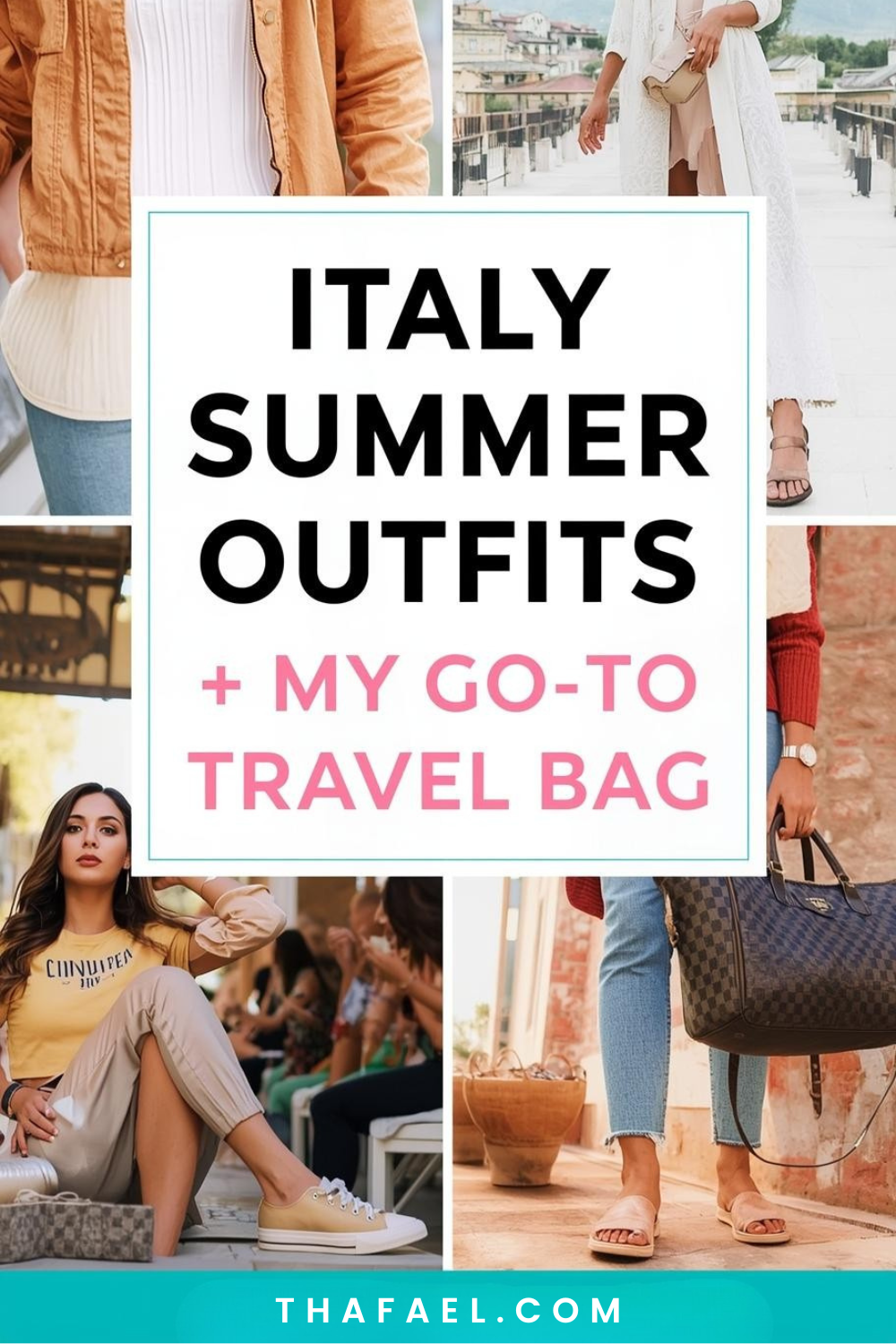
For the outfit side of packing: The best European summer outfits for 2026.
For safety packing specifically: Europe travel safety tips for women.
For choosing the right bag: How to choose the best crossbody travel bag for women.
Have an amazing trip.
Arielle
FAQ
What is the best bag to bring to Europe?
A medium-sized anti-theft crossbody bag is the best option for most women traveling in Europe. It keeps your essentials close to your body, works well in crowded cities and on public transport, and is far more secure than a backpack or open tote. In cities like Paris, Rome, Barcelona, and Lisbon where pickpocketing is common in tourist areas, a bag with lockable zippers, slash-resistant lining, and RFID-blocking pockets makes a genuine difference. The best travel crossbody bags are also minimalist enough to work with city outfits from morning sightseeing to evening dinners without looking like travel gear. For a complete guide to choosing the right bag, see: How to choose the best crossbody travel bag for women.
How many shoes should I pack for Europe?
Two pairs is the ideal number for most Europe trips, with a maximum of three. Your first pair should be a comfortable well-broken-in walking shoe or minimal sneaker that can handle cobblestones and 10,000 to 20,000 steps per day without hurting your feet. Your second pair should be a flat leather sandal or low-profile option for evenings and lighter days. If you are traveling in summer to coastal destinations, a third pair of casual sandals can be worth it. The most important rule is to never bring shoes you have not already broken in. Europe will find out immediately and your feet will pay for it.
Is a backpack or crossbody better for Europe?
A crossbody bag is generally better for European city travel for three reasons. First, backpacks are harder to monitor in crowded metros and tourist sites because they sit behind you where you cannot see them. Second, many European museums including the Louvre, the Uffizi, and the Prado require backpacks to be checked at the entrance, which slows you down significantly. Third, a crossbody sits close to your body, keeps your hands free, and can be worn in front in crowded situations for extra security. A backpack makes more sense for hiking, day trips outside the city, or when you need to carry significantly more weight.
Do I need an anti-theft bag in Europe?
It is not mandatory but it is genuinely recommended, especially if you are visiting Paris, Rome, Barcelona, Lisbon, or Florence, all of which have well-documented pickpocket activity in tourist zones. Anti-theft features like lockable zippers, RFID-blocking pockets, and slash-resistant lining significantly reduce your exposure to the most common theft methods without requiring any extra effort on your part. The bigger argument for them is psychological: when you are not worried about your bag, you are more present and more relaxed, which changes your whole experience of the trip. The best anti-theft bags are designed to look and feel like regular stylish bags rather than security products.
How do I avoid overpacking for Europe?
The most effective method is to build a capsule wardrobe before you pack rather than packing outfit by outfit. Choose a single neutral color palette of three to four tones that all work together, then select pieces that each pair with at least two other items in your bag. Limit yourself to two pairs of shoes maximum for trips under two weeks. Lay everything out before it goes in your bag and remove one item. Pack your toiletries last and in travel sizes only. The question to ask for every item is: would I genuinely be upset if I did not have this? If the answer is no, leave it behind.
What clothing should women avoid wearing in Europe?
Avoid gym clothes and athleisure outfits for city centers, since Europeans tend to dress up more than Americans and often look more formal even for errands, with local style skewing neat and understated. Avoid high heels entirely unless you are going to a specific dressy event, as cobblestones and long walking days make them impractical and painful. Avoid very short or revealing clothing if you plan to visit churches or religious sites, which require covered knees and shoulders for entry across Italy, Spain, France, and Portugal. Avoid bringing clothes that only work with one other item in your bag. And avoid packing anything brand new that you have not worn before. Europe is not the place to discover a fabric irritates you or a waistband digs in after three hours of walking.
How many outfits should I pack for two weeks in Europe?
For two weeks in Europe, aim for 12 to 15 pieces total rather than 14 separate complete outfits. This typically means three to four tops, two pairs of trousers or bottoms, two dresses, one light layer, one smarter evening piece, two pairs of shoes, and a structured crossbody bag. The key is that every top works with every bottom and every outfit works with both pairs of shoes. Packing cubes help enormously here because they let you see everything at once and avoid the trap of stuffing in extras at the last minute.
What are the most important things to pack for Europe that most women forget?
The items most commonly forgotten or underestimated are a universal power adapter, a portable phone charger with enough capacity for a full day out, a lightweight scarf that doubles as a church cover-up, an extra layer for cold plane cabins and air-conditioned museums, blister plasters specifically for the back of heels before you need them, and a small packing cube that serves as your daily organizer. The universal adapter in particular consistently catches travelers off guard on their first night in Europe.
About The Author
Arielle is the founder of Thafael, an anti-theft crossbody bag brand designed for women who refuse to choose between style and security while traveling. After years of frustration with bags that were either beautiful or safe but never both, she built Thafael to solve that exact problem. Her packing guides are rooted in that expertise: practical, honest, and written for women who want to travel confidently without overpacking.

Leave a comment
This site is protected by hCaptcha and the hCaptcha Privacy Policy and Terms of Service apply.